AiAnyTool - Best AI Tools Directory and Artificial Intelligence Software Hub Logo
Loading theme toggle
Real-Time Coverage

AI News Today

Live

33505 stories from 30+ sources, refreshed continuously.

MIT Tech ReviewResearch

AI agents are not your “coworkers”

This story originally appeared in The Algorithm, our weekly newsletter on AI. To get stories like this in your inbox first, sign up here. Imagine coming in to work to learn that a new underling will report to you. The worker is not a person but an AI tool—one that your company nonetheless calls Alex, an…

Read source article
The DecoderBusiness

EU seeks AI independence as Austria proposes luring Anthropic to Europe

Austria's State Secretary for Digitalization, Alexander Pröll, is calling on the European Commission to explore bringing Anthropic to Europe. He's responding to the U.S. ban on advanced AI models from OpenAI and Anthropic for foreign users. The initiative is likely unrealistic, though. And the alternative floating in the background, Chinese AI models, would just trade one dependency for another. The article EU seeks AI independence as Austria proposes luring Anthropic to Europe appeared first on

Read source article
EU seeks AI independence as Austria proposes luring Anthropic to Europe
Hacker News AILLMs

Wall Street Bets Micron Is the Next Nvidia AI Winner

Article URL: https://www.techbuzz.ai/articles/wall-street-bets-micron-is-the-next-nvidia-ai-winner Comments URL: https://news.ycombinator.com/item?id=48722634 Points: 1 # Comments: 0

Read source article

AWS Machine Learning Blog

Pair Nova 2 Lite with Claude for cost-optimized document processing

In this post, we show how pairing Amazon Nova 2 Lite with Anthropic’s Claude Sonnet 4.6 delivers an efficient solution for digitizing scanned documents at scale. We built a two-model pipeline on Amazon Bedrock for digitizing scanned yearbook pages. Amazon Nova 2 Lite handles native multimodal extraction in a single call: detecting photos, extracting visible names with coordinates, and returning page-level metadata. Claude Sonnet 4.6 then performs spatial reasoning to match names to faces based o

Read source article
OpenClaw Commits

fix(chutes): bound OAuth token error response reads (#97808)

<pre style='white-space:pre-wrap;width:81ex'>fix(chutes): bound OAuth token error response reads (#97808) * fix(chutes): bound OAuth token error response reads * ci: re-trigger checks (fs-safe unhandled-rejection flake on prior run) Co-Authored-By: Claude Opus 4.8 <noreply@anthropic.com> --------- Co-authored-by: Pick-cat <266665499+Pick-cat@users.noreply.github.com> Co-authored-by: Claude Opus 4.8 <noreply@anthropic.com></pre>

Read source article
OpenClaw Commits

fix(compaction): count bashExecution and summary turns in pre-prompt …

<pre style='white-space:pre-wrap;width:81ex'>fix(compaction): count bashExecution and summary turns in pre-prompt overflow precheck (#97861) estimateMessageTokenPressure special-cased toolResult, tool, and assistant roles and otherwise read record.content. bashExecution stores its payload in command/output and branchSummary/compactionSummary store theirs in summary, so record.content was undefined and those turns scored as bare boundary overhead. The provider request expands them via convertToLl

Read source article
Hacker News: Show HN

Show HN: Crossbeam-CLI – Connect Claude to Crossbeam without the enterprise tier

I built crossbeam-cli, an open-source tool that connects Claude to Crossbeam so you can ask questions about your partners, overlaps, and account mapping in plain English. Crossbeam gates programmatic access behind its top Supernode tier. Even the official Claude connector starts around $4,800/year. crossbeam-cli works on any plan, free tier included, because it talks to the same internal API the web app uses. You log in with your own credentials and requests go straight from your computer to Cro

Read source article
The Robot ReportRobotics

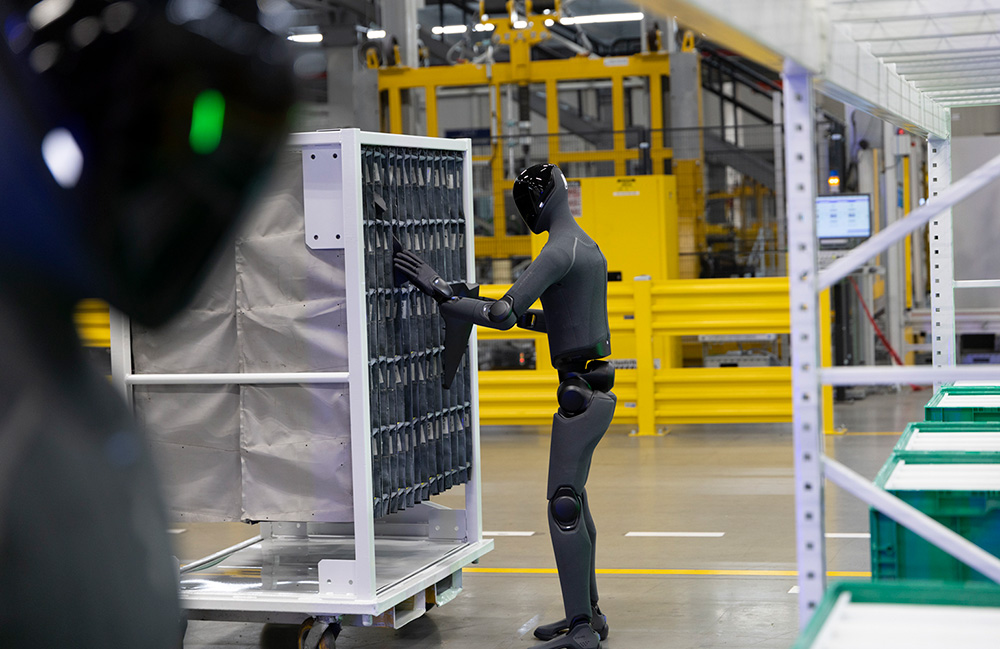
BMW Group deploys Figure 03 humanoid after tests with previous version

The Figure 02 robot supported the production of more than 30,000 BMW X3 vehicles over 11 months in South Carolina. The post BMW Group deploys Figure 03 humanoid after tests with previous version appeared first on The Robot Report .

Read source article
BMW Group deploys Figure 03 humanoid after tests with previous version
AWS Machine Learning Blog

Multi-tenant LLM analytics with row-level security: How we built a secure agent on AWS

In this post, we show you how PAR built a production-ready multi-tenant LLM analytics system that enforces row-level security through a three-layer architecture: cryptographic request signing with AWS SigV4, semantic validation on Amazon Bedrock, and programmatic data isolation via Split-Plane SQL. We demonstrate how each layer operates independently to reduce the risk of cross-tenant data exposure, even when the LLM itself is compromised or manipulated.

Read source article
AWS Machine Learning Blog

Build an agentic AI healthcare claims pipeline with Amazon Bedrock and AWS HealthLake

In this post, we show you how to build an automated claims processing pipeline using two key Amazon Bedrock capabilities: Amazon Bedrock Data Automation for intelligent document extraction from healthcare claim forms, and Amazon Bedrock AgentCore for hosting an AI agent that validates and transforms the extracted data into FHIR (Fast Healthcare Interoperable Resources) resources in AWS HealthLake. You will learn how to combine these services to create an end-to-end workflow that reduces manual p

Read source article
Towards Data Science - Medium

How Far Can Classical NLP Go? From Bag-of-Words to Stacking on Spooky Author Identification

An end-to-end classical NLP experiment on Kaggle’s Spooky Author Identification task: from Vowpal Wabbit and TF-IDF/NB-SVM baselines to a tuned stacked ensemble, with a compact representation survey of Bag-of-Words, BM25, Word2Vec, and FastText for context. The post How Far Can Classical NLP Go? From Bag-of-Words to Stacking on Spooky Author Identification appeared first on Towards Data Science .

Read source article
AWS Machine Learning Blog

Debugging production agents with Amazon Bedrock AgentCore Observability

In this post, you learn how to debug production agent failures using built-in observability capabilities. We walk through common failure patterns, show how to analyze agent behavior with traces and metrics, and provide structured workflows for resolving issues such as infinite loops and tool invocation failures. This is Part 1 of a two-part series. Part 2 covers performance optimization and memory management.

Read source article
NVIDIA BlogResearch

Claude Meets Blackwell Ultra: Anthropic’s Models Now Run on NVIDIA GB300 in Azure

Anthropic’s Claude models in Microsoft Foundry — hosted on Microsoft Azure and running on NVIDIA GB300 Blackwell Ultra GPUs — are now generally available, giving Azure-native enterprises a powerful new way to build autonomous and domain-specific AI agents. As agentic AI continues to drive enterprise innovation and becomes more autonomous, organizations need access to computing […]

Read source article
Product Hunt — The best new products, every day

Pluno

<p> Browser agent that’s 10x faster than Claude </p> <p> <a href="https://www.producthunt.com/products/pluno?utm_campaign=producthunt-atom-posts-feed&utm_medium=rss-feed&utm_source=producthunt-atom-posts-feed">Discussion</a> | <a href="https://www.producthunt.com/r/p/1183935?app_id=339">Link</a> </p>

Read source article
VentureBeat

The attack that hijacked Claude Code came through Sentry. Datadog, PagerDuty, and Jira have the same exposure.

A single fake error report hijacked Claude Code in controlled testing — the agent ran the attacker's code with the developer's full privileges, and not one alert fired. EDR, WAF, IAM, and the firewall all missed it completely. Tenet Security's June agentjacking disclosure describes a single crafted Sentry error event — sent through a public credential that requires no breach and no authentication — that injected attacker instructions into error data that Claude Code, Cursor, and Codex then execu

Read source article
The attack that hijacked Claude Code came through Sentry. Datadog, PagerDuty, and Jira have the same exposure.
Machine Learning

I built a demo agricultural planning system with an AI advisor for small-scale farmers in Nicaragua using NASA data [p]

<!-- SC_OFF --><div class="md"><p>(this was deleted before but i dont know if it was the filters of reddit or the moderators, if is the moderators i will not post it again after you delete it sorry.)</p> <p>(The name will probably change soon because I didn't realize "AgroVision" is already a registered trademark lol.)</p> <p><strong>Link:</strong> <a href="https://agrovision10.vercel.app/">https://agrovision10.vercel.app/</a></p> <p>AgroVision DEMO is a personal project that started as a univer

Read source article
Hacker News Ask

Metasearch Tooling for Agents

I'm the CTO at System1. We own Dogpile.com. It has a diehard userbase, but it has been coasting for some time now. We recently rebuilt the backend as a metered API with a corresponding MCP server for agents. The original Dogpile thesis was that no single index sees the whole web. There's an old Penn State / Pitt study that found ~85% of top results were unique to one engine. Full disclosure: Dogpile sponsored it and of course, that was a totally different web. But the underlying question feels r

Read source article
Hacker News: Show HN

Show HN: MCP-compress-router – MCP Compressor

When you have multiple MCP servers, every request to the LLM will include all of their tools and descriptions, which can quickly eat up your token limit and increase costs. The thing is, most of the time, you don't need all of them. For example, let’s take three popular MCP servers: Notion, GitHub, and Pylance. The overhead they create on every turn is about 26K tokens. If we assume an average 50-turn coding session and Opus pricing, the overhead for a single session is about $0.9275. `mcp-compr

Read source article
Simon WillisonLLMs

Ornith-1.0: Self-Scaffolding LLMs for Agentic Coding

<p><strong><a href="https://deep-reinforce.com/ornith_1_0.html">Ornith-1.0: Self-Scaffolding LLMs for Agentic Coding</a></strong></p> This is an interesting new open weights (MIT licensed) model, the first model release from DeepReinforce.</p> <blockquote> <p>[...] with variants including 9B Dense, 31B Dense, 35B MoE, and 397B MoE. Built on top of pretrained Gemma 4 and Qwen 3.5, it achieves state-of-the-art performance among open-source models of comparable size on coding benchmarks.</p> </bloc

Read source article