
Lawfare (AI Policy)Regulation
Latin America’s Long Game: Nuclear Disarmament in the Age of AI
The answer to one of the world’s most dangerous security problems was drafted in Mexico City nearly sixty years ago.
Read source article
The answer to one of the world’s most dangerous security problems was drafted in Mexico City nearly sixty years ago.
As AI labs draw professors and students away from universities, society risks losing the expertise to govern what those labs build.
On open weights for everyone else, credit for a disputed mathematics proof, and control over autonomous weapons. Source
✍️By Ahmet Ergurum Ahmet is a PhD candidate in Political Science at the University of Wisconsin-Milwaukee, as well as a Graduate Affiliate at the Governance and Responsible AI Lab (GRAIL) at Purdue University. 📌 Editor’s Note: This article is part of our AI Policy Corner series, a collaboration between the Montreal AI Ethics Institute (MAIEI) and the […] Source
<p>What AI can learn from Selective Availability, the governance technology once used to pace GPS.</p>
On open-weight models, the responsibilities that move with them, and who owns the layers beneath the model. Source
<img class="webfeedsFeaturedVisual" src="https://lawfare-assets-new.azureedge.net/assets/images/default-source/article-images/scaling-laws-logo.jpg?sfvrsn=7a7b38eb_3" /><p>Bri Treece, Executive Director of <a href="https://pactai.org/" rel="noopener noreferrer" target="_blank">PACT AI,</a> and Dr. Rob Slone, Chief Scientist & Innovation Officer at UL Solutions, join Kevin Frazier, Director of the AI Innovation and Law Program at Texas Law and a Senior Editor at Lawfare, to discuss a neglected la
✍️By Tasneem Ahmed. Tasneem is an Undergraduate Student in Political Science and Women’s, Gender, and Sexuality Studies as well as a Research Assistant at the Governance and Responsible AI Lab (GRAIL), Purdue University. 📌 Editor’s Note: This article is part of our AI Policy Corner series, a collaboration between the Montreal AI Ethics Institute (MAIEI) and […] Source
Discussing the risk of catastrophic AI-enabled terrorism.
The latest edition of the Seriously Risky Business cybersecurity newsletter, now on <em>Lawfare</em>.
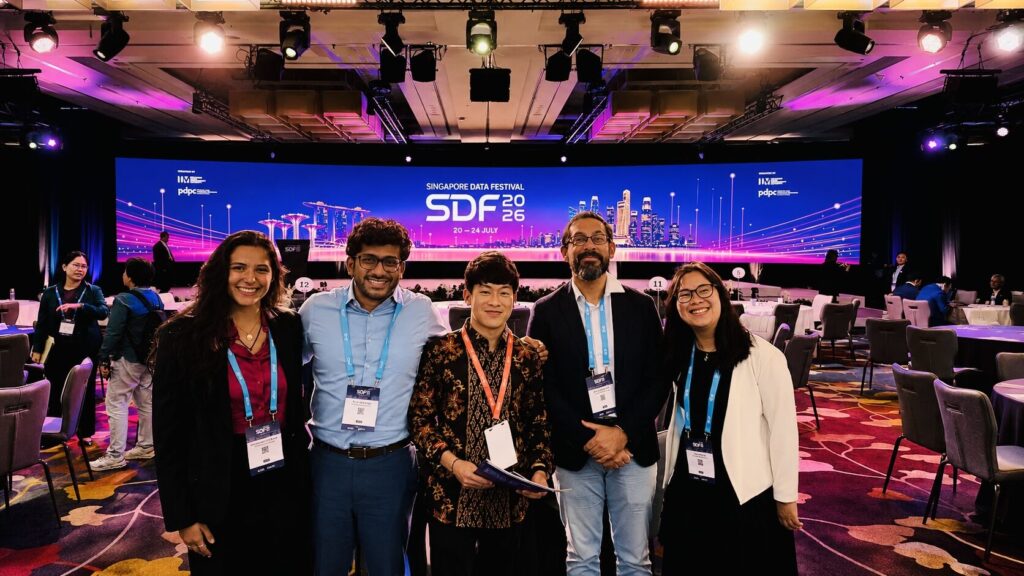
Co-authors: Lauren Koek and Valentina Curatella, FPF APAC Interns From July 20 to 24, 2026, the Future of Privacy Forum (FPF) participated in the inaugural Singapore Data Festival (SDF), hosted by Singapore’s Personal Data Protection Commission (PDPC) and Infocomm Media Development Authority (IMDA). Succeeding the PDPC’s annual Personal Data Protection Week, the SDF convened around […]
Enterprises are discovering their AI provider is also a competitor. Chinese users discovered their companions were never theirs. Source
Few areas of privacy and technology policy have attracted as much legislative attention this year as data-driven pricing or “surveillance pricing.” On August 4, the Senate Judiciary Committee held a hearing—“Your Data, Their Profit: The Consumer Cost of AI Surveillance Pricing”—highlighting the intense scrutiny on these practices by policymakers. In 2026 alone, FPF tracked the […]
Documents encoding AI models’ values are alignment’s highest-leverage point—regulating their contents hits the First Amendment.
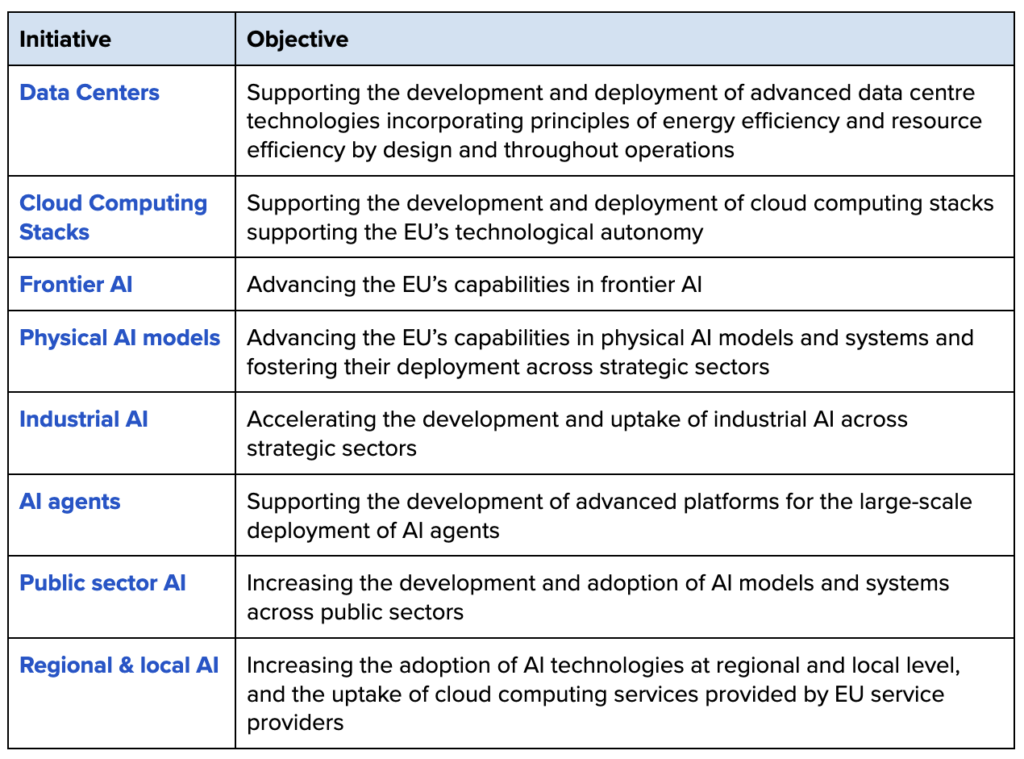
The new EU Cloud and AI Development Act (CADA) proposal marks a genuine shift in the way the bloc regulates AI, as it codifies the “AI first” principle and it is as much an “AI promotion and enabling”-type of legislation as it is a cloud sovereignty one. The European Commission published the CADA proposal at […]
<p dir="ltr">DHS deploys AI in immigration enforcement largely untested, undisclosed, and unreviewed, a preview of how AI could reshape executive power. </p>
A halt in Grokipedia’s edit pipeline offers a case study in how an AI-generated reference system governs its own content.
Expert working group updates 2023 report to account for the rise of generative AI; will host a webinar on September 28 to present an overview of best practices and risk framework WASHINGTON, D.C. – The Future of Privacy Forum (FPF), with Dayforce, LinkedIn, UKG, Workday, and Beamery – leading HR, payroll, and employment software developers […]
As artificial intelligence chatbots and voice assistants become increasingly integrated into the daily support networks of older adults, baseline consumer protections and transparency measures are essential to ensure these tools foster independence and interpersonal trust rather than introduce new risks. It is encouraging to see Congress recognizing the unique intersections of privacy and data protections, […]
Anthropic destroyed books the law had no reason to tally. OpenAI ran an evaluation no one was required to contain. Source
<p>Denying First Amendment protection to AI outputs sounds like a rule about machines. In practice it could burden human speech online.</p>
<p>The recent decision takes off the table one of the most popular proposals for AI governance: an independent federal agency, free from a president’s whims.</p>
<img class="webfeedsFeaturedVisual" src="https://lawfare-assets-new.azureedge.net/assets/images/default-source/article-images/scaling-laws-logo.jpg?sfvrsn=7a7b38eb_3" /><p>Laura Davis, founder of USLege, joins Kevin Frazier, the AI Innovation and Law Fellow at the University of Texas School of Law and a Senior Editor at Lawfare, to dive into how USLege is leveraging AI to transform the way professionals monitor and respond to government activity.<br /></p><p>USLege’s platform aims to be the answ
The latest edition of the Seriously Risky Business cybersecurity newsletter, now on <em>Lawfare</em>.
A live-blog of the summary judgment hearing over whether the U.S. Department of Defense designated Anthropic a “supply chain risk” to punish it for First Amendment protected speech.
The real lesson of the Hugging Face breach isn’t that AI went rogue—it’s how self-serving hype steers regulators toward the wrong fixes.
The implementation timeline of the EU AI Act has been significantly modified through the recently adopted AI Omnibus, which pushes compliance with the obligations for high-risk AI systems to December 2027 (Annex III) and August 2028 (Annex I), from the initial date of 2 August 2026. Changes of the AI Act include, among others, the […]
A recent AI security incident during a frontier model internal evaluation demonstrates the need for better information sharing requirements.
On July 13, FPF submitted comments in response to the Colorado Department of Justice’s (the Department’s) pre-rulemaking process for the Colorado Automated Decision-making Act (SB 189) and the Chatbot Safety Act (HB 1263). As lawmakers continue to calibrate a proportionate approach to consumer protection from risks of AI-related harms, Colorado’s two new laws each take […]
<img class="webfeedsFeaturedVisual" src="https://lawfare-assets-new.azureedge.net/assets/images/default-source/article-images/scaling-laws-logo.jpg?sfvrsn=7a7b38eb_3" /><p>Assemblymember Alex Bores ran for Congress on a platform that in many ways centered on AI policy. He therefore drew considerable support as well as substantial opposition from interest groups across the country. Though Bores lost in the Democratic primary, his experience is worth exploring in detail.</p><div data-sf-ec-immutab
The latest edition of the Seriously Risky Business cybersecurity newsletter, now on <em>Lawfare</em>.
Future AI risks will be harder to address ad hoc.
<div><p dir="ltr">The Lawfare Institute—publisher of information and insight at the intersection of national security, law and policy—seeks a motivated full-time associate editor focused on artificial intelligence. </p><div><br /></div></div>
Live from the Institute of Law & AI's Workshop on Law-Following AI
AI's costs are landing in real places, and the people absorbing them are writing the rules after the fact, in council chambers and courtrooms. Source
Rapidly growing agetech industry has a significant opportunity to close trust gap, increase product adoption with increased transparency WASHINGTON, D.C. — (July 20, 2026) — The Future of Privacy Forum (FPF) — a global non-profit focused on data protection, AI, and emerging technologies — today released findings from a comprehensive March 2026 survey about how […]
Rapidly growing agetech industry has a significant opportunity to close trust gap, increase product adoption with increased transparency WASHINGTON, D.C. — (July 20, 2026) — The Future of Privacy Forum (FPF) — a global non-profit focused on data protection, AI, and emerging technologies — today released findings from a comprehensive March 2026 survey about how […]
A review of Katrina Manson, “Project Maven: A Marine Colonel, His Team, and the Dawn of AI Warfare” (Norton, 2026).
<img class="webfeedsFeaturedVisual" src="https://lawfare-assets-new.azureedge.net/assets/images/default-source/article-images/scaling-laws-logo.jpg?sfvrsn=7a7b38eb_3" /><p>Nils Tracy, founder of Authorship, joins Kevin Frazier, the AI Innovation and Law Fellow at the University of Texas School of Law and a Senior Editor at Lawfare, to detail the challenges and solutions to deploying AI in highly sensitive contexts.<br /></p><p>Authorship enables users to map their AI policies to myriad use cases
The latest edition of the Seriously Risky Business cybersecurity newsletter, now on <em>Lawfare</em>.