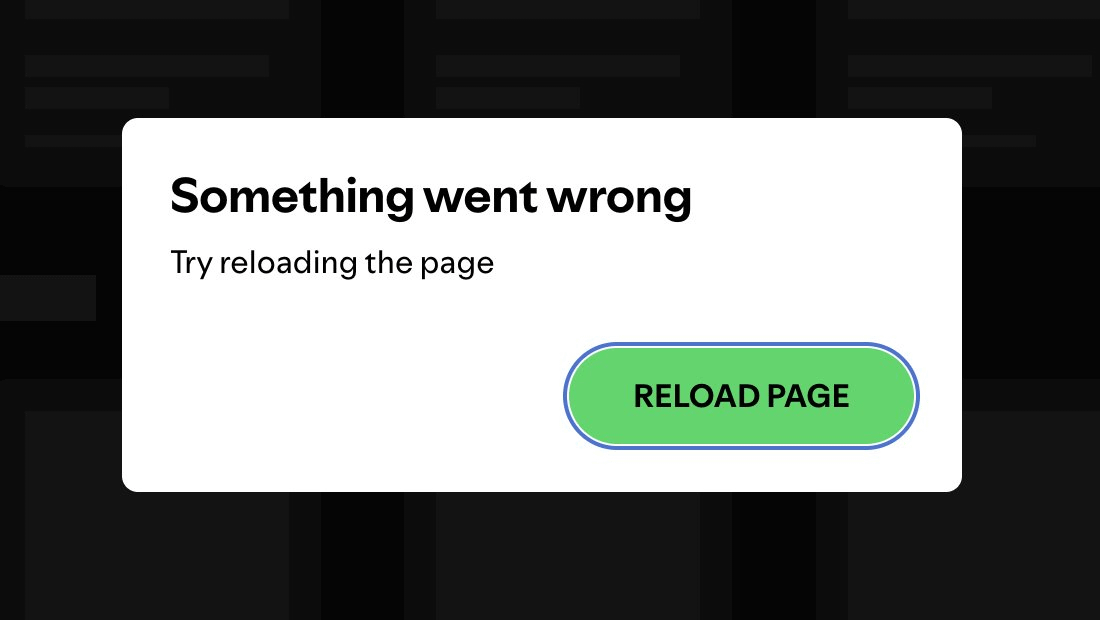
The Pulse: Quitting Spotify Podcasts over reliability
Also: Chinese open models match closed ones from Anthropic and OpenAI, AWS’s “heart-attack” billing error, and more

Also: Chinese open models match closed ones from Anthropic and OpenAI, AWS’s “heart-attack” billing error, and more

Dex Horthy explains why context engineering is key to building more effective AI-assisted software without sacrificing code quality.

Many companies assume everyone craves new AI features. But the reality is that most people don't want more AI — at least not in the way most AI leaders envision it. Brought to you by Design Patterns For AI Interfaces , **friendly video courses on UX** and design patterns by Vitaly.

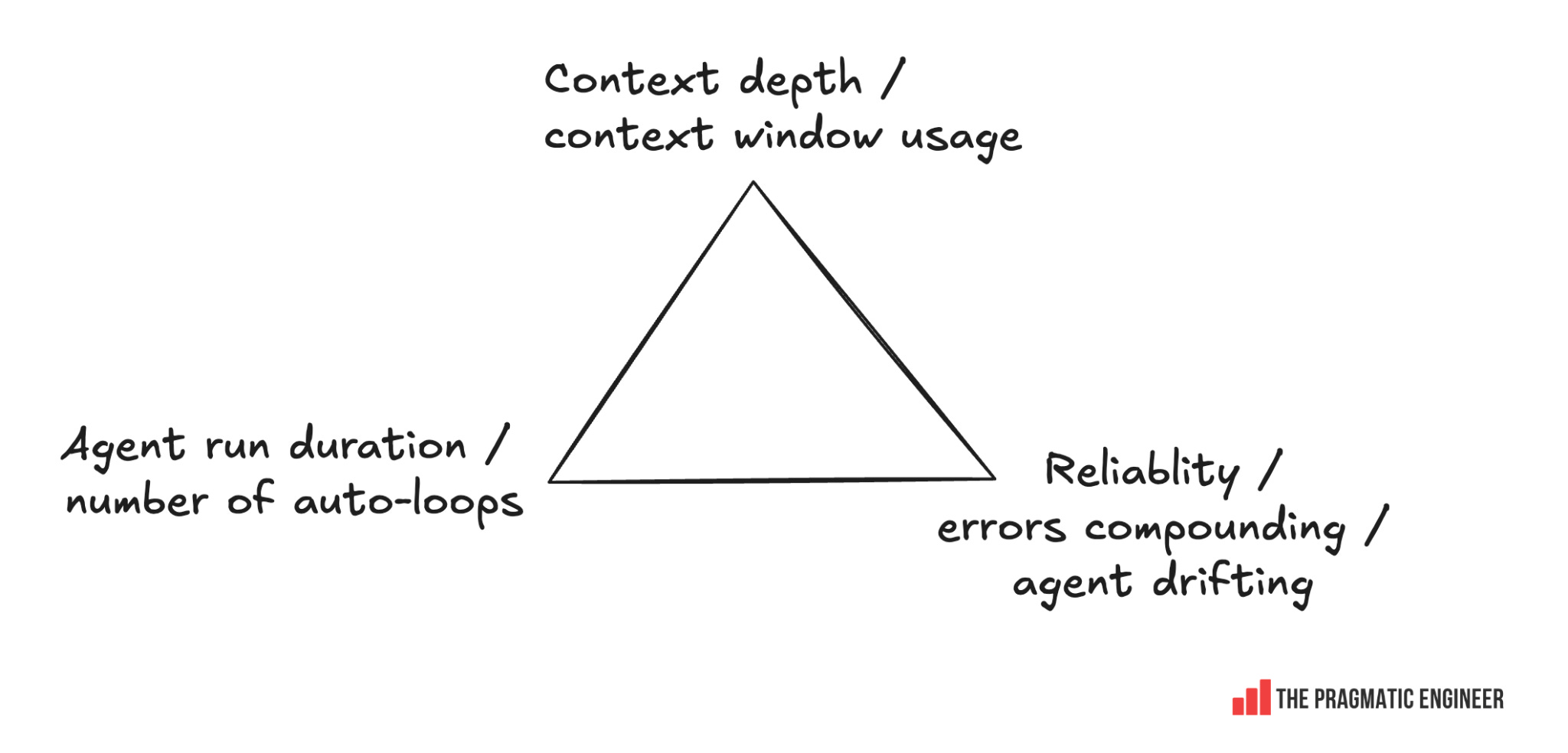
There’s talk about loop engineering, but what is it exactly? I looked into it, and found triggers, cron jobs, AI slop & more. Is it a “here today, gone tomorrow” trend?

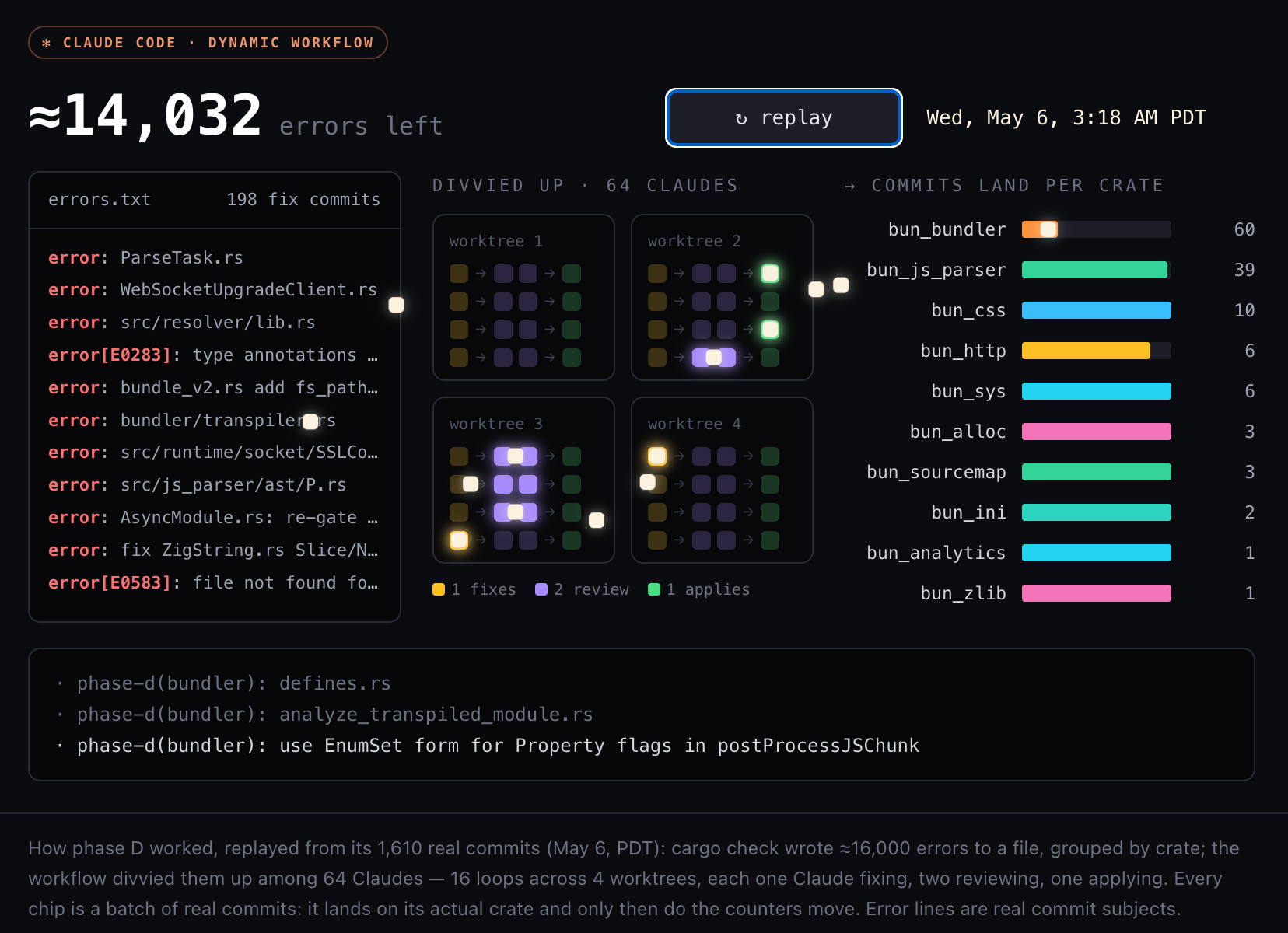
A rewrite done in 11 days that would have taken a small team a year to complete, for $165K in tokens. Also: coding LLM “wars” heat up, AI fakers from North Korea still a problem when hiring, and more

In this AMA episode, Gergely Orosz answers listener questions on AI, engineering, hiring, and careers.

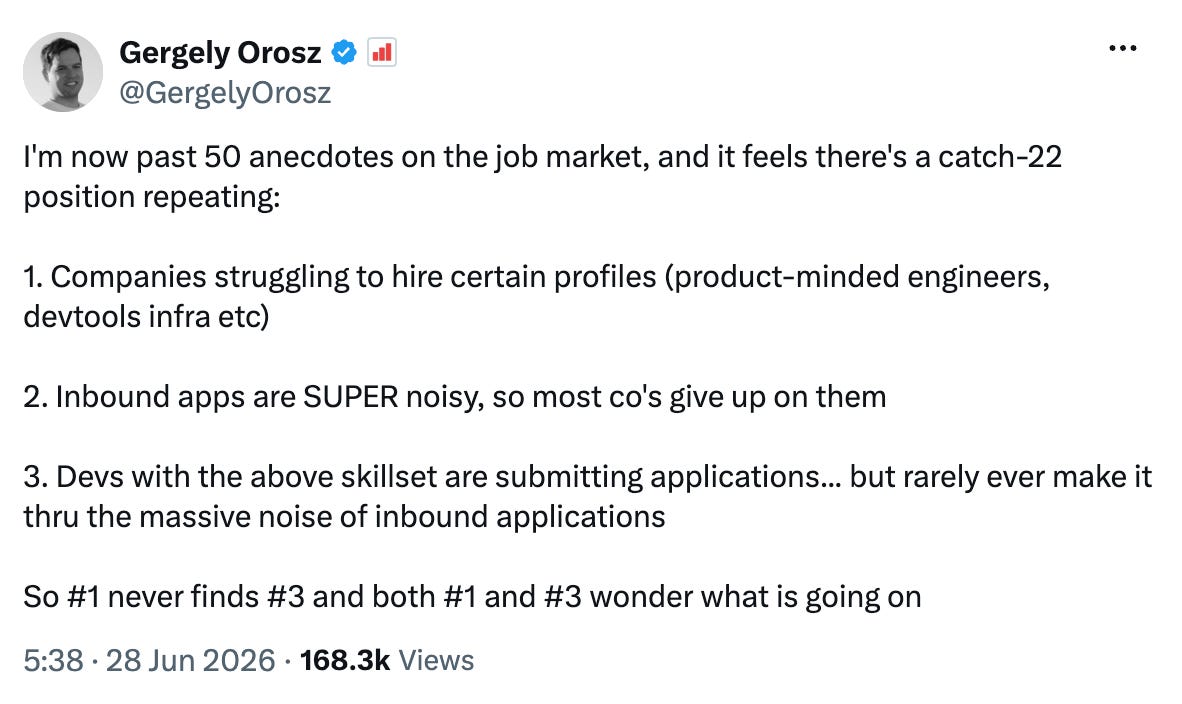
The market where nobody finds each other, the hottest market for AI-related positions, tough for engineering leaders, and more. Based on details from 50+ hiring managers & job seekers

A closer look at why users don’t need more tools in their daily lives. What they need are seamless integrations of useful features to match already existing, established mental models. Brought to you by Design Patterns For AI Interfaces , **friendly video course on UX** and design patterns by Vitaly.

We’ve fallen into conversational tunnel vision, defaulting every AI capability into a chat-based interface simply because LLMs are trained on dialogue data. But great UX is about matching modality to users’ context, intent, and cognitive load, so the interface adapts to the user, not the other way around.

Kent Beck reflects on Agile, TDD, and why building trust—not just generating code—will define the future of software engineering in the AI era.

A peek into where software engineering is headed from inside the sector’s leading AI labs. Agents running in the cloud are a major trend, while coding harnesses are spreading beyond the craft

Actionable errors with paste-ready fix prompts, first-party Skills for the dev loop and Cache Components, and tooling that keeps coding agents in sync with your project.
NeetCode shares his journey from Amazon and Google to building a startup, and why deep expertise still matters in the age of AI.

Learn how to build agent-ready websites using the Lighthouse Agentic browsing category and Chrome DevTools for agents.
Also: a follow-up on Meta destroying its own engineering culture, the SpaceX IPO, SpaceX buys Cursor, Cursor’s GitHub competitor, and more.

Chrome DevTools for agents introduces third-party developer tools, which lets frameworks and applications share rich, runtime context with AI coding assistants.
Robert Erez of Octopus Deploy joins me to discuss Kubernetes, GitOps, progressive delivery, AI in CI/CD, and the evolving practices behind modern software delivery.

Leadership at the social media giant has been on an AI-fueled rampage through its engineering org. We report what’s happened

In a world where AI is informing more design choices, it’s easy to mistake predictions for certainties. This article introduces Probabilistic Design, a mindset that allows UX and product teams to accept uncertainty, decipher AI outputs with nuance, and make smart, adaptive decisions.

We have officially moved past the era of humanoid robots as mere public relations stunts. As they become increasingly lifelike, society may soon face profound social, psychological, and ethical challenges. What happens when the boundary between humans and machines becomes almost impossible to distinguish?

Hi, this is Gergely with a bonus, free issue of the Pragmatic Engineer Newsletter. In every issue, I cover Big Tech and startups through the lens of senior engineers and engineering leaders. Today, we cover one out of four topics from The Pulse issue from two weeks ago. Full subscribers
Anthropic’s new model, Fable, has restrictions many users find unacceptable. Also: a new trend of smart model routing, Coinbase’s core service has no automatic cross-zone failover, and more.

Feedback about the redesigned IDE is overwhelmingly negative due to bugs, poor UX & model support, and eating through Gemini token quotas. Also: a clue that Antigravity’s own devs use other tools for their work?

Findings from an exploratory user research study highlighting the unique insights and practical UX recommendations shared by participants with cognitive disabilities.

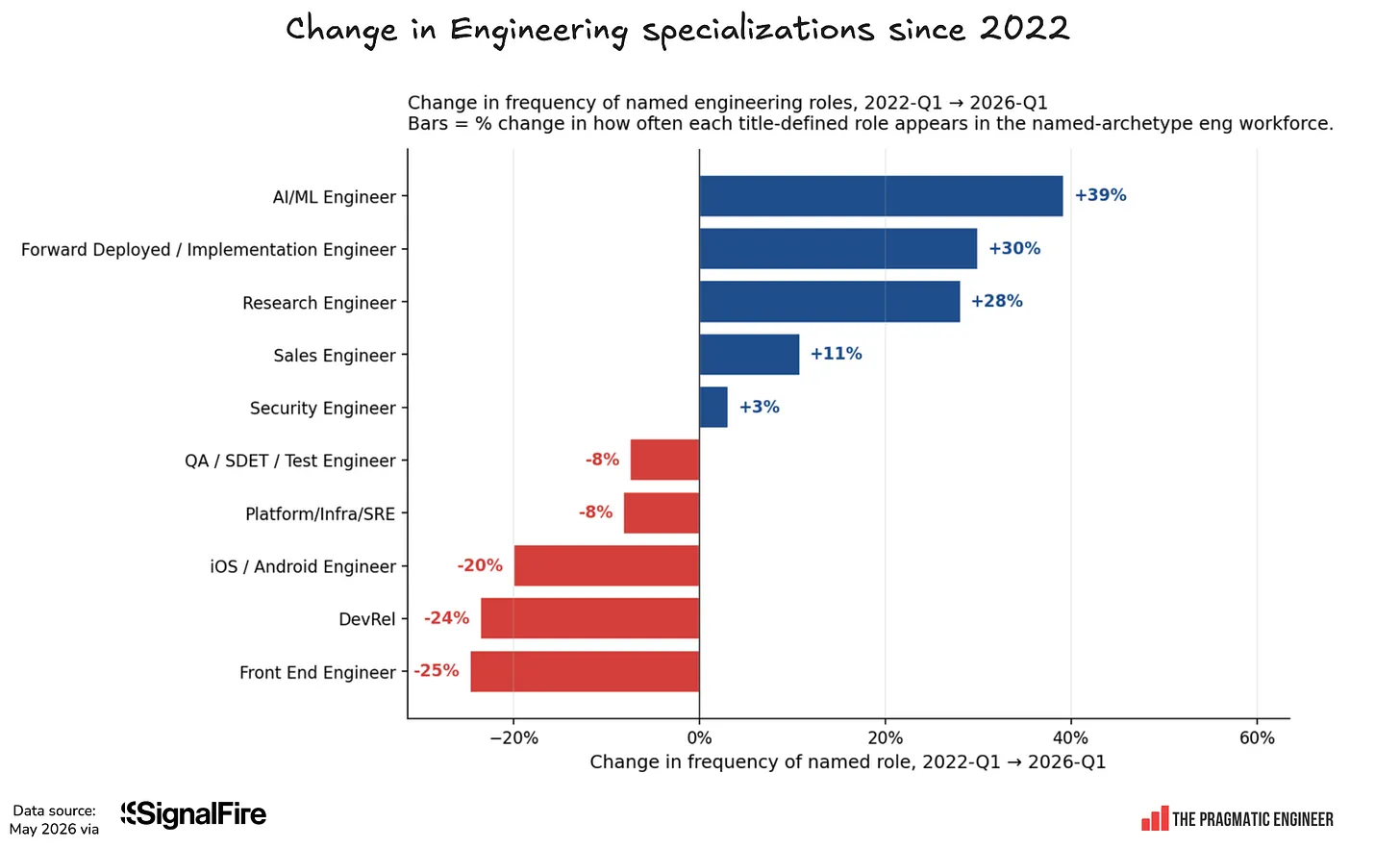
Deepdive into the tech jobs market with exclusive data revealing AI labs are more attractive than Big Tech, native mobile & frontend roles are declining, management’s “great flattening”, and more

Build structured tools for your website, so agents can complete tasks accurately.
Kelsey Hightower reflects on his journey from self-taught technician to Google Distinguished Engineer, sharing lessons on open source, Kubernetes, AI, and building technology that serves people.

Practical guide on how to reduce drifts, minimize mistakes, maintain context, and improve the quality of AI-generated prototypes. Brought to you by Design Patterns For AI Interfaces , **friendly video course on UX** and design patterns by Vitaly.

From Chrome 150 you can seamlessly transition a PWA to a new same-site origin.
Get a preview of the next Chrome release with this post detailing the features in the current beta.
Devs are generating twice as much code (or more) than just 6 months ago, which is a problem for quality, reliability, and tech debt. A rational fix is available for these, but who’s acting rationally?

DevTools for agents is stable, AI assistance gets major upgrade with Lighthouse and widgets, new WebMCP debugging tools.
CSS gap decorations, disconnecting WebSockets for bfcache, and Intl.Locale variants.
Let’s kick off June — and the beginning of summer — with some fresh inspiration! Artists and designers from across the globe once again tickled their creativity to welcome the new month with a new collection of desktop wallpapers. Enjoy!

Top-down and bottom-up efforts to rationalize AI token spend, interesting AI coding stats from Cursor, GCP suspends $2M/month customer without warning, and more

Seventy percent of websites still fail basic WCAG contrast checks in 2025. After years of design system tooling, accessibility linters, and JavaScript libraries, nothing moved the needle. We didn’t need better libraries. We needed better CSS. `contrast-color()` is that better CSS.

Dax Raad, co-founder of OpenCode, joins the show to discuss their explosive growth, the limits of AI coding tools, and why engineering judgment still matters.

Learn more about the talk given at Google I/O 2026 by Thomas Steiner.
There’s a moment in almost every usability session where a participant pauses at the login screen, types something, and glances up: checking whether they’re “doing it right.” That pause is a clear sign. They’ve already clocked that this isn’t a real app, and every data point collected after that moment is filtered through that awareness.

Massive demand for the role at Google, OpenAI, and Anthropic. The latest version of the FDE role looks like the consultant / solution architect role done by many early-junior engineers.