Every AI Company Needs a Context Graph. None of Them Need the Same One
Article URL: https://hydradb.com/blog/ai-context-graph-ontology-infrastructure Comments URL: https://news.ycombinator.com/item?id=48813904 Points: 2 # Comments: 0
Article URL: https://www.uptimelabs.io/articles/jet-engine-on-a-tractor-ais-big-productivity-trap Comments URL: https://news.ycombinator.com/item?id=48813813 Points: 1 # Comments: 0
Article URL: https://github.com/Songmu/slidown Comments URL: https://news.ycombinator.com/item?id=48813802 Points: 1 # Comments: 0
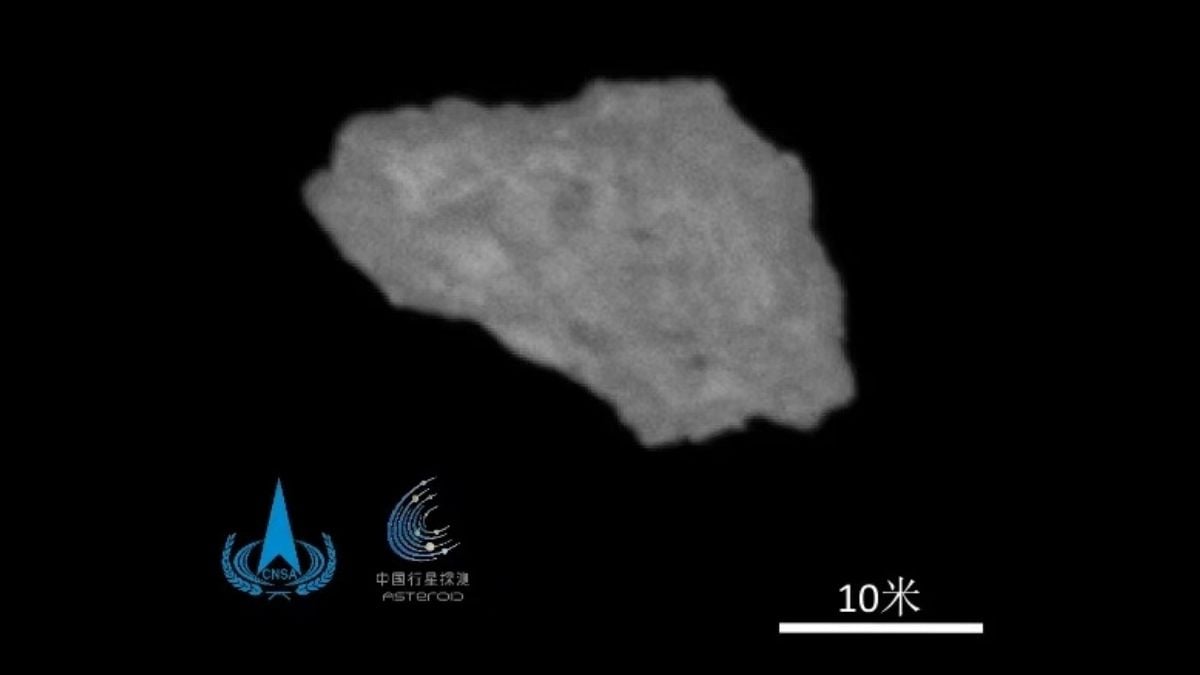
The smallest object ever visited by human spacecraft? ScienceAlert stories are written, fact-checked, and edited by humans, never generated by AI. Don't miss a story, subscribe here.

<p>As of July 8, 2026, Anthropic moved <strong>Fable 5</strong> off Pro/Max/Team subscriptions and onto usage-credit billing. The Mythos-tier model a lot of us leaned on is now a pay-per-use add-on.</p> <p>Before you top up credits, a reframe: on the long, autonomous runs where Fable 5 felt irreplaceable, the bottleneck usually isn't raw model IQ. It's that <strong>Opus drifts off-mission and loses the goal to auto-compaction</strong>. Fix those two things and Opus punches far above where it fee
<p>Our Fable Master said something that I'm still turning over in my head.</p> <p>Here's the context: we built a 37-agent film crew to produce a YouTube tutorial from scratch. Writer drafts the script. Visual designer generates slides. Audio engineer renders voiceover. Subtitle artist burns captions. Assembly engineer compresses the final cut. Seven phases, fully automated, end to end.</p> <p>After it shipped, Fable Master—our internal review system—delivered the post-mortem assessment.</p> <p>I
<p>Want to design real microchip-style logic at home without a five-figure toolchain? Here is what you would need to get started with the new <strong>Adiuvo Explorer Board</strong>: the $99 board itself, a single USB-C cable, and AMD's free-tier Vivado tools running on a modest laptop. That is genuinely it — no bench power supply, no separate JTAG programmer, no add-on debugger. For an ECE student or a school robotics team, that shopping list is the whole point.</p> <h3>What the Explorer Board a
<p>You open a job post for a senior backend role. The stack is what you would expect: TypeScript, Postgres, AWS, a bit of Go. And then, sitting in the list like it has always belonged there, one more line.</p> <p>Cursor.</p> <p>Not "we are an AI company." Not a perk buried three scrolls down the careers page. A tool, in the requirements, in the same slot where they tell you which database they run.</p> <p>A year ago the AI editor you coded with was a private preference. You found out what your n
<p>I gave Claude Code control over my article publishing pipeline. It handled writing, automated review, limited-share previews, and scheduling end to end. It worked well enough that I stopped watching closely.</p> <p>Then one afternoon I asked it to rewrite an existing post and give me a limited-share URL so I could review the changes. Instead it published the draft publicly. By the time I noticed, roughly 100 people had already read it.</p> <p>I was publishing to Qiita, where once an article g
arXiv:2607.02551v1 Announce Type: new Abstract: Video multimodal large language models have made strong progress on open-ended video understanding, but they still lack precise local spatiotemporal perception. When two videos share almost the same global semantics and differ only in a short time span or a small region, current models often fail to find the change and provide reliable evidence. We propose DELTAVID, a verifiable proxy-task framework that enhances fine-grained spatiotemporal percept
arXiv:2607.02561v1 Announce Type: new Abstract: Consumer depth sensors such as the LiDAR scanner on recent iPhones provide metric range, but their useful range is short and their returns are sparse. We present DH-Active, a lightweight, training-free geometry back-end that treats the sensor as a metric ruler rather than the sole source of depth. Near-field returns anchor the metric relative pose of two views through PnP; visually trackable samples without a valid depth return are then triangulate
arXiv:2607.02563v1 Announce Type: new Abstract: Diffusion-based text-to-image models can synthesize complex and highly structured visual content, yet the emergence and evolution of semantic structure remain difficult to interpret. Many existing workflows rely on aggregated attention or scalar summaries that separate temporal change from image-space evidence. To address this gap, we present a visual analytics framework for exploring attention dynamics in diffusion models: the step-indexed evoluti
arXiv:2607.02572v1 Announce Type: new Abstract: In multi-source image fusion scenarios, heterogeneous inputs are typically driven by distinct generative mechanisms and can be viewed as a composition of multiple causal systems. However, cross-system discrepancy (CSD) and cross-system entanglement (CSE) commonly arise during the fusion process, often leading to significant performance degradation under out-of-distribution (OOD) predictions. To address the CSD and CSE issues, we propose the additiv
arXiv:2607.02588v1 Announce Type: new Abstract: Multimodal large language models excel on short clips but struggle on hour-long videos in an online setting, where frames are processed incrementally under limited memory. Existing online methods either retain compact visual representations that lack semantic structure, or build higher-level memory stores organized around temporal proximity rather than explicit causal links, leaving multi-hop narrative reasoning to be reconstructed by the LLM at ev
arXiv:2607.02594v1 Announce Type: new Abstract: Deep learning is widely applied in medical image analysis, but up to 10% of manually labelled images may be incorrect, degrading model performance. This paper proposes an automated method to identify incorrectly labelled medical images by analyzing sequences of loss functions from deep learning classification networks over multiple training epochs. Identified images can be reviewed and relabelled by experts, improving dataset quality and model perf
arXiv:2607.02612v1 Announce Type: new Abstract: Vision Transformers achieve strong image classification accuracy but process all image regions with nearly the same computation, even when many regions are redundant or uninformative. Recent adaptive inference methods reduce this cost by selectively compressing tokens or terminating inference early, but combining these mechanisms often causes unstable intermediate representations and accuracy degradation. We introduce Fusion, a unified adaptive inf
arXiv:2607.02680v1 Announce Type: new Abstract: MLLMs have shown strong zero-shot capabilities across diverse inputs such as across images, video, audio, and text. A crucial, yet underexplored, application of these models lies in understanding and modeling animal-centric scenarios. As animals are integral to millions of households, benchmarking next-generation AI models on pet-focused tasks, ranging from recognizing distress signals to enabling responsive robotic companions, is essential for bui
arXiv:2607.02689v1 Announce Type: new Abstract: As wearable devices enable continuous first-person recording, AI assistants must reason across long time horizons to recall past experiences-a capability known as episodic memory. Current benchmarks often rely on offline evaluation with access to entire video files, failing to simulate the streaming reality of wearable intelligence. We introduce S-EMBER (Streaming Egocentric Memory Benchmark for Episodic Retrieval), a large-scale benchmark comprisi
arXiv:2607.02718v1 Announce Type: new Abstract: Recent advances in large-scale image generative models enable photorealistic scene synthesis with controllable attributes. Beyond data augmentation, their potential as diagnostic tools for trained vision systems remains unexplored in the aerial and remote sensing domains. We introduce a synthetic diagnostic framework for aerial-view vehicle detection that combines text-guided generation, attribute-controlled editing, and automated attribute verific
arXiv:2607.02886v1 Announce Type: new Abstract: Deploying AI-generated video detectors in real-world services demands an ultra-low false positive rate (FPR) on real videos to avoid falsely rejecting authentic content, a regime where standard metrics such as AUROC fail to reflect actual operating behavior. We introduce Spatial Patch-Level Incoherence and Temporal Roughness (SPLIT), a training-free detector that operates on patch tokens from a frozen vision encoder to detect both fully generated a
arXiv:2607.02909v1 Announce Type: new Abstract: Taxonomies provide key information about the semantic relationships between concepts and the inherent organization of vision and language. Despite their impressive capabilities, large multimodal models (LMMs) often lack taxonomic knowledge, leading to low hierarchical visual recognition (HVR) consistency. These models typically only rely on language modeling objectives during fine-tuning and lack explicit taxonomy-aware regularization. To address t
arXiv:2607.02927v1 Announce Type: new Abstract: Video understanding is moving beyond closed-context perception toward open-world evidence exploration, a paradigm formalized as Video Deep Research (VDR). However, existing multimodal search agents primarily target static images, and the current VDR benchmark relies on text-centric retrieval that discards crucial visual information. To address these limitations, we propose VideoSearcher, a closed-loop agentic framework that empowers Vision-Language
arXiv:2607.02952v1 Announce Type: new Abstract: Convolutional Neural Networks (CNNs) achieve strong denoising performance by exploiting spatial context from neighboring pixels. Deep Image Prior (DIP) leverages this property to restore images from a single noisy input without requiring large datasets. However, the over-parameterized architecture of DIP often leads to noise fitting during optimization. In this paper, we propose Pool-DIP, a convolution-free architecture that incorporates pooling-ba
arXiv:2607.02963v1 Announce Type: new Abstract: Dense video captioning aims to generate temporally grounded descriptions of video events, benefiting both event-level video understanding and generation. In this domain, autoregressive video large language models have emerged as a prevalent paradigm due to their strong generative and cross-modal modeling capacity. However, generating dense captions under the token-by-token paradigm severely limits inference efficiency and hinders scalability as vid
arXiv:2607.02998v1 Announce Type: new Abstract: Controllable generative models of 3D medical images can synthesize volumes with specified clinical attributes, but this demands samples that are simultaneously high-fidelity, natively 3D, and faithful to the requested conditioning. We present CONFLUX, a latent diffusion model for chest computed tomography (CT): a 3D variational autoencoder compresses each volume, and a rectified-flow transformer generates in the latent space. Generation is conditio
arXiv:2607.03012v1 Announce Type: new Abstract: Video Diffusion Transformers (VDiTs) have demonstrated significant capabilities in high-fidelity video generation. However, their ability to produce long-duration videos is fundamentally constrained by the quadratic complexity of the self-attention mechanism. Recent clustering-based sparse attention methods improve the quality-speed trade-off by grouping semantically similar tokens, but their practical efficiency remains limited by two bottlenecks:
arXiv:2607.03013v1 Announce Type: new Abstract: Images captured by consumer electronic devices, such as mobile phones and digital cameras, often suffer from low-light degradation due to sensor limitations and imaging pipelines, which degrades visual quality and affects downstream vision tasks. Existing methods based on Convolutional Neural Networks (CNNs) and Transformers have dominated current low-light image enhancement (LIE) due to their excellent ability to model hierarchical features. Howev
arXiv:2607.03103v1 Announce Type: new Abstract: Clinical cardiac imaging pipelines currently deploy separate models for each dataset and modality, incurring redundant training costs and precluding knowledge sharing across anatomically related tasks. Consolidating semi-supervised learning, unsupervised domain adaptation, and domain generalisation into one model is therefore a practical necessity, yet naive joint training exposes a fundamental barrier: conflicting label semantics between datasets
arXiv:2607.03131v1 Announce Type: new Abstract: Modern video surveillance systems generate far more video streams than human operators can effectively monitor, making automated analysis essential for timely detection of security events. This paper presents a unified multi-task deep learning framework that simultaneously performs face recognition with zone-based authorization, automatic license plate recognition, weapon detection, fire and smoke detection, and human action recognition on a shared
arXiv:2607.02632v1 Announce Type: new Abstract: Time-series forecasting supports decisions in finance, en-ergy, transportation, public health, and industrial monitoring. Recent foundation models improve transfer across forecast-ing tasks, but many depend on centralized data and Trans-former attention, which restricts their use for long, high-di-mensional, and privacy-sensitive signals. This paper presents QuantFlow, a probabilistic forecasting framework that com-bines inverted sequence embedding
arXiv:2607.02637v1 Announce Type: new Abstract: Recent generative models can produce high-quality synthetic images, offering scalable training training data for data-hungry models. Existing approaches to exploiting this potential typically involve 1) training or fine-tuning generators, or 2) using lightweight post-hoc adaptation like prompt engineering or inference-time guidance, making them generator-specific and expertise-intensive. We study a complementary question: given a fixed pool of gene
arXiv:2607.02755v1 Announce Type: new Abstract: Training AIs to be risk-averse in resources could offer a failsafe in the event that AIs turn out misaligned. Misaligned but risk-averse AIs would tend to prefer low-risk, low-reward strategies like cooperation over high-risk, high-reward strategies like rebellion, limiting the downsides of any misalignment. But we can only feasibly train AIs to be risk-averse on low-stakes gambles, and we will only be safe if their risk aversion generalizes to ast
arXiv:2607.02781v1 Announce Type: new Abstract: Inference-time alignment steers a frozen language model during decoding using auxiliary reward signals, avoiding the cost of repeated weight updates. However, existing inference-time alignment methods typically optimize a single scalar score, so explicit safety constraints must either be ignored or encoded through manually tuned penalties. We propose Lagrangian Reward Augmentation (LARA), a general inference-time alignment framework under safety co
arXiv:2607.02805v1 Announce Type: new Abstract: High-throughput long-context generation is one of the central challenges for large language models. Generation is typically memory-bandwidth-bound rather than compute-bound: each decoding step must stream the accumulated key/value (KV) cache from memory, so bandwidth demand grows with context length while only one token is emitted. Two parallel approaches have therefore emerged: reducing memory access with efficient attention variants and linear-ti
arXiv:2607.02915v1 Announce Type: new Abstract: In many scientific and engineering domains, maximizing discovery within a limited sampling budget demands strategic, observation-guided exploration. While generative models have enabled training-free reward alignment, current methods typically excel in local searches within narrow regions of the underlying distribution. These approaches struggle when preferences are unknown a priori and only revealed through sequential feedback-a scenario demanding
arXiv:2607.02944v1 Announce Type: new Abstract: We propose PRECEDE, a precedent-guided co-scientist for side-effect-aware drug redesign that revises a parent compound to mitigate a specified side effect while preserving therapeutic function. Rather than isolated molecular generation, PRECEDE frames redesign as evidence-grounded reasoning over drug--side-effect associations, biomedical knowledge graphs, and precedents of safety-driven optimization, coordinated by an LLM orchestrator with explicit
arXiv:2607.02964v1 Announce Type: new Abstract: A central goal of mechanistic interpretability is to understand how neural networks work and what each individual component does. Dominant circuit-finding approaches focus on a specific behavior and reverse-engineer the role of components on the associated sub-distribution. However, past work has shown that components can have different functions that are active on different subsets of the input distribution. In this work we ask whether a single we
arXiv:2607.03007v1 Announce Type: new Abstract: Recent advances in molecular large language models have led to strong performance on molecular understanding and generation tasks, yet these gains often come without reliable structural grounding. In particular, existing approaches conflict with the chemistry principle that structure determines function: despite their downstream success, current molecular LLMs perform poorly on basic structure recognition, suggesting that they fail to capture molec
arXiv:2607.03057v1 Announce Type: new Abstract: The rapid growth in the parameter scale of large language models (LLMs) has created a strong demand for efficient compression techniques. As a hardware-agnostic and highly compatible approach, low-rank compression has been widely adopted to reduce both memory footprint and computational cost. However, existing SVD-based methods are still largely driven by local reconstruction objectives, overlooking two critical limitations: rank budgets are often
arXiv:2607.03065v1 Announce Type: new Abstract: Reinforcement learning has become a standard post-training recipe for large language models, but dense full-parameter updates create two deployment-relevant bottlenecks: suppressed reasoning performance, often reflected by premature saturation of test-time scaling, and interference when consolidating multiple capabilities through multi-domain training or model merging. We show that the reasoning-effective component of these updates is largely conce