AiAnyTool - Best AI Tools Directory and Artificial Intelligence Software Hub Logo
Loading theme toggle
Real-Time Coverage

AI News Today

Live

31837 stories from 30+ sources, refreshed continuously.

Commonplace - The Commoncog Blog

Tactical Decision Game with John Schmitt

Aug 13 2026 9am-12pm CDT / 10pm-12am SGT. A live tactical decision game with the creator of Tactical Decision Games, John Schmitt. TDGs are an accelerated expertise training format developed for the US Marines. Schmitt has kindly agreed to run a TDG and to take questions from the membership.

Read source article
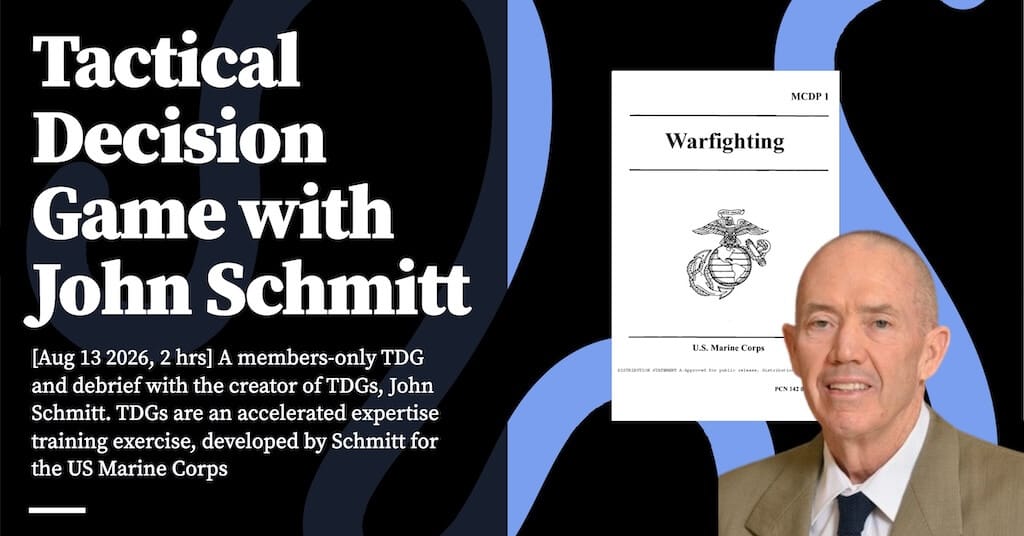
Tactical Decision Game with John Schmitt
Hacker News: Show HN

Show HN: Spur solver – Z3-backed model-finder solved values for coding agent

Hi guy, I am author of Spur , I want to share the Spur solver which is backed by z3 for neuro-symbolic reasoning, combining probabilistic language models with mathematical constraint solving The ideal here : LLM will give out constranst and translate the constranst to the z3 SMT language, then give out feedback loop between LLM model and neuro-symbolic reasoning to give out better reasioning looking for feedback and comments from HNs Thanks and best regards Kevin Comments URL: https://news.ycomb

Read source article
arXiv cs.AIResearch

FlowEvo: Self-Evolving Agents through the Co-Evolution of Workflows and Executable Skills

arXiv:2607.21596v1 Announce Type: new Abstract: Large language model agents increasingly solve complex tasks by constructing inference-time workflows that combine reasoning, tool use, and code execution. While such workflows enable flexible problem solving, the useful procedures discovered during execution are often transient: they help solve the current task but are not retained in a form that can systematically benefit future tasks. We present FlowEvo, a training-free framework that compiles s

Read source article
arXiv cs.AIResearch

Securing Multimodal AI through Internal Information Decomposition

arXiv:2607.21600v1 Announce Type: new Abstract: Multimodal large language models introduce attack surfaces absent in unimodal systems: adversaries can distribute malicious intent across modalities to evade unimodal safeguards. This motivates using cross-modal consistency as a detection signal rather than inspecting each modality in isolation. Our key observation is that benign inputs induce compatible predictive behavior from text-only and vision-only reasoning that stabilizes when fused, wherea

Read source article
arXiv cs.AIResearch

Transferable Latency Prediction for Fast LLM Screening on Heterogeneous Edge Devices

arXiv:2607.21602v1 Announce Type: new Abstract: Accurate latency prediction is critical for deploying large language models (LLMs) on heterogeneous edge devices, where inference latency is affected by model architecture, prompt behavior, runtime backend, hardware utilization, dynamic voltage and frequency scaling (DVFS), and thermal variation. This paper presents a runtime-aware latency prediction framework for deployment-oriented LLM selection. The framework represents each inference request as

Read source article
arXiv cs.AIResearch

AgentKVShift: Efficient KV Cache Reuse for Agentic Memory Systems

arXiv:2607.21604v1 Announce Type: new Abstract: Memory-augmented LLM agents maintain context across hundreds of interactions through agentic memory systems that actively curate retrieved content with LLM-generated metadata such as summaries, keywords, and tags. From an inference cost standpoint, every retrieval triggers a full re-encoding of these structured memory units into Key-Value (KV) states, which dominates prefill latency. Existing training-free KV reuse methods mitigate this by selectiv

Read source article
arXiv cs.AIResearch

TILT: Improving Compositional Generation in Diffusion Models with a Model-Intrinsic Reward

arXiv:2607.21606v1 Announce Type: new Abstract: Recent advances in powerful text-to-image generation models have made it increasingly important to develop test-time methods that modify the sampling trajectory to produce images more faithful to complex compositional prompts. We present TILT, a training-free framework for compositional text-to-image generation via test-time reward alignment. We interpret compositional failures as overlap modes between joint and single-concept distributions, and de

Read source article
arXiv cs.AIResearch

Spectral Flow Certificates for Depth-Aware Long-Range Propagation in Graph Neural Networks

arXiv:2607.21607v1 Announce Type: new Abstract: Graph Neural Networks propagate information through local message passing, but the graph topologies themselves can silently prevent any amount of training from solving long-range tasks. When we deploy GNNs on new graphs, there is currently no inexpensive way to know, before training begins, whether the graphs' structures will allow information to travel far enough between distant nodes. We address this gap by proposing Spectral Flow Certificates (S

Read source article
arXiv cs.AIResearch

Coupled Hierarchical Search over Topology and Execution for Agentic Workflow Synthesis

arXiv:2607.21609v1 Announce Type: new Abstract: Although structured workflows empower Large Language Models (LLMs) to tackle complex problems, automating their creation is severely hindered by a vast combinatorial search space, frequently resulting in inflexible and resource-heavy offline training dependencies. To address this, we conceptualize workflow generation as an intertwined topology-and-execution search paradigm, where the broader topological layer dictates subtask boundaries and lower-l

Read source article
arXiv cs.AIResearch

Procedural Knowledge Is Not Low-Rank: Why LoRA Fails to Internalize Multi-Step Procedures

arXiv:2607.21612v1 Announce Type: new Abstract: Parameter-efficient fine-tuning methods like LoRA have become the default for adapting large language models, succeeding across instruction following, style transfer, and factual adaptation. We show that for procedural knowledge--the ability to follow multi-step procedures with conditional branching through to terminal states--LoRA fails to match full fine-tuning at the ranks where it retains its efficiency advantage. In a systematic ablation (r =

Read source article
arXiv cs.AIResearch

The Hard Decision Layer: Evidence for Committed Inference in Transformers

arXiv:2607.21613v1 Announce Type: new Abstract: We investigate where and how transformer-based language models commit to predictions in multiple-choice question answering. We identify the _Hard Decision Layer_ (HDL), a natural architectural property where answer option rankings stabilize abruptly during inference. Empirical validation across four language models (Qwen, Llama, Granite, Mistral) and four benchmark datasets demonstrates consistent HDL emergence without learned routing policies. We

Read source article
arXiv cs.AIResearch

Household Movement Detection in Mixed-Format Occupancy Data Using LLM-Based Entity Resolution

arXiv:2607.21614v1 Announce Type: new Abstract: Entity resolution (ER) typically relies on pairwise similarity comparisons between records, which limits its ability to capture indirect relationships present in demographic occupancy data. An important indirect pattern arises from household movement, where multiple individuals relocate together across addresses, but detecting such patterns is difficult due to mixed-format records, noise, duplication, and the absence of stable identifiers. This pap

Read source article
arXiv cs.AIResearch

FrED: External Data Influence Estimation via Domain Knowledge Graph Grounding

arXiv:2607.21615v1 Announce Type: new Abstract: The rapid deployment of generative AI has amplified the critical need for Training Data Attribution to ensure transparency and accountability. However, current parametric approaches require computationally prohibitive access to model weights, while similarity-based methods ignore deep structural context. We propose a novel probabilistic framework that operates entirely in a black-box setting. Our method fuses continuous feature similarities with di

Read source article
arXiv cs.AIResearch

Lost in Context: Addressing Context Anxiety in Large Language Models

arXiv:2607.21616v1 Announce Type: new Abstract: Conventional wisdom suggests that reasoning models fail when problems exceed their capabilities. However, we find that frontier reasoning models sometimes possess the necessary capabilities to solve problems but fail due to premature self-doubt -- a phenomenon informally known as context anxiety. We provide the first systematic study of context anxiety, demonstrating that it arises, in part, from a model's inability to accurately estimate the token

Read source article
arXiv cs.AIResearch

LeafData: An Agentic System for Data Migration

arXiv:2607.21618v1 Announce Type: new Abstract: Modern data migration relies on JSON configuration to define data connection, pipeline logic, and orchestration behavior. This requires domain knowledge from users and is time-consuming and error-prone. In this paper, we present LeafData, an agentic system that converts user intent into validated and executable JSON configuration for data migration. Specifically, LeafData comprises a frontend chatbot and the backend service. The chatbot incremental

Read source article
arXiv cs.AIResearch

From Profiles to Steering Vectors: Global Sparse Priors and Local Semantic Calibration for Personalized Text Generation

arXiv:2607.21620v1 Announce Type: new Abstract: Personalized text generation requires models to capture user-specific writing styles from historical data. Existing approaches based on retrieval, parameter-efficient fine-tuning, or activation steering either introduce inference and storage overhead or struggle to separate stylistic signals from semantic content. We propose GLASS, a training-free framework for personalized generation via Global-Local Activation Steering with Sparse priors. GLASS u

Read source article
arXiv cs.AIResearch

FBLayout: Optimizing Memory Layout for Efficient LLM Finetuning on Mobile GPUs

arXiv:2607.21624v1 Announce Type: new Abstract: Transformer-based models have enabled unprecedented capabilities across language, vision, and multimodal tasks. On-device fine-tuning of transformer models offers a privacy-preserving path to personalized AI, yet remains inefficient on mobile GPUs due to severe memory constraints and frequent layout transformations in attention mechanism during training. Existing mobile training frameworks either use unified layouts for forward and backward passes

Read source article
arXiv cs.AIResearch

Trajectory-Aware Retrieval Agents for Temporal Decision- Making

arXiv:2607.21625v1 Announce Type: new Abstract: We study the problem of decision-making from long-form, temporally structured text using large language model (LLM) agents. Standard retrievalaugmented generation (RAG) pipelines fragment chronological context into isolated snippets, discarding the temporal structure that is often critical for correct downstream decisions. We introduce TLM (Trajectory Language Model), a closed-loop agentic framework that iteratively refines the evidence set using S

Read source article
arXiv cs.AIResearch

Discrete Action Space as a Prerequisite for GRPO Convergence in Small-Model Continuous Control

arXiv:2607.21626v1 Announce Type: new Abstract: We study whether Group Relative Policy Optimization (GRPO) can fine-tune small language models for simulated quadrotor continuous-control tasks. In our benchmark, vanilla GRPO fine-tuning of Qwen-0.5B for 25 Hz quadrotor velocity control collapses to the trivial zero action: 0 percent success rate, with entropy falling from 0.35 to 0.03 within 60 steps. Two ablations - removing the jerk-penalty term and removing the KL anchor to the pretrained prio

Read source article
arXiv cs.AIResearch

Do Modules Stay in Their Lane? Role Drift in Compound LLM Systems

arXiv:2607.21627v1 Announce Type: new Abstract: End-to-end reinforcement learning can improve the accuracy of compound LLM systems, but it does not constrain how modules divide labor internally. We identify Role Drift, a failure mode in which modules preserve or improve end-task performance while deviating from their assigned roles through role-violating shortcuts that remain invisible to system-level evaluation. To make role drift observable and controllable, we propose Role Anchor, a regulariz

Read source article
arXiv cs.AIResearch

Wavelet Phase Diffusion for Structurally and Semantically Consistent Sim-to-Real Translation

arXiv:2607.21628v1 Announce Type: new Abstract: Simulation-to-reality translation must bridge the appearance gap between synthetic and real domains while preserving structural and semantic consistency. Conditioning-based methods achieve spatial alignment but introduce computationally expensive control modules. Paired-data methods achieve realism but rely on complex synthesis pipelines, often altering scene geometry and semantics. Training-free editing methods avoid both constraints but lack a le

Read source article
arXiv cs.AIResearch

Defining AI-Native Systems: Autonomy as Revision Authority

arXiv:2607.21659v1 Announce Type: new Abstract: AI has begun to write systems code: agents now synthesize, verify, and deploy system components. Despite this shift, "AI-native" remains a marketing term with no precise technical definition. This paper gives it one. We define AI-nativeness along a single axis---authority over the system's own decisions rather than by the capability of the underlying AI models. Building on a decision-level model of a system, we distinguish occupancy (who executes a

Read source article
arXiv cs.CVResearch

Oxygen-TryOn: Fashion-Native Foundation Model for Any-item Virtual Try-On

arXiv:2607.21694v1 Announce Type: new Abstract: We present Oxygen-TryOn, a unified foundation model for any-item virtual try-on. Rather than repurposing a general-purpose image editor, Oxygen-TryOn is fashion-native, built for try-on through a dedicated data engine and try-on-specific training. Given one or more reference items (clean product shots or in-the-wild worn-on photos) and a single target subject image, it synthesizes a photorealistic image of the subject wearing the items across virtu

Read source article
arXiv cs.CVResearch

Risk-Routed Implicit Boundary Refinement for Robust Ultrasound Image Segmentation

arXiv:2607.21787v1 Announce Type: new Abstract: Medical ultrasound (US) image segmentation faces significant challenges due to speckle noise, low-contrast boundaries, acoustic shadowing, and acquisition variation across operators and clinical centers. Although encoder-decoder and transformer-based networks have achieved strong performance, many methods recover boundary details through dense decoders or larger backbones, which may still produce over-smoothed contours or unstable predictions under

Read source article
arXiv cs.CVResearch

What Happens to Accuracy When Photo Lineups Contain Non-Mated Rank-One Images From Large Galleries?

arXiv:2607.21792v1 Announce Type: new Abstract: One-to-many facial identification is commonly used to match a probe image from surveillance video against a gallery of driver's licenses and/or booking photos. The algorithm's rank-one image from the gallery, or a human examiner's selection from the algorithm's top-ranked images, may then be placed in a photo lineup shown to a witness. Witness selection of the gallery image in the photo lineup may then lead directly to the person in the gallery ima

Read source article
arXiv cs.CVResearch

Closing the Loop: Training-Free Revisit Consistency for Autoregressive Generative Rendering

arXiv:2607.21848v1 Announce Type: new Abstract: Recent conditional video generation models have shown promising potentials to transform 3D engine renderings, such as depth maps and untextured geometry, into photorealistic videos for gaming and immersive content creation. These applications require long-horizon auto-regressive generation that continuously synthesizes new frames while preserving a persistent 3D world. Auto-regressive generators synthesize video chunk by chunk with a bounded KV cac

Read source article
arXiv cs.CVResearch

Farmland Extent and Visible Boundary Mapping from 1 m NAIP Imagery Using Residual U-Net and Text-Prompted SAM 3 Refinement

arXiv:2607.21881v1 Announce Type: new Abstract: Agricultural field maps are often proprietary, incomplete, or outdated, yet they provide the spatial framework for crop monitoring, production accounting, and land-conversion analysis. This study presents a reproducible workflow for mapping farmland extent and visible boundaries from 1 m NAIP RGB imagery. Thirty-seven scenes spanning open cropland, peri-urban interfaces, semi-arid irrigation geometries, and fragmented mosaics were annotated in CVAT

Read source article
arXiv cs.CVResearch

Diffusion Models in Medical Image Inpainting: Challenges, Solution Taxonomy, and Future Directions

arXiv:2607.21904v1 Announce Type: new Abstract: Image inpainting aims to reconstruct missing or corrupted regions of an image while preserving as much as possible, visual and semantic consistency. In medical imaging, this task is particularly important because artifacts, missing information, and pathological alterations can compromise diagnostic reliability and downstream clinical applications. Recently, diffusion models have emerged as state-of-the-art generative approaches for medical image in

Read source article
arXiv cs.CVResearch

Rethinking Layer-Wise Information Allocation for Vision Foundation Model Adaptation

arXiv:2607.21973v1 Announce Type: new Abstract: Vision foundation models are increasingly reused as frozen backbones for downstream visual recognition, making parameter-efficient adaptation a central problem. Prompt-based adaptation, including Visual Prompt Tuning (VPT), provides a lightweight way to specialize these models, but its layer-wise behavior remains poorly understood: performance is sensitive to prompt depth, placement, and task distribution, and gains on standard in-domain benchmarks

Read source article
arXiv cs.CVResearch

Rethinking Multi-Branch and Cross-Backbone Fusion for Vehicle Re-Identification in the Foundation-Model Era

arXiv:2607.22068v1 Announce Type: new Abstract: Multi-branch architectures and CNN-Transformer fusion have long been regarded as effective ways to improve vehicle re-identification (Re-ID) by combining complementary representations. In this work, we revisit this assumption in the foundation-model era through a comprehensive empirical study. A single DINOv3-pretrained ConvNeXt trained with a tuned recipe achieves 88.19 mAP on VeRi-Wild Small and 77.47 mAP on VeRi-Wild Large using visual cues alon

Read source article
arXiv cs.CVResearch

ReCowGnition: A Realistic Biometric Benchmark for Cow Face Recognition

arXiv:2607.22071v1 Announce Type: new Abstract: With the development of precision livestock farming and the advances in computer vision, visual animal biometrics has gained attention. Using biometric technologies that have been proven effective for humans to identify livestock can increase animal welfare as well as production efficiency. However, challenges such as complex scenarios, similar appearances, occlusions, and non-cooperative behavior, as well as the limited amount of publicly availabl

Read source article
arXiv cs.CVResearch

CommandLM: Data driven behavior level descriptor for ego vehicles

arXiv:2607.22078v1 Announce Type: new Abstract: As autonomous driving systems move toward real-world deployment, interpretable, behavior-level decision-making is essential for safety, trust, and regulation. We introduce CommandLM, a multimodal large language model that generates concise, human-readable behavior descriptions for ego vehicles from fused multi-sensor data. Our model processes temporally fused bird's-eye view representations from LiDAR and multi-camera inputs via a Q-Former adapter

Read source article
arXiv cs.CVResearch

FAIR: Feature-Augmented Implicit Regularization for AI-generated Fake Image Detection

arXiv:2607.22087v1 Announce Type: new Abstract: Generalization remains a critical bottleneck in AI-generated image detection. Because many modern generators are proprietary or adversarially modified, existing detectors overfit to the low-level textural patterns of accessible training data, resulting in severe failures on unseen domains. Conventional regularization techniques (e.g., $L_1$/$L_2$ norms, Dropout) apply indiscriminate parametric constraints and fail to provide the domain-invariant st

Read source article
arXiv cs.CVResearch

Spectral Prior for Reducing Exposure Bias in Diffusion Models

arXiv:2607.22091v1 Announce Type: new Abstract: Diffusion models typically suffer from error accumulation during iterative sampling, commonly referred to as exposure bias. We reveal systematic frequency-dependent discrepancies between training and inference, which can be interpreted as frequency-dependent SNR error. Crucially, the direction of this mismatch varies across models and timesteps, indicating that fixed correction rules do not generalize. We propose Spectral Alignment (SPA), a lightwe

Read source article
arXiv cs.CVResearch

InnoText: A Unified Model for Visual Text Generation and Editing

arXiv:2607.22101v1 Announce Type: new Abstract: Diffusion models have recently achieved remarkable success in high-fidelity image synthesis, yet their application to visual text generation and editing remains relatively underexplored. Unlike general image generation, visual text tasks demand precise structural regularity and legibility, which may pose additional challenges for small-scale text and non-Latin scripts such as Chinese. Existing UNet-based models often struggle to produce clear and c

Read source article
arXiv cs.CVResearch

Projection Pursuit CPCANet for Domain Generalization

arXiv:2607.22117v1 Announce Type: new Abstract: Domain Generalization (DG) aims to learn representations robust to distribution shifts. Recent geometric alignment methods, such as CPCANet, extract domain-invariant structures through batch-wise Common Principal Component Analysis (CPCA). However, CPCANet suffers from rank-deficient covariance estimation due to the small-sample-size issue in mini-batch training. To address this limitation, we propose Projection Pursuit CPCANet (PP-CPCANet), a cova

Read source article
arXiv cs.CVResearch

JustDepth: Real-Time Radar-Camera Depth Estimation with Single-Scan LiDAR Supervision

arXiv:2607.22172v1 Announce Type: new Abstract: Accurate yet low-latency depth is essential for radar-camera perception in autonomous systems. Cameras provide rich appearance but lack metric scale, whereas automotive radar offers metric range but is sparse and noisy. Many pipelines are multi-stage or depend on auxiliary annotations, increasing latency and limiting portability. We introduce JustDepth, a single-stage radar-camera depth estimator trained only with radar, camera, and single-scan LiD

Read source article
arXiv cs.CVResearch

Bowel Obstruction Detection and Localization on Abdominal CT with Deep Learning

arXiv:2607.22173v1 Announce Type: new Abstract: Bowel obstruction is a common and potentially life-threatening gastrointestinal condition. In the face of rising diagnostic workloads, the automated diagnosis of bowel obstruction on CT scans supports radiologists by accelerating detection and improving patient outcomes. In this work, we propose a deep learning framework with a multi-task objective that jointly detects bowel obstruction and localizes its transition zone. Additionally, we extend the

Read source article
arXiv cs.CVResearch

Deep Convolutional Large-Margin $\ell_p$-SVDD for Visual Anomaly Detection

arXiv:2607.22212v1 Announce Type: new Abstract: Visual anomaly detection requires adaptive representations and reliable decision boundaries, particularly when anomalous training samples are scarce and class distributions are highly imbalanced. Classical kernel-based methods yield principled geometric decision regions but typically operate on fixed features, while deep detectors learn task-specific representations but often fail to provide an explicit margin-aware kernel boundary. In this study,

Read source article
arXiv cs.CVResearch

AgentHOI: Multi-Agent Reasoning for Human-Object-Interaction Video Generation via Implicit Representation Alignment

arXiv:2607.22241v1 Announce Type: new Abstract: Recent advances in video diffusion models have spurred interest in human-object interaction (HOI) video generation, which demands fine-grained control over interaction logic beyond single-subject animation. However, existing HOI methods rely heavily on explicit motion control, limiting scalability and generalization across diverse objects and interactions. In this study, we propose AgentHOI, a text-driven HOI video generation following a thinking-b

Read source article