
Read source article
All TopicsLLMs4945Robotics457Business2763Research11932Regulation128Tools1098Open Source144Security433Dev & Frontend237General Tech2116Newsletters252Video160
Eric Jang
Sovereign Arcade: Currency as High-Margin Infrastructure
This essay is about how the powerful want to become countries, and the implications of cryptocurrencies on the sovereignty of nations. I’m not an economics expert: please leave a comment if I have made any errors. Money allows goods, services, and everything else under the sun to be assigned a value using the same unit of measurement. Without money, society reverts to bartering , which is highly ineffi
Read source article

Blog on Text Analytics - Provalis Research
Why People Hoarded Toilet Paper at the Beginning of the Pandemic ?
A text analytics study of Twitter data using Wordstat 8 We have all heard the stories about people around the world stocking up on utilitarian goods such as toilet paper, soap, disinfectant, and other products at the beginning of the COVID-19 lockdown. News reports showing barren store shelves brought the situation home and created the […]
Read source article

Web Browser Engineering
Why Widgets?
We’re working interactive widgets to Web Browser Engineering to better explain the concepts and to make room for discoveries. But it’s not easy!
Read source article
Distill
Adversarial Reprogramming of Neural Cellular Automata
Reprogramming Neural CA to exhibit novel behaviour, using adversarial attacks.
Read source article
John Egan
The Startup Guide To Managing Your Email Reputation in 2025
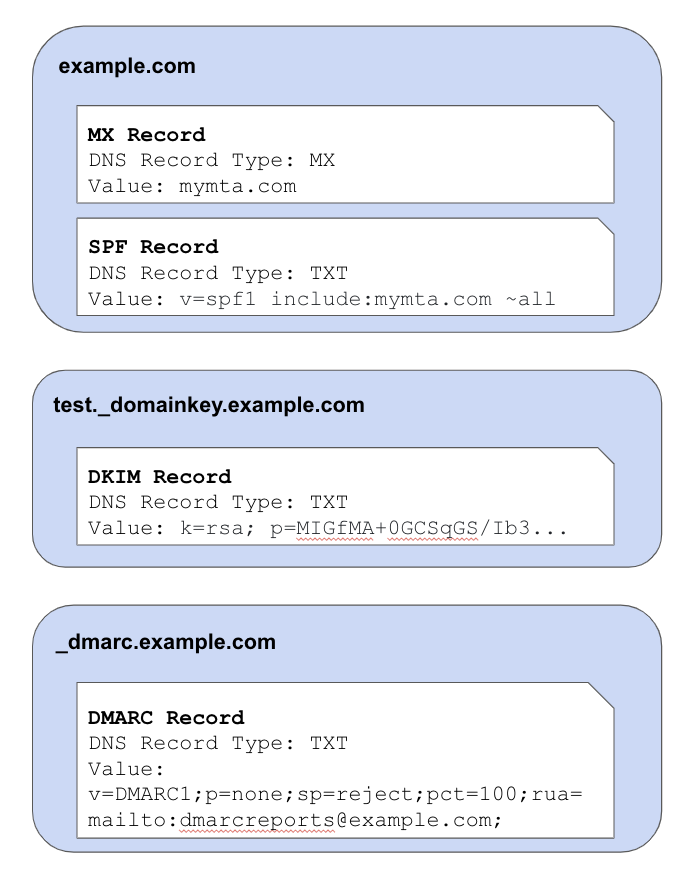
(and avoiding the spam folder) Email is a powerful engagement channel, even in the age of mobile and push notifications. However, if you’re a startup, setting up your email sending infrastructure and monitoring your reputation can be overwhelming and complicated. I’ve seen multiple startups that have struggled with email reputation issues and having their emails […] The post The Startup Guide To Managing Your Email Reputation in 2025 appeared first on John Egan .
Read source article
Jay Alammar
Explainable AI Cheat Sheet
Introducing the Explainable AI Cheat Sheet, your high-level guide to the set of tools and methods that helps humans understand AI/ML models and their predictions. I introduce the cheat sheet in this brief video:
Read source article
Web Browser Engineering
History of the Web
Today we’re releasing a new chapter on the History of the Web. The rest of the book is about how web browsers work, but this chapter is about why. It’s about the goals and motivations for the web and for web browsers, which shape the way they work.
Read source article
Next.js BlogDev & Frontend
Next.js 10.2
Next.js 10.2 introduces performance improvements (faster builds, refresh, and startup), improved accessibility, Automatic Webfont Optimization, and more!
Read source article
John Egan
Top 10 Mistakes In Running A Growth Team
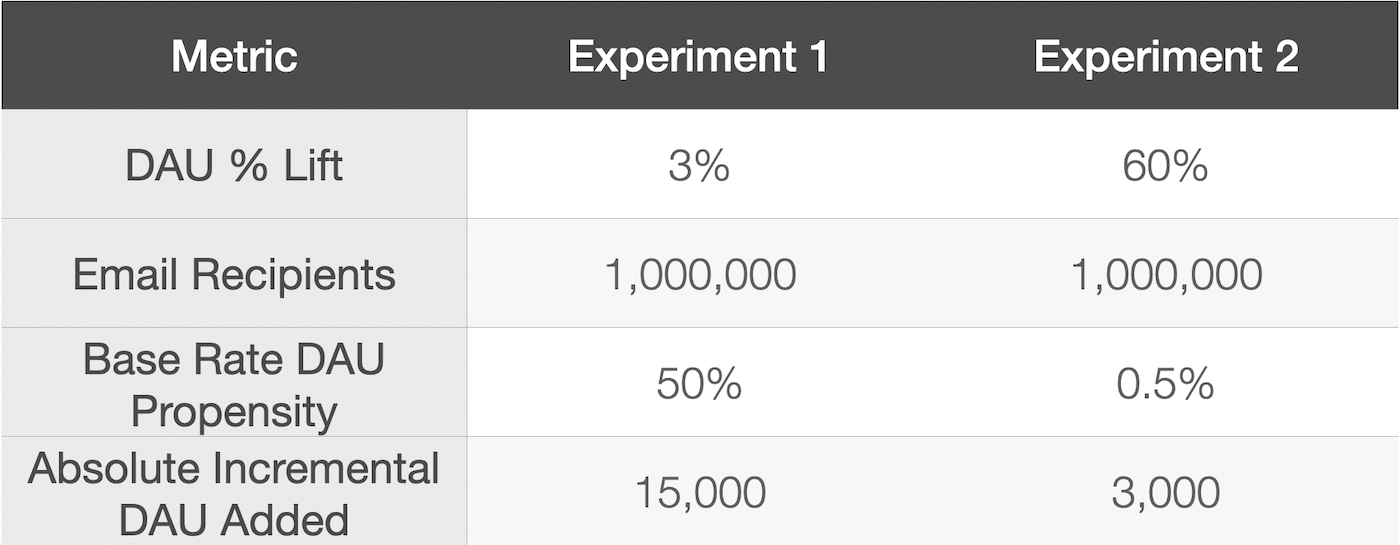
I’ve been working in Growth for 10 years now and I wanted to reflect on the top 10 mistakes I’ve seen teams make from either teams I worked on directly or mistakes I’ve seen from talking to Growth teams at other startups over the past 10 years. For each lesson I also linked to an […] The post Top 10 Mistakes In Running A Growth Team appeared first on John Egan .
Read source article
Martin Kleppmann's blog
It's time to say goodbye to the GPL
The trigger for this post is the reinstating of Richard Stallman, a very problematic character, to the board of the Free Software Foundation (FSF). I am appalled by this move, and join others in the call for his removal. This occasion has caused me to reevaluate the position of the...
Read source article
Distill
Weight Banding
Weights in the final layer of common visual models appear as horizontal bands. We investigate how and why.
Read source article
Web Browser Engineering
Laying Out Pages
We’re releasing Chapter 5. It introduces layout trees, the data structure at the center of layout. Building, laying out, and rendering layout trees is how every web page you view is rendered!
Read source article
Distill
Branch Specialization
When a neural network layer is divided into multiple branches, neurons self-organize into coherent groupings.
Read source article
Shopify Engineering - Shopify Engineering
Building Smarter Search Products: 3 Steps for Evaluating Search Algorithms
Read source article
Next.js BlogDev & Frontend
Next.js 10.1
Next.js 10.1 introduces 3x faster refresh, 58% smaller install size, 56% less dependencies, WebAssembly Image Optimization, improved next/image support, and more!
Read source article
John Egan
The 5 Rules Every Growth Team Should Follow for Effective Collaboration
In product-led Growth, some of the biggest opportunities can require working across product boundaries and partnering with other teams. When collaboration goes well it can deliver big unlocks, help build a seamless user experience, and avoid the trap of your product reflecting your org structure. Collaboration not done well can cause friction, contention, and put […] The post The 5 Rules Every Growth Team Should Follow for Effective Collaboration appeared first on John Egan .
Read source article
Read source article
Eric Jang
Science and Engineering for Learning Robots
.column-center-outer {width:125%} .left { width: 44%; float: left; } .right { width: 56%; float: left; margin-left: 3rem } .row { display: flex; margin-bottom: 3rem; } } .post-body img { border: none!important; box-shadow: none!important; /* Browser specific implementations */ -moz-box-shadow: none!important; -webkit-box-shadow: none!important; } <p&
Read source article

Web Browser Engineering
Browsers and the Web
The intro chapter is here! Now you get to find out why this book was worth writing, mostly in Chris’s words. Plus you’ll learn a few things about where the web came from and how the sausage is made.
Read source article
Distill
Multimodal Neurons in Artificial Neural Networks
We report the existence of multimodal neurons in artificial neural networks, similar to those found in the human brain.
Read source article
Martin Kleppmann's blog
Building the future of computing, with your help
For the last five or six years, since I bid goodbye to the startup scene and Silicon Valley, I have been increasingly working in public. I have written a book, given around 100 talks (many of which are available on YouTube), published over 20 research papers (all freely available from...
Read source article
Eric Jang
Don't Mess with Backprop: Doubts about Biologically Plausible Deep Learning
“Traducción a Español” Biologically Plausible Deep Learning (BPDL) is an active research field at the intersection of Neuroscience and Machine Learning, studying how we can train deep neural networks with a "learning ru
Read source article
Distill
Self-Organising Textures
Neural Cellular Automata learn to generate textures, exhibiting surprising properties.
Read source article
Blog on Text Analytics - Provalis Research
Literature Review of Published Papers on Covid-19 using a Text Analysis Software: QDA Miner or WordStat
Unfortunately, the Covid-19 pandemic has been with us now for more than a year and it is likely to remain in some form for many months to come. Researchers haven’t wasted anytime in looking into the impacts of the pandemic on many, many fields including health care, mental health, the news media, social media, […]
Read source article
Blog - Singularity Weblog
Nikola Danaylov @ Frankfurt AI Meetup
This is the video recording of my presentation and consequent Q&A at last week’s Frankfurt AI Meetup. It seems to have struck a chord with a few people and the feedback I got afterward has invigorated me to restart my efforts on ReWriting the Human Story. You can read most of the articles I used […]
Read source article
On GATE, Text and Social Media Analysis, and Detecting Misinformation Online
New releases bringing GATE and Python closer together
Release The GATE Team is proud to announce two new releases that bring GATE and Python together: Python GateNLP (version 1.0.2) : a Python 3 package that brings many of the concepts and the ease of handling documents, annotations and features to Python. GATE Pytho
Read source article
Distill
Visualizing Weights
We present techniques for visualizing, contextualizing, and understanding neural network weights.
Read source article
Web Browser Engineering
Constructing the Document Tree
Chapter 4 is out! It’s decked out with HTML parsing and error handling, and starts building out the core data structures of the browser. Plus, it has tips for leveraging implicit tags to make your HTML cleaner and simpler!
Read source article
Distill
Curve Circuits
Reverse engineering the curve detection algorithm from InceptionV1 and reimplementing it from scratch.
Read source article
Distill
High-Low Frequency Detectors
A family of early-vision neurons reacting to directional transitions from high to low spatial frequency.
Read source article
Eric Jang
How to Understand ML Papers Quickly
My ML mentees often ask me some variant of the question "how do you choose which papers to read from the deluge of publications flooding Arxiv every day?” The nice thing about reading most ML papers is that you can cut through the jargon by asking just five simple questions. I try to answer these questions as quickly a
Read source article
Blog on Text Analytics - Provalis Research
Workshop: Introduction to Content Analysis with WordStat
Provalis Research in collaboration with the Mixed Methods International Research Association – Caribbean Chapter (MMIRA-CC) will give a FREE 3-hour workshop on content analysis, a powerful deductive technique for text analysis. The workshop will be held online, Friday, February 26, from 12:00 pm to 3:00 pm Eastern Time. Content analysis approach allows analysts and researchers […]
Read source article
Jay Alammar
Finding the Words to Say: Hidden State Visualizations for Language Models
By visualizing the hidden state between a model's layers, we can get some clues as to the model's "thought process". Figure: Finding the words to say After a language model generates a sentence, we can visualize a view of how the model came by each word (column). Each row is a model layer. The value and color indicate the ranking of the output token at that layer. The darker the color, the higher the ranking. Layer 0 is at the top. Layer 47 is at the bottom. Model:GPT2-XL Part 2: Continuing the
Read source article
Martin Kleppmann's blog
Decentralised content moderation
Who is doing interesting work on decentralised content moderation? With Donald Trump suspended from Twitter and Facebook, and Parler kicked off AWS, there is renewed discussion about what sort of speech is acceptable online, and how it should be enforced. Let me say up front that I believe that these...
Read source article
Machine, Think!
The SEFR classifier
If you thought machine learning on mobile is already a bit of a stretch, how about machine learning on microcontrollers? Take the Arduino Uno . This has an 8-bit CPU running at 16 MHz, no real floating point support — it does not even have a division instruction — and only has 2KB of RAM. Is it even possible to do machine learning on these devices? The answer is yes , but you need to be smart about the al
Read source article
Vue Blog
Reflections for 2020-2021
With a new year upon us, we also have a new blog! In this post, we would like to take a look back at some of the highlights from 2020, as well as some ideas we have for 2021.
Read source article
Web Browser Engineering
Code Outlines
I’ve added a code outline tool to help you see the intermediate-level structure of a web browser. As Chris and I write more chapters, it’ll become more and more useful.
Read source article
Read source article
Svelte Blog
What’s new in Svelte: January 2021
<p>Happy new year from Svelte! In the last month we made progress on Sapper's upcoming release, fine-tuned our <code>SvelteComponent</code> typings, and have seen some amazing apps, sites, and libraries coming out in the showcase.</p> <h2 id="What's-changed-in-Svelte"><span>What's changed in Svelte?</span><a href="#What's-changed-in-Svelte" class="permalink" aria-label="permalink"></a></h2><p>A new minor release replaces the <code>SvelteComponent</code> class with a <code>SvelteComponentTyped</c
Read source article