
Distill
AI Safety Needs Social Scientists
If we want to train AI to do what humans want, we need to study humans.
Read source article
If we want to train AI to do what humans want, we need to study humans.
A recurring discussion in Overwatch (as well as other online games) is whether or not women are treated differently from men. If you do a quick search, you can find hundreds of discussions about this, some of which have well over a thousand comments. These discussions tend to go the same way and involve the same debate every time, with the same points being made on both sides. Just for example, <a href="https://www.reddit.com/r/Overwatch/comments/8hvmih/the_girl_problem_an_open_letter_to_the_
Some thoughts on the interesting <a href="https://openreview.net/forum?id=SkfMWhAqYQ">BagNet paper</a> (accepted at ICLR 2019) currently being circulated around the Machine Learning Twitter Community.<br /> <div> <br /> <div> Disclaimer: I wasn't a reviewer of this paper for ICLR. I think it was worthy of acceptance to the conference, and hope it prompts further investigation by the research community. Please feel free to email me if you spot any mistakes / misunderstandings in this post.<br />

There are tons of posts on how to set a Growth team up for success from a hiring perspective, process perspective, tooling perspective, etc. However, one of the most important things to get right is setting up what each team is goaled on. This is especially true as a Growth Org starts to scale with […] The post 5 Principles For Goaling Your Growth Team appeared first on John Egan .
This very special episode of Unsupervised Thinking takes place entirely at the IBRO-Simons Computational Neuroscience Imbizo in Cape Town, South Africa! <img aria-label="Efectos - Foto - Paisaje - 12 ene. 2019 18:00:59" class="SzDcob" height="356" src="https://lh3.googleusercontent.com/iclnBok5A32WaoGe40kyUUcfD16ZYrzgVAsl0KQJn_IBEkiLFfp5jOFmqkhIk89J8nbVsYqus3F8oWYGvuyFAnECty-K6PA-DrxCTp29KLpQDmNCM-gUIKunhISWpNxdHRElXjQJtspXgfjGiUqlrwMUHu
One question I often get asked by people starting out on growth is “what metrics should be in my growth dashboard?”. I’ve written before about what metrics we value at Pinterest. In this post however, I’ll give people a peek behind the scenes and share what our internal growth dashboard looks like. We have organized […] The post The 27 Metrics in Pinterest’s Internal Growth Dashboard appeared first on John Egan .

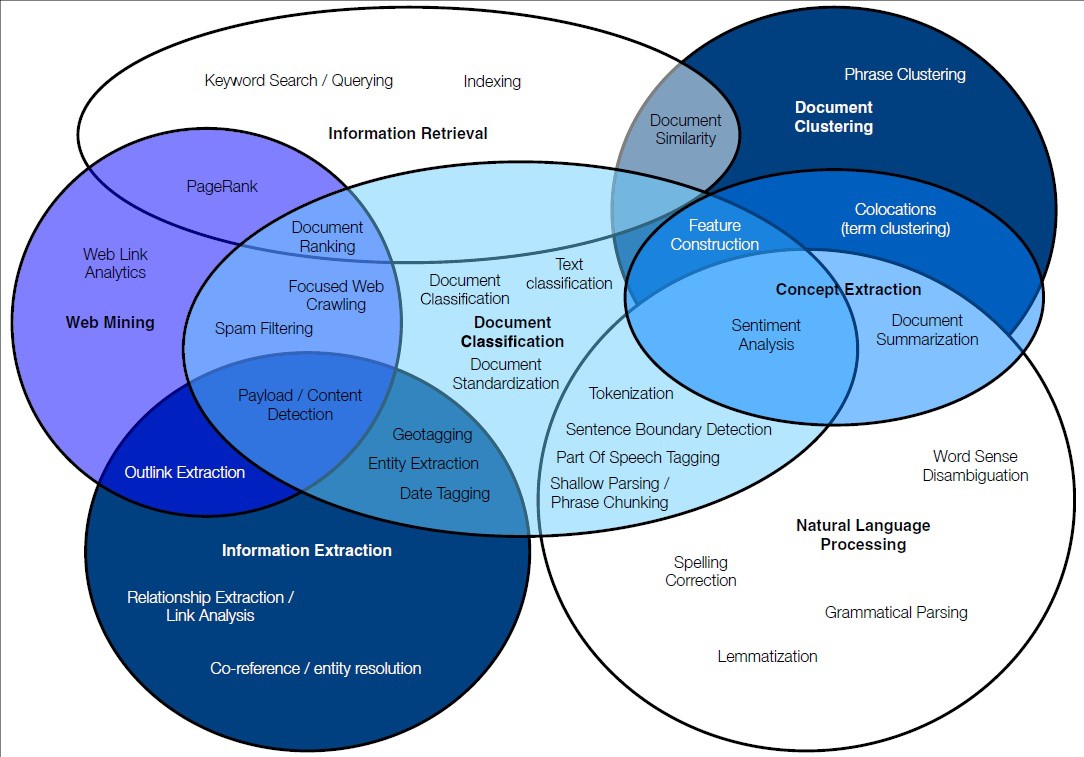
This blog focuses on Automatic Machine Learning Document Classification (AML-DC), which is part of the broader topic of Natural Language Processing (NLP)
The metrics typically advertised by startups are total users, daily active users (DAU), and monthly active users (MAU). While these numbers might be good to share with the press, they are only vanity metrics because they don’t give any real insight into your growth rate or the quality of the users you’re bringing in. Here are 4 […] The post 4 Metrics Every Growth Hacker Should Be Watching appeared first on John Egan .

A PDF version of this post can be found <a href="https://drive.google.com/open?id=1swsAR8q5nJMB1SE6cQBKHrA1tCAsU_EP">here</a>.<br /> <a href="https://www.jianshu.com/p/dc9128123afc">Chinese translation by Xiaoyi Yin</a><br /> <br /> Notions of <b>uncertainty </b>are tossed around in conversations around AI safety, risk management, portfolio optimization, scientific measurement, and insurance. Here are a few examples of colloquial use:<br /> <br /> <div> <ul> <li>"We want machine learning models

In the past few years, we've noticed researchers making more explicit efforts to engage with scientists in other countries, particularly those where science isn't well-represented. Inspired by these efforts, we took a historical dive into the international element of science with special guest Alex Antrobus . How have scientists viewed and communicated with their peers in other countries over time? To what extent do nationalist politics in
This blog post is a lightly edited chapter from my book Core ML Survival Guide . If you’re interested in adding Core ML to your app, or you’re running into trouble getting your model to work, then check out the book . It’s filled with tips and tricks to help you make the most of the Core ML and Vision frameworks. You can find the source code for this blog post in the <a
Provalis Research is holding a three-day training workshop for QDA Miner 5 and WordStat 8 in Chicago, IL. The training will be held from January 31 to February 2, 2019, at Elmhurst College Campus: 190 S Prospect Ave, Elmhurst, IL 60126, USA. Click here for a detailed description of the workshop. Each participant is required to bring his/her own laptop computer. The […]
A periodically-updated list of my favorite Deep Learning memes. Enjoy!<br /> <br /> content warning: may contain crude humor.<div><br /></div><div class="separator" style="clear: both; text-align: center;"><a href="https://blogger.googleusercontent.com/img/b/R29vZ2xl/AVvXsEh978w2dqgMioBTNc_qfSwyPbNWjre9MxjJ5jxDODc9zBL28Os0zVLm7Sh66jU3Xsy6EBqxW8kjtlZtKIEWRNDOn2ioKqIRkQ_RF8QhU-ooM10ajpEp0KZlZJHo-aRLHVxqZO9l4vgPHnk/s675/E3OEwuMWUAwfU1I.jpg" imageanchor="1" style="margin-left: 1em; margin-right: 1em

Cerebellum literally means "little brain," and in a way, it has been treated as a second-class citizen in neuroscience for awhile. In this episode we describe the traditional view of the cerebellum as a circuit for motor control and associative learning and how its more cognitive roles have been overlooked. First we talk about the beautiful architecture of the cerebellum and the functions of its different cell types, including the benefits of diversity. We then discuss the evidence for no
Reinforcement learning is important for understanding behavior because it tells us how actions are guided by reward. But the topic also has a broader significance---as an example of the happy marriage that can come from blending computer science, psychology and neuroscience. In this way, RL is a poster child for what's known as Marr's levels analysis, an approach to understanding computation that essentially asks why, how, and where. On this episode we first define some of the basic terms of rei
Microsoft is privileged to work with leading-edge customers and partners who are...

Welcome to How AI Transforms Business, a new series featuring insights from conversations with...

This post is authored by Anusua Trivedi, Senior Data Scientist at Microsoft. This post builds on...

A special guest post by cricket legend and founder of Spektacom Technologies, Anil Kumble. This post...

Announcing new open source contributions to the Apache Spark community for creating deep,...

This post is authored by Tara Shankar Jana, Senior Technical Product Marketing Manager at...


By Joseph Sirosh, Corporate Vice President and CTO of AI, and Sumit Gulwani, Partner Research...

In part two of our conversation on what counts as an explanation in science, we pickup with special guest David Barack giving his thoughts on the "model–mechanism–mapping" criteria for explanation. This leads us into a lengthy discussion on explanatory versus phenomenological (or "descriptive") models. We ask if there truly is a distinction between these model classes or if a sufficiently good descript
Based on a recent conversation between Joseph Sirosh, CTO for AI at Microsoft, and Roger Magoulas,...
![This New [AI] Software Constantly Improves – and that Makes all the Difference](https://msdnshared.blob.core.windows.net/media/2018/09/092118_2122_Traditional1.png)
This post is co-authored by Chun Ming Chin, Technical Program Manager, and Max Kaznady, Senior Data...

Earlier this week, MIT, in collaboration with Boston Consulting Group, released their second global...

As scientists, we throw around words like "explanation" a lot. We assume explaining stuff is part of what we're doing when we make and synthesize discoveries. But what does it actually take for something to be an explanation? Can a theory or model be successful without truly being one? How do these questions play out in computational neuroscience specifically? We bring in philosopher-neuroscientist David B
Since biological neural network are not feedforward but connect in both forward and backward directions, they have a different structure from ANNs (artificial neural networks)

Machine learning has been making big strides in a lot of straightforward tasks, such as taking an image and labeling the objects in it. But what if you want an algorithm that can, for example, generate an image of an object? That's a much vaguer and more difficult request. And it's where generative models come in! We discuss the motivation for making generative models (in addition to making cool images) and how they help us understand the core components of our data. We also get into the
A powerful, under-explored tool for neural network visualizations and art.
Because of the sheer number of neurons in the gut, the enteric nervous system is sometimes called the second brain. What're all those neurons doing down there? And what, or who, is controlling them? Science has recently revealed that the incredibly large population of microorganisms in the gut have a lot to say to the brain, by acting on these neurons and other mechanisms, and can impact everything from stress to obesity to autism. In this episode, we give the basic stats and facts about the ent
Today, OpenAI released a new result . We used PPO (Proximal Policy Optimization), a general reinforcement learning algorithm invented by OpenAI, to train a team of 5 agents to play Dota and beat semi-pros. This is the game that to me feels closest to the real world and complex decision making (combining strategy, tactics, coordinating, and real-time action) of any game AI had made real progress against so far. The agents we train consistently outperform two-week old agents with a win rate of 90-