
Distill
Visualizing Neural Networks with the Grand Tour
By focusing on linear dimensionality reduction, we show how to visualize many dynamic phenomena in neural networks.
Read source article
By focusing on linear dimensionality reduction, we show how to visualize many dynamic phenomena in neural networks.
I’m trying to fund startups/projects helping with COVID-19, because it’s basically the one thing I know how to do that can help. I think we will soon have enough testing capacity, so now I’d like to start funding more startups working on: Producing a lot of ventilators or masks/gowns very quickly. This will require a lot of repurposing and creativity but thankfully is an engineering problem not a scientific ones. Screening existing drugs for effectiveness. Novel approaches to vaccines (i.e., not
I have been using the qualitative data analysis software QDA Miner since 2015. I used it multiple times for my doctoral research in global public health. It was very useful for coding my interview transcriptions and a variety of policy documents related to my PhD research topic. In addition, thanks to the handy “Code […]

I've been comparing notes with people who run corporate engineering blogs and one thing that I think is curious is that it's pretty common for my personal blog to get more traffic than the entire corp eng blog for a company with a nine to ten figure valuation and it's not uncommon for my blog to get an order of magnitude more traffic. I think this is odd because tech companies in that class often have hundreds to thousands of employees. They're overwhelmingly likely to be better equipp
What can we learn if we invest heavily in reverse engineering a single neural network?
By studying the connections between neurons, we can find meaningful algorithms in the weights of neural networks.
Although I still hope things will go differently, the experts I’ve spoken to think we are likely to face a global tragedy—hundreds of thousands of deaths from Covid-19. I hope that society views this as a warning for the future. Covid-19 is bad, but only a warm-up. I think it’s unlikely that this is the worst new pandemic (human-created or otherwise) we’ll see in our lifetimes. We need to be ready to deal with it much better next time. In the meantime, young healthy people should try to avoid ge
My hobby : opening up McIlroy’s UNIX philosophy on one monitor while reading manpages on the other. The first of McIlroy's dicta is often paraphrased as "do one thing and do it well", which is shortened from "Make each program do one thing well. To do a new job, build afresh rather than complicate old programs by adding new 'features.'" McIlroy's
The most counterintuitive secret about startups is that it’s often easier to succeed with a hard startup than an easy one. A hard startup requires a lot more money, time, coordination, or technological development than most startups. A good hard startup is one that will be valuable if it works (not all hard problems are worth solving!). I remember when Instagram started to get really popular—it felt like you couldn’t go a day without hearing about another photo sharing startup. That year, probab
<span id="docs-internal-guid-fa23b435-7fff-4c7b-3f71-6b92bffc9165" style="font-we
As of mid-2019, Dropbox announced that they no longer support symlinks that point outside of the main Dropbox folder. In this tutorial, we show a workaround on Linux that enables us to store in Dropbox any file, even if it is not located within the main Dropbox folder. What is the limitation and why it’s […]
If you read any personal finance forums late last year, there's a decent chance you ran across a question from someone who was desperately trying to lose money before the end of the year. There are a number of ways someone could do this; one commonly suggested scheme was to buy put options that were expected to expire worthless , allowing the buyer to (probably) take a loss. One reason people were looking for ways to lose money was
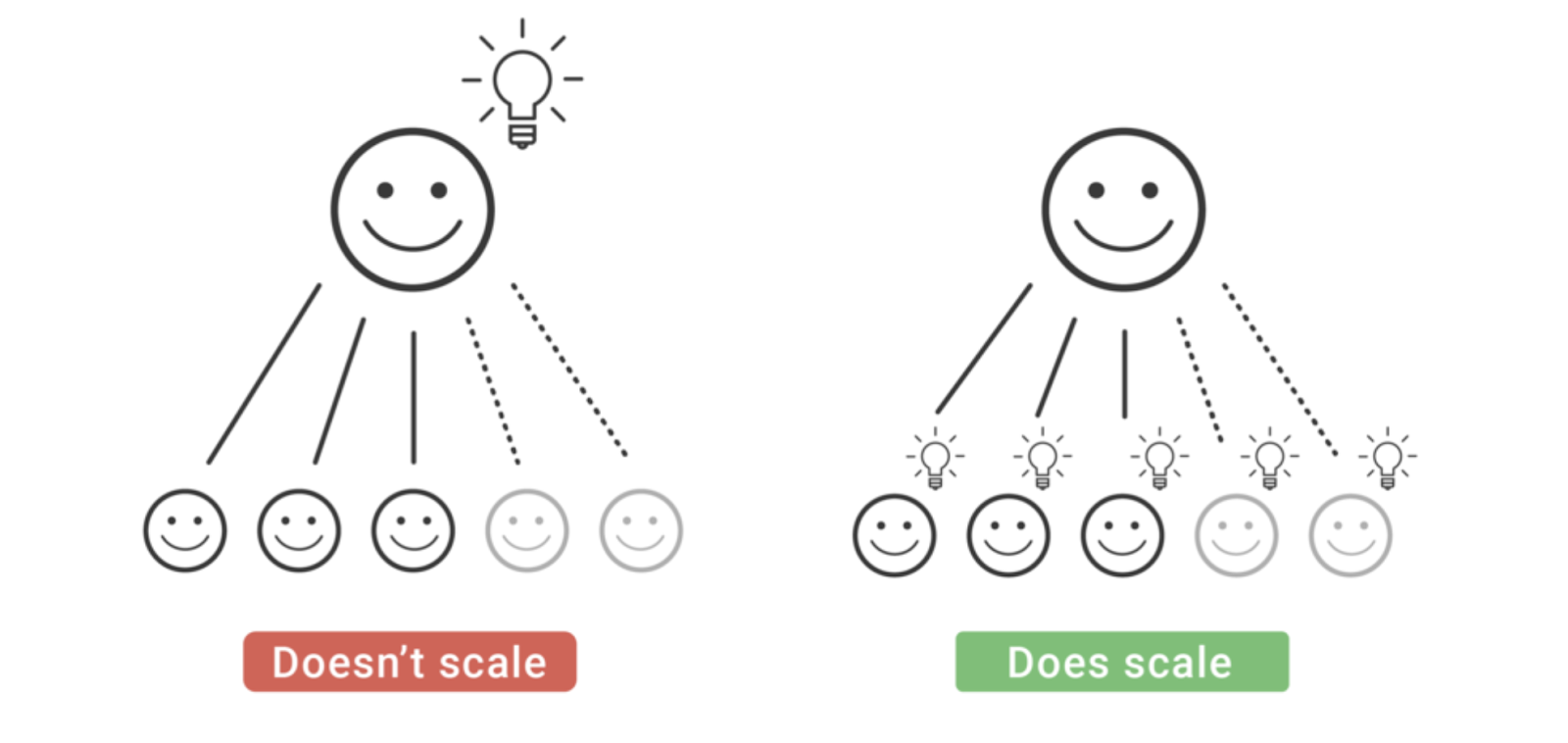
Written by Jeff Chang & John Egan Growth teams need to be organized bottom-up to scale well The Pinterest Growth team has over 100 members, and we’ve run thousands of experiments over the years. It’s difficult to run that many experiments and still maintain a high success rate over time. We’ve found the traditional growth […] The post How Pinterest Supercharged its Growth Team With Experiment Idea Review appeared first on John Egan .
Training an end-to-end differentiable, self-organising cellular automata model of morphogenesis, able to both grow and regenerate specific patterns.
Reaching 95%-ile isn't very impressive because it's not that hard to do. I think this is one of my most ridiculable ideas. It doesn't help that, when stated nakedly, that sounds elitist. But I think it's just the opposite: most people can become (relatively) good at most things. Note that when I say 95%-ile, I mean 95%-ile among people who participate, not all people (for many activities, just doing it at all makes you 99%-ile or above across all people). I'm also not referring to 95%-
Resizing feature maps is a common operation in many neural networks, especially those that perform some kind of image segmentation task. One issue I ran into recently while converting a neura
As some listeners may know, UST co-host Grace Lindsay is writing a book. That book---a popular science take on the science, history, and philosophy of many different topics in computational neuroscience---is very nearly due to the publisher. As a result, time for podcasting (or really anything other than book writing...) is rapidly disappearing! So until further notice, there will be no new episodes of Unsupervised Thi

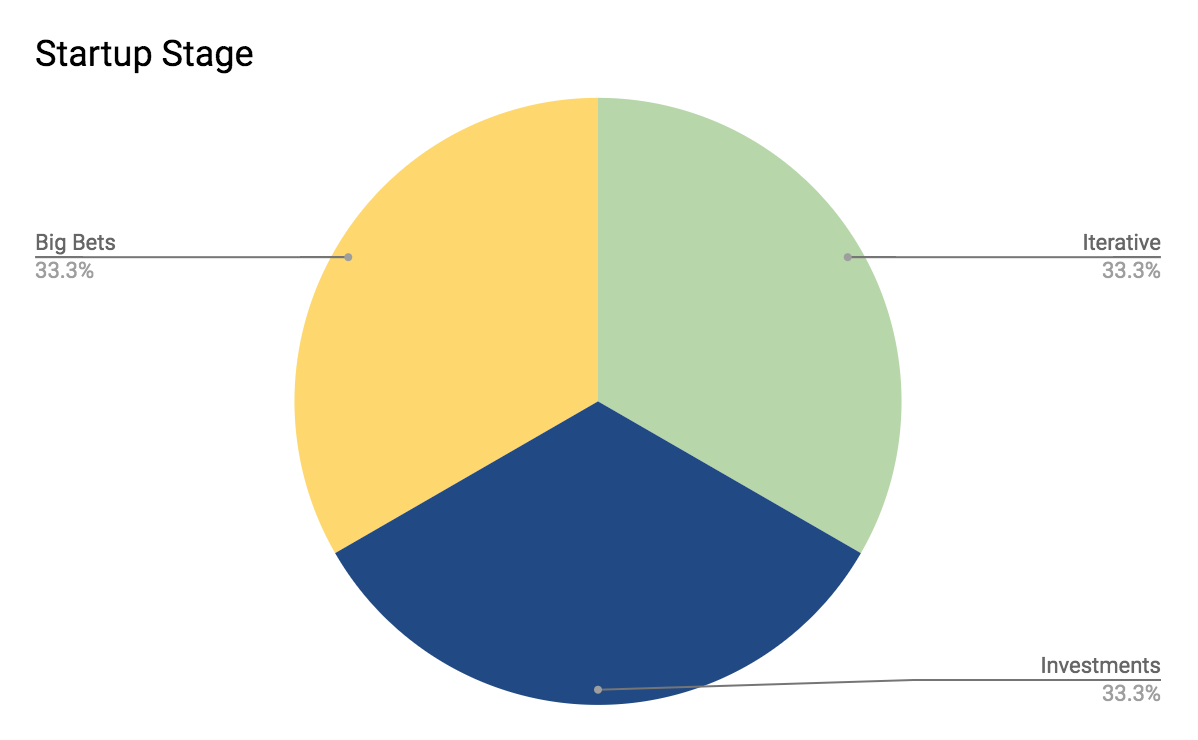
Managing a Growth team in many ways can be like managing an investment portfolio. Each individual experiment or project is an investment and the goal is to maximize the long-term return (i.e. impact) of your portfolio. Having worked in Growth for almost 10 years I’ve seen how the portfolio of a Growth team can evolve […] The post Managing Your Growth Team’s Portfolio: A Step-by-Step Guide appeared first on John Egan .
Exploring the baseline input hyperparameter, and how it impacts interpretations of neural network behavior.
Next.js 9.1.7 improves upon a solid foundation, improving the enterprise-ready 9.1 release-channel. Upgrade for smaller client-side JavaScript bundles, redesigned CLI output, faster FCP/TTI, and more!
When I ask people at trendy big tech companies why algorithms quizzes are mandatory, the most common answer I get is something like "we have so much scale, we can't afford to have someone accidentally write an O(n^2) algorithm and bring the site down" 1 . One thing I find funny about this is, even though a decent fraction of the value I've provided for companies has been solving phone-screen level algor
In 1984, a panel at the AAAI conference discussed whether the field was approaching an "AI Winter" . Mitch Waldrop wrote a transcript of the discussion , and much of it reads exactly like something written 35 years into the future.<br />
To some neuroscientists, the brain exists to produce movement and everything else it does should be understood in light of this goal. On this episode, we talk about these "motor chauvinists" and the broader topic of how motor control is studied in neuroscience and artificial intelligence. First we briefly discuss the tangled anatomy of motor control in animals. Then we get into how artificial motor control is done, including optimal feedback control, reinforcement learning, and the six core prin
I see the following questions come up a lot on Stack Overflow, the Apple developer forums, and various Slack groups: My neural network works on images but the Core ML model expects an MLMultiArray object. How do I convert my UIImage to an MLMultiArray? My neural network outputs an MLMultiArray but how do I convert this back into a UIImage? My model outputs an image but the UIImage is all black. People run into these issues because most tr
For the last couple of months, Prashanth Chandrasekar has been getting settled in as the new CEO of Stack Overflow. I’m still going on some customer calls… Read more "So, how’s that retirement thing going, anyway?"

In this series of blog posts we’re taking a deep dive into the new on-device model personalization features from Core ML 3. I’ll show how to create a customizable image classifier using k-Nearest Neighbors as well as a deep neural network, right from inside an iOS app. This is the last part of a four-part series: Introduction to on-device training <a href="https://machinethink.net/b
You can download a PDF (typset in LaTeX) of this blog post here . Jupyter Notebook Code on GitHub: https://github.com/ericjang/pt-jax</

Over the weekend I was reading Combine: Asynchronous Programming with Swift from my friends at raywenderlich.com when it occured on me that Combine and Core ML might make a nice couple. Combine lets you build reactive event processing chains . Doing inference with a Core ML model can be one of the stages in such a chain, as this is nothing more than another data transforma

DISCLAIMER: NO INVESTMENT OR LEGAL ADVICE The Content is for informational purposes only, you should not construe any such information or other material as legal, tax, investment, financial, or other advice. Investing involves risk, please consult a financial professional before making an investment. Robinhood is a zero-commission brokerage that was founded in 2013. It ha
As part of our work tracking Twitter abuse towards MPs and candidates going into the December 12th general election I've been updating our
Detailed derivations and open-source code to analyze the receptive fields of convnets.
Most neuroscience research takes place in a full, live animal. But brain organoids are different. Brain organoids are three-dimensional blobs of brain grown from human stem cells and they offer novel access to the study of human brain development. On this episode we go beyond our computational comfort zone to talk about the history of stem cells, the potion of chemicals needed to get these little blobs to grow, and the extent to which they mimic features of the human brain when they do. We also