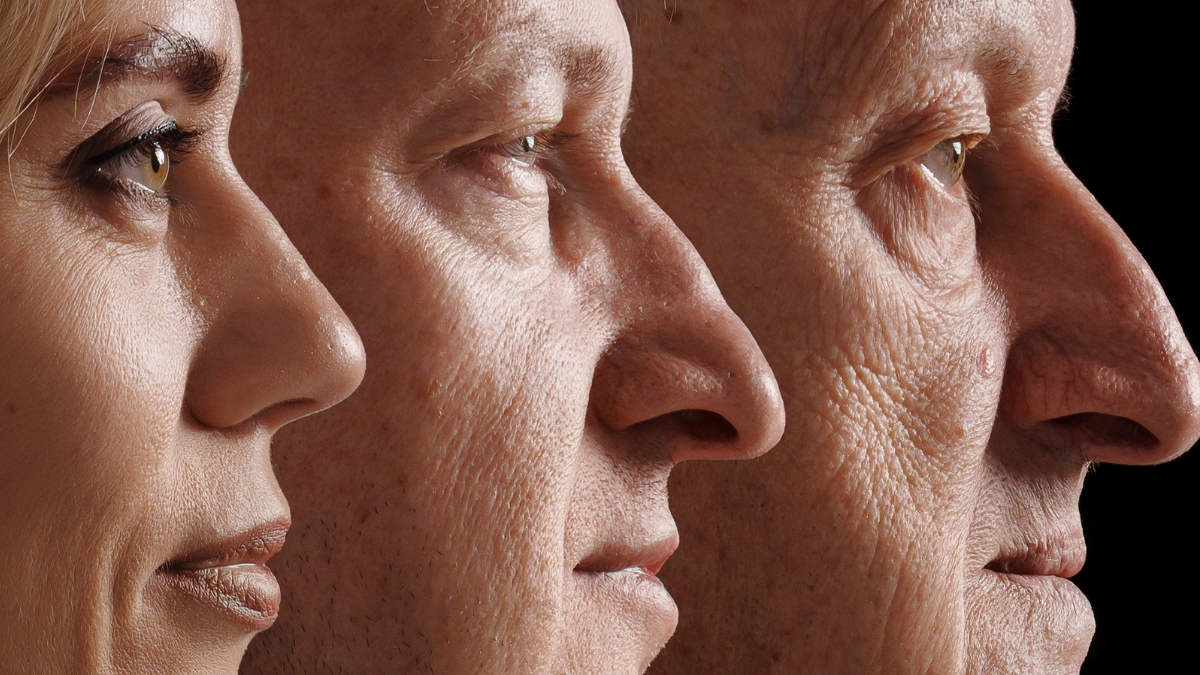
Younger Adults May Be Aging Faster Than Previous Generations
This could explain a worrying trend. ScienceAlert stories are written, fact-checked, and edited by humans, never generated by AI. Don't miss a story, subscribe here.

This could explain a worrying trend. ScienceAlert stories are written, fact-checked, and edited by humans, never generated by AI. Don't miss a story, subscribe here.

Article URL: https://github.com/swiftsellai-ssa/sticky/releases/tag/v1.0.0 Comments URL: https://news.ycombinator.com/item?id=48656277 Points: 2 # Comments: 0
Measuring AI search like SEO? Learn what to track instead: visibility, recommendations, bot access, citations, and off-site signals that drive real value
Article URL: https://github.com/SaravananJaichandar/world-model-mcp Comments URL: https://news.ycombinator.com/item?id=48656153 Points: 2 # Comments: 0
Article URL: https://github.com/cisco-ai-defense/skill-scanner Comments URL: https://news.ycombinator.com/item?id=48656076 Points: 3 # Comments: 0
TechCrunch's StrictlyVC evening in Los Angeles late last week brought together two of the more straight-talking investors working in AI right now. They were as entertaining as they were illuminating.
OpenAI and Broadcom introduce Jalapeño, a custom AI chip built for LLM inference to improve performance, efficiency, and scale across AI systems.
Article URL: https://supercomputing-system-ai-lab.github.io/projects/voltana/ Comments URL: https://news.ycombinator.com/item?id=48655520 Points: 2 # Comments: 0
<p> AI swim coach with Apple Watch tracking & smart workouts </p> <p> <a href="https://www.producthunt.com/products/swimio?utm_campaign=producthunt-atom-posts-feed&utm_medium=rss-feed&utm_source=producthunt-atom-posts-feed">Discussion</a> | <a href="https://www.producthunt.com/r/p/1179668?app_id=339">Link</a> </p>
Article URL: https://forkai.in Comments URL: https://news.ycombinator.com/item?id=48655438 Points: 1 # Comments: 0
<p>When workers had cameras attached to them, they found it funny at first. But novelty soon turned to concern</p><p></p><p>The first time the factory supervisors handed garment worker Lalita* a head-mounted camera, she burst out laughing. “The way people mount a CCTV camera on a wall, they mounted one on us,” she says.</p><p>The 32-year-old had been working at the garment factory on the outskirts of Delhi for nearly a year when management asked workers on her line to strap small cameras to thei

Article URL: https://www.darktable.org/2026/06/meet-darktable-5.6-ai-tools/ Comments URL: https://news.ycombinator.com/item?id=48655147 Points: 1 # Comments: 0
Comments URL: https://news.ycombinator.com/item?id=48655137 Points: 2 # Comments: 2
Article URL: https://github.com/VeilusDigital/PhantomChatCrypto Comments URL: https://news.ycombinator.com/item?id=48655037 Points: 1 # Comments: 0
When AI generates code, I first instruct the model to find, fix, and verify any issues. After that, I start the server and test whether it actually works from the user’s perspective. What I’m looking for is a workflow where issues are received, fixed, tested, and deployed—but it seems that current AI agents aren’t very good at performing browser tests from the user’s perspective. I’ve tried using the built-in browsers in Codex and Cursor, but they often only checked whether the page loaded. In t
Article URL: https://github.com/mukul975/Anthropic-Cybersecurity-Skills Comments URL: https://news.ycombinator.com/item?id=48654971 Points: 3 # Comments: 0
<p>Check this out: how I Stopped Overpaying For AI Models (And You Can Too)</p> <p>honestly, I gotta say... I'm pretty bad at math when it comes to my own money. I was burning through cash on AI infrastructure like it was going out of style before I finally sat down and did the math. And what I found kinda pissed me off, because I've been overpaying for MONTHS.</p> <p>This is the post I wish someone had written for me six months ago. Its basically my whole journey of comparing every open source
<pre style='white-space:pre-wrap;width:81ex'>fix(agents): run heartbeat_prompt_contribution on harness prompt builds (#96233) * fix(agents): run heartbeat_prompt_contribution on harness prompt builds Harness runtimes (e.g. the Codex app-server) assemble the prompt through resolveAgentHarnessBeforePromptBuildResult rather than the embedded runner's resolvePromptBuildHookResult. The harness helper ran before_prompt_build and before_agent_start but never invoked heartbeat_prompt_contribution, so th
arXiv:2606.23927v1 Announce Type: new Abstract: Agentic AI systems powered by large language models (LLMs) are rapidly evolving into autonomous decision-making systems, exposing attack vectors beyond those of traditional LLM vulnerabilities. Existing security evaluations are often tied to specific implementations or domains, limiting unified comparison across heterogeneous systems. To address this gap, we introduce RIFT-Bench, a graph representation-driven methodology for dynamic red-teaming tha
arXiv:2606.23991v1 Announce Type: new Abstract: What is an agent? What constitutes agency? With the rise of Large Language Model (LLM) systems marketed as ``coding agents'', ``AI co-scientists'', and other ``agentic" tools that promise to drive up productivity, and at the same time, ``existential" concerns such as AI escaping human control with destructive power under a speculative ``machine agency" against humans, it has become essential to clarify where automation ends and agency begins, both
arXiv:2606.24010v1 Announce Type: new Abstract: Multi-agent systems are widely used in safety-critical applications that require coordinated behavior under strict safety constraints. Existing approaches face a fundamental trade-off: learning-based methods achieve strong empirical performance but lack theoretical safety guarantees, while control-theoretic methods enforce safety but often lead to overly conservative and inefficient behaviors. We propose a hierarchical multi-agent reinforcement lea
arXiv:2606.24014v1 Announce Type: new Abstract: As AI systems are deployed across increasingly diverse and high-stakes settings, model alignment must generalize beyond the tasks and domains seen during training. This is especially important for reinforcement learning (RL), which can introduce unexpected misalignment through reward hacking, deception, or other unintended strategies. We study whether RL on beneficial behavior, instantiated in realistic domains, can produce broad and persistent ali
arXiv:2606.24026v1 Announce Type: new Abstract: Mechanistic interpretability has made substantial progress in automatically localizing circuits, but explaining what localized components do remains labor-intensive and difficult to standardize. In this work, we study whether language model (LM) agents can assist with this explanation problem once a circuit has already been identified. We introduce AgenticInterpBench, a benchmark for circuit explanation built from 84 semi-synthetic transformer circ
arXiv:2606.24047v1 Announce Type: new Abstract: One of the significant mental health issues affecting female sex workers (FSWs) is mental disorders, especially depression. Exposure to violence, stigma, and economic hardship further increases their psychological risk. Current machine learning (ML) models are typically ineffective at capturing the high-dimensional and complex risk patterns that exist in this marginalized group. This paper suggests a hybrid predictive model that merges an ensemble
arXiv:2606.24064v1 Announce Type: new Abstract: Distilling reasoning capabilities from strong to weak language models typically involves imitating specific solution trajectories, effectively transferring what to answer rather than how to reason. This trajectory-level imitation encourages memorization of instance-specific steps rather than acquisition of transferable problem-solving skills, limiting generalization to novel problems. We propose Strategy-Guided Policy Optimization (SGPO), which rep
arXiv:2606.24099v1 Announce Type: new Abstract: Algorithms have become central to scientific research in the era of artificial intelligence (AI). Although algorithm mentions in papers are often used to indicate popularity and influence, existing studies usually evaluate individual algorithms in isolation and pay limited attention to the collective influence formed through their interconnections. This study constructs large-scale algorithm co-occurrence networks in natural language processing (NL
arXiv:2606.24112v1 Announce Type: new Abstract: Multimodal misinformation detection is increasingly important because viral posts now combine long multilingual narratives, several images, mixed provenance, and subtle text--image framing errors. Existing benchmarks and methods remain poorly matched to this setting: they usually isolate short captions, single images, binary labels, or one manipulation source, while agentic verification remains costly under realistic evidence search. We present ReM
arXiv:2606.24124v1 Announce Type: new Abstract: Multi-step reasoning with Chain-of-Thought (CoT) prompting remains fragile: logical errors or hallucinations in early steps silently propagate, producing confident but incorrect conclusions. This paper presents VeryTrace, a zero-shot verification-and-repair framework that formalizes natural-language reasoning traces into a structured, compilable representation. VeryTrace introduces a Domain-Specific Language (DSL) that (i) makes step dependencies e
arXiv:2606.24129v1 Announce Type: new Abstract: For a wheelchair user, a standard blue line on a map is often a broken promise. While platforms like OpenStreetMap (OSM) successfully capture where a path is, they frequently fail to convey how it physically feels to travel on it. This information barrier is problematic for wheelchair users. To solve this issue, we present OmniPath, a system that moves from passive mapping to proactive environmental auditing. Our framework fuses the network topolog
arXiv:2606.24145v1 Announce Type: new Abstract: Large language models (LLMs) can produce clinically fluent recommendations for type 2 diabetes while failing to satisfy guideline constraints or explicitly justify lifestyle-related glycemic claims. We present T2D-Bench, a reproducible benchmark and evidence-gated evaluation framework for testing whether LLM outputs satisfy explicit, graph-checkable evidence requirements. T2D-Bench is built on a multi-layer clinical-lifestyle knowledge graph that c
arXiv:2606.24157v1 Announce Type: new Abstract: The space $\mathcal{P}_2(\mathbb{R}^d$) of probability measures with finite second moment carries a natural geometry: the quadratic Wasserstein distance W_2 makes it a complete metric space and, following Otto, a (formal) Riemannian manifold whose geodesics are the optimal-transport interpolations. On this manifold, the gradient flow of the free energy F(rho) = KL(rho || \pi) is exactly the Fokker-Planck equation, and its implicit-Euler discretizat
arXiv:2606.24160v1 Announce Type: new Abstract: Causal inference provides a set of principles and tools that allow one to combine data and knowledge about an environment to reason with questions of counterfactual nature, i.e., what would have happened had reality been different, even when no data of this unrealized reality is currently available. Reinforcement learning provides methods to learn a policy that optimizes a specific measure (e.g., reward, regret) when the agent is deployed in an env
arXiv:2606.24224v1 Announce Type: new Abstract: Despite the extensive discussions of human-centric AI (HCAI) in Industry 5.0, its effects on firms' idiosyncratic risks (IR) remains underexplored. This is an imperative issue for firms navigate financial risks during the current technological revolution, as IR reflects investor reactions to corporate heterogeneous AI strategies and implementations by isolating firm-level stock volatility from systematic factors. Integrating situated AI theory with
arXiv:2606.24235v1 Announce Type: new Abstract: Spatial proteomics enables single-cell-resolution characterization of protein expression within tissue architecture, playing a critical role in understanding tumor microenvironments and guiding precision medicine. However, current analysis workflows remain fragmented, requiring expert manual orchestration of heterogeneous tools and limiting research scalability and reproducibility. We present SP-Mind, the first autonomous AI agent designed to unify
arXiv:2606.24251v1 Announce Type: new Abstract: Large language models exhibit a growing range of misaligned behaviors such as strategic deception, sandbagging, and self-preservation. As they are increasingly deployed in high-stakes settings, it is critical to reliably detect such behaviors to ensure safe and responsible use. In this work, we propose to monitor misalignment by decomposing it into fine-grained cognitive processes -- misalignment indicators -- and detecting their presence in a mode
arXiv:2606.24311v1 Announce Type: new Abstract: As large language model (LLM) agents are applied to longer tasks, they increasingly modify workspace state across multiple rounds of iteration. However, agents typically observe only tool outputs and log fragments, while the actual state changes occur in the file system. Without explicit workspace boundaries, state-changing operations such as file writes and temporary artifact generation may scatter changes across paths. Over time, these weakly con
arXiv:2606.24313v1 Announce Type: new Abstract: AI-driven image-to-image synthesis is rapidly advancing, with growing applications in medical imaging. Multi-modal image analysis plays a crucial role in optimizing examination quality, yet acquiring multiple imaging modalities in clinical settings remains resource-intensive and time-consuming, especially for 3D imaging. To address this challenge, we propose a novel image-to-image translation model based on Brownian Bridge Diffusion Models (BBDM),
arXiv:2606.24369v1 Announce Type: new Abstract: Reinforcement learning (RL) has become a dominant post-training paradigm, driving the emergence of high-performance RL systems such as veRL for autoregressive large language models (LLMs). In parallel, diffusion-oriented RL algorithms, e.g., DanceGRPO and FlowGRPO, have rapidly expanded the scope of RL from language reasoning to diffusion-based visual and flow-based generation. However, efficient RL systems for diffusion generative LLMs remain unde
arXiv:2606.23699v1 Announce Type: new Abstract: Instrumented bicycle studies have produced direct field evidence on vehicle passing behavior, but extracting overtaking events from continuous rear-facing video has remained dependent on manual, frame-by-frame annotation. This bottleneck constrains sample sizes and limits naturalistic cycling safety research. We present a geometry-informed computer vision pipeline that automates overtaking event detection from a single bicycle-mounted camera withou
arXiv:2606.23835v1 Announce Type: new Abstract: ABACUS is a unified vision-language model that handles object counting, crowd counting, referring-expression counting, and count-faithful image generation without any benchmark-specific training required. Our model is built on existing 3B-parameter unified foundation model and is adapted for object localization tasks using three key innovations: density-aware adaptive zooming with objectness maps for spatial grounding; a boundary-aware count policy