AiAnyTool - Best AI Tools Directory and Artificial Intelligence Software Hub Logo
Loading theme toggle
Real-Time Coverage

AI News Today

Live

31239 stories from 30+ sources, refreshed continuously.

arXiv cs.LGResearch

Machine Unlearning for Speech Question Answering in Large Audio-Language Models

arXiv:2609.13195v1 Announce Type: new Abstract: Large Audio-Language Models (LALMs) have recently shown strong capabilities in speech understanding and question answering (QA), but they also inherit privacy risks from large-scale training data, including the unintended memorization of sensitive information. In this work, we study machine unlearning for speech QA in LALMs, a setting that is more challenging than prior work on text-based Large Language Models (LLMs) or Automatic Speech Recognition

Read source article

arXiv cs.LGResearch

Algorithmic Information Dynamics of Learning: A Certified, Differentiable Complexity Controller for Grokking

arXiv:2609.13197v1 Announce Type: new Abstract: Algorithmic Information Dynamics (AID) studies systems by perturbing them and measuring changes in algorithmic complexity, but its usual estimator, the Block Decomposition Method, is piecewise constant, restricting the calculus to finite differences. We use $K^{\mathrm{CDM}}_{\mathrm{s}F}$, a certified, differentiable estimator, to bring the calculus into learning dynamics: grokking, where a complexity order parameter is known but has not been made

Read source article
arXiv cs.LGResearch

Criticality in Dissimilar Decomposition and Undersampling of Random Datasets with Anomalies

arXiv:2609.13201v1 Announce Type: new Abstract: Training datasets for upcoming LLMs would include a significant amount of AI text/image data generated from current LLMs. In such a scenario, it is important to understand how this affects batch decompositions and thereby, the performance of the resultant new LLM. In this paper, we consider AI generated data as anomalies ``linked" to main data points and study decomposition and undersampling properties of the overall random dataset. We use redundan

Read source article
arXiv cs.LGResearch

Do Tabular Foundation Models Still Need Feature Engineering?

arXiv:2609.13202v1 Announce Type: new Abstract: Feature engineering has long been a cornerstone of tabular machine learning. Tabular foundation models (TFMs) are pretrained on a wide range of tabular datasets and applied via in-context learning. Their rise raises a natural question: does manual feature construction still matter as these models become more capable? To answer this, we perform a controlled study across several versions of two major TFM families, testing a wide range of existing fea

Read source article
arXiv cs.LGResearch

GradRepair-ODE: Certified Gradient Repair for Neural ODE Training

arXiv:2609.13204v1 Announce Type: new Abstract: Neural ordinary differential equations use numerical solvers inside the training loop. The solver determines the forward trajectory and also affects the gradient passed to the optimizer. That coupling creates a reliability problem for scientific machine learning and continuous-time generative modeling, including diffusion probability-flow ordinary differential equations and flow-matching models. Under loose step sizes, stiff dynamics, chaotic sensi

Read source article
arXiv cs.LGResearch

Efficient Online Inverse Optimization with $O(d)$ Regret

arXiv:2609.13440v1 Announce Type: new Abstract: We give a deterministic algorithm for online inverse linear optimization with regret $O(d)$, uniform in the horizon and $O(d^{2})$ time per round. A bound of this order was obtained recently by Dewasurendra, settling a question of Gollapudi et al.\ and of Oki and Sakaue, but by an improper rule that enumerates covers at every scale and costs $T^{\Theta(d)}$ a round; ours is the first efficient such bound and the first proper one. We build on the va

Read source article
arXiv cs.LGResearch

A Machine Learning API for Earth Observation Data Cubes Based on openEO

arXiv:2609.13453v1 Announce Type: new Abstract: Earth Observation (EO) data are increasingly organized as spatio-temporal data cubes, while machine learning (ML) methods operate on tabular feature matrices or structured tensor inputs. This mismatch forces platform-specific transformations that are difficult to reproduce or transfer across cloud infrastructures. The openEO specification provides a unified interface for EO data access and processing across heterogeneous backends, but lacks a stand

Read source article
arXiv cs.LGResearch

On the Potential of Multi-Task Learning in Predictive Process Monitoring

arXiv:2609.13477v1 Announce Type: new Abstract: Predictive Process Monitoring (PPM) forecasts how ongoing organizational processes unfold, enabling information systems to move beyond execution support toward proactive analysis and monitoring. Although deep learning has improved prediction accuracy in PPM, most approaches follow a single-task learning (STL) setup, training a separate model per task. This increases maintenance effort and overlooks potential synergies. Multi-task learning (MTL), wh

Read source article
arXiv cs.LGResearch

Pretraining for Sample-Efficient Neural Interfaces

arXiv:2609.13507v1 Announce Type: new Abstract: Brain-computer interfaces (BCIs) decode neural activity to restore lost function. Typically, training a high-performance neural decoder requires a large labeled dataset to be collected from every new subject. One way to reduce the labeled data cost is self-supervised pretraining, which learns general neural representations from unlabeled recordings that accumulate across subjects. However, for intracranial electroencephalography (iEEG) recordings,

Read source article
arXiv cs.LGResearch

Operational Range Bounding in Spectroscopy: A Safety Cage Framework for Machine Learning Models

arXiv:2609.13514v1 Announce Type: new Abstract: Ensuring the reliability of black-box machine learning models in safety-critical space missions remains a significant challenge, particularly when ground-truth is unavailable for validation. Although machine learning models offer a powerful means to augment standard pipelines by extracting transmission spectra from complex exoplanetary light curves, their susceptibility to unmodelled instrument anomalies, stellar activity, and domain shifts introdu

Read source article
arXiv cs.LGResearch

Toward Optimal Switching Regret for Multi-Armed Bandits with Oblivious Adversary

arXiv:2609.13547v1 Announce Type: new Abstract: We study switching regret in adversarial multi-armed bandits, where the learner competes with an arm sequence that changes at most $S$ times. When $S$ is known, an optimal expected regret of $\widetilde{\mathcal{O}}(\sqrt{(S+1)KT})$ is obtainable [Auer et al., 2002]. However, when $S$ is unknown, Marinov and Zimmert [2021] show that this guarantee is impossible under an adaptive adversary. In this paper, we show that a single algorithm achieves $\w

Read source article
arXiv cs.LGResearch

When Greedy Sampling Explores: KL-Regularized Contextual Bandits without Eluder-Dimension Dependence

arXiv:2609.13564v1 Announce Type: new Abstract: We study KL-regularized contextual bandits under both reward and preference feedback. We show that greedy sampling can achieve logarithmic regret without explicit dependence on the eluder dimension. For reward feedback, we establish an eluder-dimension-independent regret bound for a simple greedy algorithm that directly samples from the Gibbs policy induced by the estimated reward. We further extend this result to preference feedback under both the

Read source article
arXiv cs.LGResearch

AttnFuse: A Composable DSL for Compiling Attentions to Fused GPU Kernels

arXiv:2609.13612v1 Announce Type: new Abstract: Modern AI systems are built on the Transformer architecture, whose core operation, attention, accounts for the majority of computation and memory cost. Researchers continually propose new attention variants to improve quality, efficiency, or context length, but each variant currently requires expert-written GPU code to run at usable speeds. PyTorch's recent flex\_attention lets researchers describe custom attention patterns in Python and compile th

Read source article
arXiv cs.LGResearch

FlowTSFM: Turning Encoder Depth into Quantile Transport

arXiv:2609.13640v1 Announce Type: new Abstract: Encoder-based time series foundation models (TSFMs) typically rely on deep stacks of independently parameterized Transformer layers, where only the final forecast is supervised and intermediate representations have no explicit predictive role. We introduce FlowTSFM, an encoder architecture that interprets depth as a recurrent transport process: a single Transformer block is iteratively applied with shared parameters, while a quantile-flow objective

Read source article
arXiv cs.LGResearch

When Compliance Data Masquerades as Evaluation: Measurement Validity for Deployed AI Systems

arXiv:2609.13642v1 Announce Type: new Abstract: We argue that a recurring failure in the evaluation of deployed AI systems occurs when data collected for operational monitoring or regulatory compliance are interpreted as if they were designed for comparative evaluation. Automated driving provides a concrete example of this problem. U.S. disengagement and crash-reporting regimes produce valuable operational evidence, but differences in reporting scope, exposure, deployment domain, event capture,

Read source article
arXiv cs.LGResearch

Online Bayesian Node Classification on Inductive Graphs under Distribution Shift

arXiv:2609.13655v1 Announce Type: new Abstract: On evolving graphs, node classifiers must satisfy two key requirements: inductive generalization to newly arriving nodes under distribution shift and calibrated uncertainty for safety-sensitive applications. Standard graph neural networks (GNNs) are typically trained once and address neither requirement. We adapt the Bayesian last-layer (BLL) model by placing random last-layer parameters on top of a deterministic GNN encoder for uncertainty quantif

Read source article
Hacker News LLMLLMs

Show HN: Sunk Cost – How long until a local LLM rig pays for itself?

I kept hearing "just buy a Mac and run models locally, it pays for itself" and wanted to check. Sunk Cost takes a machine, a model and how many tokens you use a day, and works out how long the hardware takes to pay back against renting the same model by the token. Obviously there are other reasons to buy your own hardware aside from just saving money on llms but this is just looking at it from a raw cost saving perspective. If you have any ideas on how I can make this more helpful lmk! Comments

Read source article
Stripe Blog

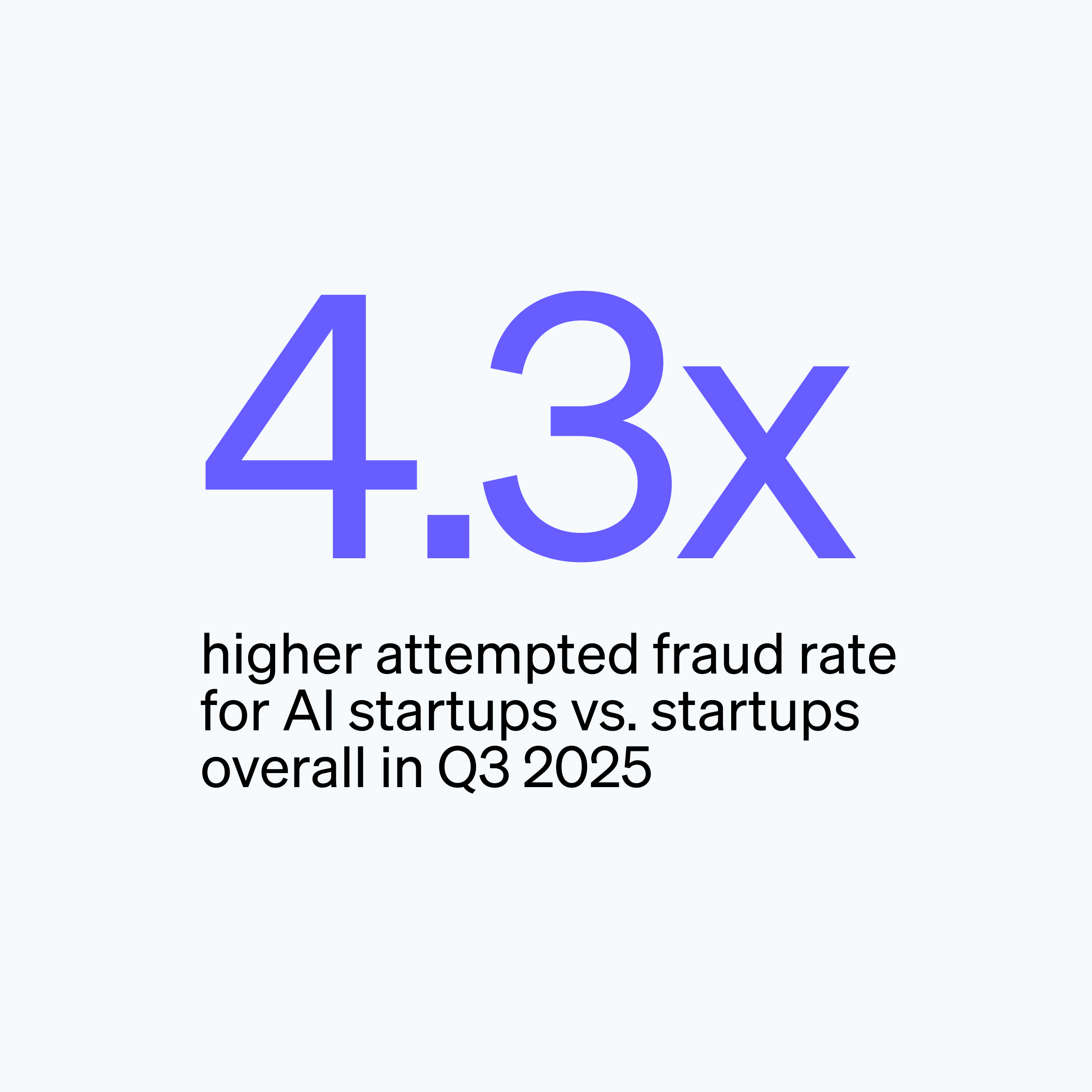
What Stripe data shows about fraud at AI startups

We analyzed attempted fraud rates and customer abuse patterns on Stripe over the past year and found that AI companies faced 4.3x more fraud attempts than startups overall in Q3 2025.

Read source article
What Stripe data shows about fraud at AI startups
Vercel Blog

Gemini 3.8 Live models now available on AI Gateway

Gemini 3.8 Live and Gemini 3.8 Live Extended Thinking from Google are now available on AI Gateway. Both models support real-time spoken interactions for voice assistants, conversational experiences, and applications that respond through audio. google/gemini-3.8-live supports real-time audio, visual grounding, automatic switching across 97 languages, and background tool calls while the conversation continues. google/gemini-3.8-live-extended-thinking adds multi-step reasoning that runs in parallel

Read source article
Product Hunt — The best new products, every day

Convo

<p> The AI copilot for people who sell </p> <p> <a href="https://www.producthunt.com/products/convo-7?utm_campaign=producthunt-atom-posts-feed&utm_medium=rss-feed&utm_source=producthunt-atom-posts-feed">Discussion</a> | <a href="https://www.producthunt.com/r/p/1250753?app_id=339">Link</a> </p>

Read source article
Product Hunt — The best new products, every day

Ari by Ariso

<p> AI bar raiser for the most ambitious teams </p> <p> <a href="https://www.producthunt.com/products/ariso?utm_campaign=producthunt-atom-posts-feed&utm_medium=rss-feed&utm_source=producthunt-atom-posts-feed">Discussion</a> | <a href="https://www.producthunt.com/r/p/1250743?app_id=339">Link</a> </p>

Read source article
The Verge

Is Big Tech’s AI slowdown a safety pact or a cartel?

When OpenAI CEO Sam Altman, Anthropic CEO Dario Amodei, Google DeepMind cofounder Demis Hassabis, and SpaceX head Elon Musk loosely agreed over the weekend to slow down AI development, skeptics spotted an ulterior motive immediately. The AI titans had declared that their aim was to "pace the frontier," signing on at least partially to a […]

Read source article
Is Big Tech’s AI slowdown a safety pact or a cartel?
The Verge

Apple Home’s new security camera features cost as much as $60 a month

With the public release of iOS 27 and tvOS 27, Apple Home is getting an injection of Apple Intelligence - but you'll have to pay more for it. Apple Intelligence for Home brings AI-powered video summaries to HomeKit Secure Video, so you can get short text descriptions of who and what compatible security cameras saw, […]

Read source article
Apple Home’s new security camera features cost as much as $60 a month
The Guardian AIBusiness

AI-linked stocks slide after tech bosses call for slowdown in ‘reckless’ development

<p>Donald Trump dismisses attempts to increase controls on artificial intelligence as ‘sick conspiracy’ </p><p><a href="https://www.theguardian.com/technology/artificialintelligenceai">AI</a>-linked stocks tumbled on Monday after the bosses of Anthropic, OpenAI and SpaceX called for a <a href="https://www.theguardian.com/technology/2026/sep/13/openai-sam-altman-elon-musk-back-anthropic-calls-brakes-ai-development">slowdown in AI “reckless” development</a>, citing fears the technology could soon

Read source article
AI-linked stocks slide after tech bosses call for slowdown in ‘reckless’ development
The Robot ReportRobotics

Why RaaS needs more than a subscription model

At RoboBusiness 2026, a panel of robotics business leaders will examine the practical playbook behind Robots-as-a-Service or RaaS offerings. The post Why RaaS needs more than a subscription model appeared first on The Robot Report .

Read source article
Why RaaS needs more than a subscription model
Vercel Blog

AI SDK harness layer now supports native subscription authentication

The AI SDK harness layer now supports authenticating harnesses through their native subscriptions, where the underlying harness supports them. The harness layer runs different coding agents through the same HarnessAgent interface, so you can switch agents without changing your application code. No code changes or new settings are required. The direct authentication mode uses explicit provider environment credentials when they are present, and otherwise a native subscription found on the host. Th

Read source article
AWS Machine Learning Blog

Abnormal AI: Amazon Bedrock AgentCore for agentic email security at scale

Learn how Abnormal AI deployed Amazon Bedrock AgentCore Code Interpreter as an ephemeral compute scratch pad for the agents behind its real-time email threat detection at billion-message scale, plus the sandbox design decisions and practical lessons for builders deploying Code Interpreter in production.

Read source article
The Verge

What execs and politicians are saying about slowing down AI development

Dario Amodei kicked off a flood of statements over the past few days about AI safety by publishing a long essay titled "We Must Pace the Frontier" detailing why AI development should be slowed down. Other AI leaders and politicians are speaking out in favor of or opposing his points, and we've compiled some of […]

Read source article
What execs and politicians are saying about slowing down AI development
Simon WillisonLLMs

The contagion of fear

<p><strong><a href="https://bcantrill.dtrace.org/2026/09/13/the-contagion-of-fear/">The contagion of fear</a></strong></p> Bryan Cantrill responds to the <a href="https://x.com/hilbertspaess/status/2097476203863224394">tweet by former Anthropic employee Jacob Coxon</a> confirming that many Anthropic researchers believe AI "could kill us all by the end of the decade".</p> <p>Bryan shares a story of his own youthful mistakes causing unjustified panic among less technical peers, and warns against d

Read source article