

Anxiety SimulatorAnxiety help AI Tool
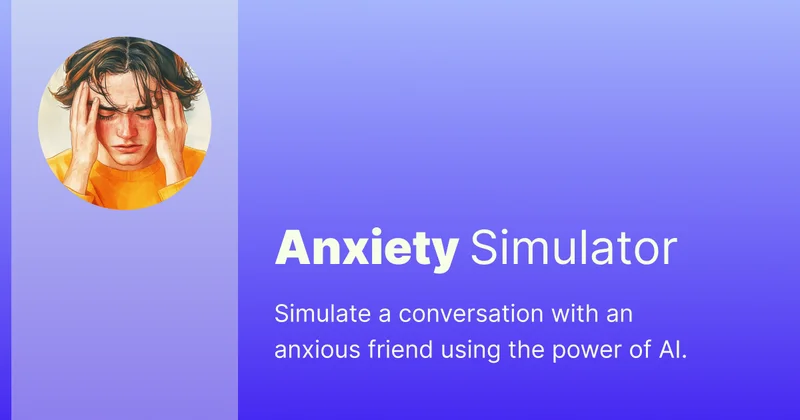
Simulate a conversation with a person with an anxiety disorder.
Anxiety help1 views
Simulate a conversation with a person with an anxiety disorder.
Overall
Average of 1 data signal below
3 of 4 content areas filled (features, FAQs, pros/cons, description)
This score is calculated automatically from this listing's available data (community rating, capabilities, pricing transparency, and documentation). It is not a paid or sponsored review.
Pricing & Model
free
Open Source & API
Proprietary
No Public API
Foundational Model
Proprietary Engine
Key Integrations
Web App Only
Common queries about Anxiety Simulator answered
The primary function of the Anxiety Simulator is to present an interactive conversation with a virtual individual manifesting symptoms of anxiety.
Anxiety Simulator enhances the learning experience by providing constructive feedback throughout the conversation simulation. This feedback offers valuable insights and guidelines on effective communication practices with individuals experiencing anxiety.
No, Anxiety Simulator is not designed to replace professional mental health advice. However, it can be instrumental in enhancing understanding of anxiety and reinforcing supportive relationships.
Real ratings and feedback from the community
Be the first to share your rating and comments for this AI tool!
How Anxiety Simulator stacks up against top competitors
| Feature | Anxiety Simulator | Balance | Mindwell | Fliki |
|---|---|---|---|---|
| Rating | ★ 3 | — | — | ★ 4.8 |
| Visits / month | — | — | — | 692,189 |
| Pricing Model | free | free | unknown | freemium |
| API Access | No | No | No | No |
| Open Source | No | No | No | No |
| Link | Visit Website |
Explore similar AI tools in this category
Yes, using the Anxiety Simulator can indeed help you improve communication with a person suffering from anxiety. It aims to develop empathetic communication skills and strategies for supporting those coping with anxiety disorders.
Anxiety Simulator contributes to mental health awareness by promoting understanding of the intricacies of anxiety and how it influences communication and interpersonal interactions.
Anxiety Simulator provides guidance for communication practices both in casual and supportive contexts.
Yes, Anxiety Simulator can help users cultivate a greater understanding of anxiety disorders through its interactive, conversation-based simulations.
Yes, the Anxiety Simulator is interactive, allowing users to engage in a simulated conversation with a virtual individual exhibiting symptoms of anxiety.
Yes, Anxiety Simulator provides constructive feedback during the conversation simulation to enhance the learning experience.
There's no explicit reference to virtual reality in the given information. Anxiety Simulator is referred to as an application tool designed to simulate a conversation with a person suffering from an anxiety disorder.
Anxiety Simulator represents the symptoms of anxiety disorder through a virtual person in the simulation of a conversation. The virtual person exhibits these symptoms during the interaction.
Yes, the Anxiety Simulator is specifically designed to assist individuals in understanding the intricacies of anxiety and how it impacts communication and interpersonal relations.
Yes, by using the Anxiety Simulator, you can develop empathetic communication skills. This program was specifically designed to provide users with effective strategies for supporting those with anxiety disorders.
The Anxiety Simulator replicates situations involving conversations with individuals exhibiting symptoms of anxiety. However, the specific types of situations are not specified in the available information.
Yes, throughout the conversation simulation, the Anxiety Simulator provides insights and guidelines on how to effectively support individuals experiencing anxiety.
Yes, the Anxiety Simulator can be used to learn how to support a friend with anxiety. It is designed to provide users with valuable feedback and insights on how to effectively communicate with individuals suffering from anxiety.
Yes, the Anxiety Simulator can be instrumental in building supportive relationships. It provides users with empathetic communication skills and strategies for effectively supporting friends or acquaintances coping with anxiety disorders.
Anxiety Simulator helps in understanding the effects of anxiety on communication and interpersonal interactions by simulating conversations with a virtual person enduring symptoms of anxiety.
Anxiety Simulator simulates a conversation with a virtual person manifesting anxiety symptoms, not a real person suffering from anxiety.
Yes, if you have friends or acquaintances coping with anxiety disorders, Anxiety Simulator can help you. It aims to develop empathetic communication skills and strategies for offering support.
| Visit Website |
| Visit Website |
| Visit Website |


