AiAnyTool - Best AI Tools Directory and Artificial Intelligence Software Hub Logo
Loading theme toggle
Real-Time Coverage

AI News Today

Live

10540 stories from 30+ sources, refreshed continuously.

arXiv cs.CL (NLP)Research

A Calibrated Instrument for Measuring How Inference Optimizations Affect Output Quality

arXiv:2609.18005v1 Announce Type: new Abstract: Large language model optimization is an active research area, spanning quantization of model weights, early-exit methods for skipping layers, and speculative decoding. Each track uses its own quality measures, typically an idiosyncratic benchmark score. Few approach the measurement precision required by other scientific disciplines. We propose a rigorous methodology for measuring output quality, suitable for cross-system and cross-technique compari

Read source article
Apple Machine LearningResearch

REVERSAL-BENCH: A Reversibility Axis and Reset Oracle for Measuring the Reset-Free RL Cliff

A central goal of autonomous reinforcement learning is continuous policy training without external resets. However, existing paradigms largely depend on underlying environmental reversibility, a property absent in real world manipulation, where events such as pushing objects off tables or spilling granular substances cannot be undone. We introduce REVERSAL-BENCH, a benchmark that controls reversibility via a continuous parameter ρ∈ [0, 1] and provides a reset oracle, a ground-truth verification

Read source article
IEEE Spectrum AIResearch

Rethinking Robot Safety in the Age of AI

This article is brought to you by VicOne . Robot safety has traditionally asked: Can a machine remain safe when something goes wrong? Physical AI raises a harder question: Can a machine remain safe when an attacker changes what it sees, decides, or does even when nothing appears to have failed? As AI and robotics continue to advance at an unprecedented pace, modern robots perceive through multimodal sensors, interpret context using AI models, and translate those interpretations into physical act

Read source article
Rethinking Robot Safety in the Age of AI
NVIDIA BlogResearch

NVIDIA Vera Rubin NVL72 Delivers Leading Performance in MLPerf Inference v6.1 Debut

System performance, efficient infrastructure scaling and continuous software optimization are key levers that determine AI inference economics. Higher system performance means more tokens generated, resulting in higher revenue. Efficient scaling means throughput grows proportionally as hardware gets added, requiring fewer resources to serve users at scale. Continuous optimization means generating more value from infrastructure investments. […]

Read source article
NVIDIA Vera Rubin NVL72 Delivers Leading Performance in MLPerf Inference v6.1 Debut
NVIDIA BlogResearch

Emerald AI, Google and NVIDIA Launch Alliance to Advance Flexible AI Data Centers

AI factories are the infrastructure of the intelligence era. Scaling them responsibly will depend as much on innovation across the grid as inside the data center. Today, Emerald AI, Google and NVIDIA announced the launch of the AI Energy Management Alliance (AEMA), a first-of-its-kind coalition advancing data centers that can dynamically manage their electricity use […]

Read source article
Emerald AI, Google and NVIDIA Launch Alliance to Advance Flexible AI Data Centers
MIT Tech ReviewResearch

Building the materials foundation for AI

The AI boom is becoming a materials challenge. As AI pushes computing into new territory, the materials behind that infrastructure are becoming just as crucial as the algorithms running on it. Semiconductors and data centers are approaching physical limits around performance, thermal management, electrical efficiency, and reliability, creating new demands for materials that can do…

Read source article
MIT Tech ReviewResearch

The Download: AI’s trillion-dollar gamble and OpenAI’s biology data bid

This is today’s edition of The Download, our weekday newsletter that provides a daily dose of what’s going on in the world of technology. What’s at stake in AI’s trillion-dollar gamble When Jessica Wachter, a finance professor at the University of Pennsylvania, wanted to assess AI’s impact on the economy over the next few years,…

Read source article
The Download: AI’s trillion-dollar gamble and OpenAI’s biology data bid
NVIDIA BlogResearch

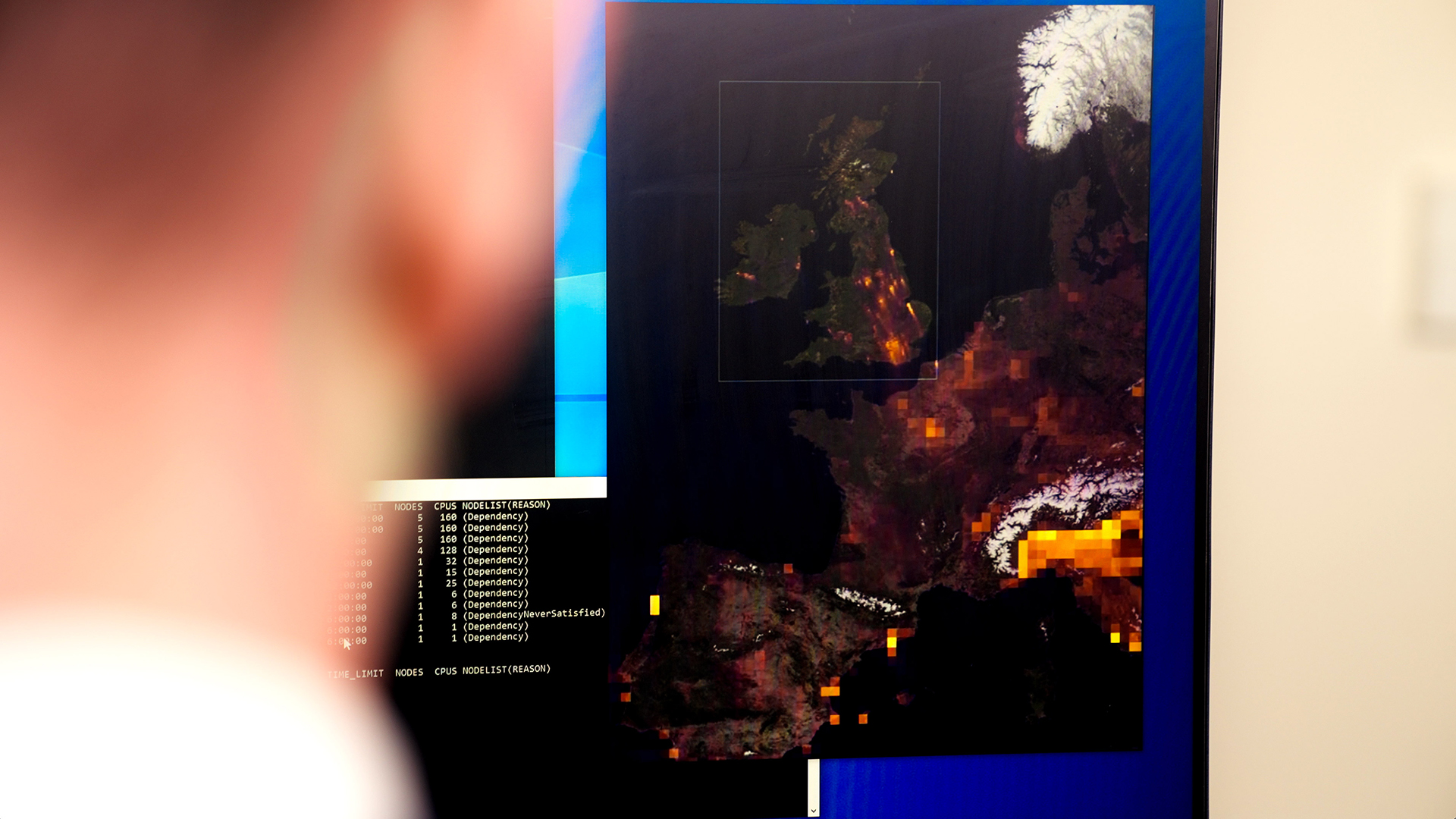
University of Manchester Uses NVIDIA Earth-2 to Forecast Air Pollution Across the UK

Air pollution is a serious public health risk, contributing to an estimated 30,000 deaths in the U.K. alone last year. Data-driven insights can help — but computing air quality with traditional chemistry-based models is expensive, which limits how detailed they can be and how regularly they can be run. David Topping, a professor in the […]

Read source article
University of Manchester Uses NVIDIA Earth-2 to Forecast Air Pollution Across the UK
arXiv cs.CL (NLP)Research

Few-Shot Degradation Is Not What It Seems: Behavioral Evidence, Representation Analysis, and a Random-Text Control Across 12 Models, 2 Tasks, and 2 Architectures

arXiv:2609.15990v1 Announce Type: new Abstract: Few-shot prompting sometimes degrades language models instead of helping them, but why this happens is unknown. We evaluate 12 open-weight models on two Ukrainian tasks news classification and legal case outcome prediction and find that the effect is strongly task-dependent: the same models that gain +24 pp on news show only +3.4 pp on legal text, with two models degrading. To understand why, we look inside the models. Prior work measures how much

Read source article
arXiv cs.CL (NLP)Research

Optimal Model Activation Policies for Inference Networks of Large Language Models

arXiv:2609.15992v1 Announce Type: new Abstract: Recent advances in large language models (LLMs) have rendered them necessary for Natural Language Processing (NLP) tasks, and their high inference cost motivates the study of cost-performance trade-offs. In practice, several expert LLMs are used in synergy for inference, either in an ensemble mode or in series, yet without a principled approach on how to best use the available models. An adaptive approach can route simple queries to cheaper LLMs an

Read source article
arXiv cs.CL (NLP)Research

Latent Undertow: How Ordinary Typos Break Probes

arXiv:2609.15994v1 Announce Type: new Abstract: LLMs handle ordinary typing variation fluently: a typo or missing punctuation leaves both user intent and the model's response substantively unchanged. Yet probes that detect malicious prompts by reading the model's hidden states tell a different story: the same edit rotates the readout vector by 43--56 at the perturbed token, decaying below 15% within ~10 downstream tokens. Stacking ~3 common typos per message cuts a single-position prompt-injecti

Read source article
arXiv cs.CL (NLP)Research

Bias Audits Detect Bias but Disagree on Ranking: Evidence from Ten Instruments and Ten Frontier Models

arXiv:2609.15995v1 Announce Type: new Abstract: Emerging AI regulation mandates bias audits of high-risk systems, and audit scores are beginning to be used to rank models. Both uses assume different audit tools measure the same thing well enough to compare. We test that assumption directly, running ten extrinsic audit instruments over a shared panel of ten frontier models through one pooled inference gateway, first on occupational gender bias, then on age and socioeconomic status. Detection succ

Read source article
arXiv cs.CL (NLP)Research

Comment on arXiv:2607.01233: Survivorship Bias in Published-Paper Baselines for Research-Idea Distributions

arXiv:2609.15996v1 Announce Type: new Abstract: Chen, Zhao, and Cohan introduce a valuable distributional evaluation of LLM-generated research ideas. This comment raises a narrower identification concern: their human baseline consists of published papers, whereas the LLM baseline consists of one-shot proposals. If bridge-like or synthesis-like ideas are relatively easy to generate but relatively unlikely to survive publication, then the published human baseline will understate their prevalence i

Read source article
arXiv cs.CL (NLP)Research

Crash Narrative-Guided Countermeasure Recommendation Using Large Language Models: A Retrieval-Augmented Generation Framework for Intersection Safety

arXiv:2609.15997v1 Announce Type: new Abstract: Improving safety at intersections requires identifying crash mechanisms and recommending appropriate countermeasures. However, this process traditionally relies on expert judgment, making it labor-intensive, difficult to scale, and dependent on the availability of experienced traffic safety engineers. Although crash narratives contain rich description of crash mechanisms, this unstructured information remains largely underutilized in safety analyse

Read source article
arXiv cs.CL (NLP)Research

Self-reported archetypes and behavioral failures in Large Language Models

arXiv:2609.15998v1 Announce Type: new Abstract: Every large language model (LLM) has behavioral traits and moral preferences that comprise its character. Whether by design or as an emergent property of training, these systems exhibit persistent dispositions that shape how they interact, comply, resist, and err, yet the structure of LLM character remains poorly understood. We map the self-reported personality archetypes of 22 LLMs spanning closed-source frontier systems (GPT-4.0-5.2, Grok-3/4, Ge

Read source article
arXiv cs.CL (NLP)Research

NepKANUN: A RAG-Based Nepali Legal Assistant

arXiv:2609.15999v1 Announce Type: new Abstract: Accessing legal information in Nepal is difficult due to complex terminology, limited resources, and misinformation. We introduce an AI-powered legal assistant that is tailored for Nepali legal texts and is built on a fine-tuned large language model. The technology provides precise, streamlined answers to natural language legal inquiries when integrated into a Retrieval-Augmented Generation (RAG) framework. It was trained using a custom dataset of

Read source article
arXiv cs.CL (NLP)Research

Nepali Legal Expertise through Generative and Extractive Pre-trained Transformers (NepLEGiT)

arXiv:2609.16010v1 Announce Type: new Abstract: The complexity of legal language and limited accessibility to legal information pose significant challenges to justice delivery in Nepal. Traditional legal services remain inaccessible to many citizens due to language barriers, information fragmentation, and a critical shortage of legal expertise, particularly in rural areas. We present NepLEGiT (Nepali Legal Expertise through Generative and Extractive Pre-trained Transformers), a specialized small

Read source article
arXiv cs.CL (NLP)Research

ViCo: Visual-oriented Coding with Self-Reflection for Chart Replication

arXiv:2609.16014v1 Announce Type: new Abstract: This paper addresses the challenge of generating high-quality academic charts that match the visual standards of human-authored papers. While existing AI agents can produce well-structured text and code, their generated visualizations often lack the stylistic and semantic fidelity of human designs. Advanced coding agents that employ self-reflection mechanisms exhibit poor visual reasoning and limited reflection following, resulting in sparse reward

Read source article
arXiv cs.CL (NLP)Research

Retrieval-Driven Memory Reconsolidation for Long-Term LLM Agents

arXiv:2609.16053v1 Announce Type: new Abstract: Long-term memory is essential for LLM-based agents operating over extended interactions. Existing memory systems primarily update memory when new information arrives, treating retrieval as the endpoint of memory access rather than a driver of memory evolution. Consequently, retrieval feedback is rarely exploited to reorganize memory for future access continuously. Moreover, most existing approaches rely on predefined memory structures together with

Read source article
arXiv cs.CL (NLP)Research

State of Thought Enables Endogenous Reasoning

arXiv:2609.16055v1 Announce Type: new Abstract: Test-time compute has emerged as a major approach to improving the capabilities of Large Language Models (LLMs). However, existing test-time reasoning paradigms rely heavily on externally imposed control, either through fixed reasoning programs or through costly expansion in constrained search spaces, limiting both generalization and efficiency. We propose State of Thought (SoT), a new reasoning paradigm that enables endogenous reasoning in LLMs, w

Read source article
arXiv cs.CL (NLP)Research

Towards Scalable RLVR: Multimodal Instruction Following Data Synthesis and Distillation

arXiv:2609.16059v1 Announce Type: new Abstract: Multimodal instruction following (MMIF) is crucial for building generalist agents. However, current training paradigms rely heavily on Supervised Fine-Tuning (SFT), which often leads to surface-level pattern matching and degrades general capabilities. While Reinforcement Learning with Verifiable Rewards (RLVR) offers a promising alternative, its scalability in MMIF is severely bottlenecked by the scarcity of high-quality, RL-ready multimodal data.

Read source article
arXiv cs.CL (NLP)Research

The Immutable Past: Formalizing State Mutability and Conflict Resolution in Mutable RAG

arXiv:2609.16073v1 Announce Type: new Abstract: Retrieval-Augmented Generation (RAG) serves as the primary memory architecture for long-horizon autonomous agents. However, treating shared memory as an append-only stream introduces \textit{Semantic Shadowing}, a critical failure mode where conflicting historical observations accumulate and statistically dominate valid recent updates. In dynamic environments, this results in severe state divergence as agents retrieve and act upon obsolete facts. T

Read source article
arXiv cs.CL (NLP)Research

The Imitation Game: When LLMs Learn to Reason Like Programs via Code-Centric Reasoning Data Synthesis

arXiv:2609.16076v1 Announce Type: new Abstract: Large Language Models (LLMs) excel at programming tasks but frequently fail at deterministic, fine-grained reasoning in natural language, relying heavily on semantic approximations rather than robust symbolic execution. To bridge this gap, we propose MIMIC, a framework that leverages executable code as a rigorous medium for reasoning data synthesis. MIMIC fundamentally transforms algorithms into verifiable reasoning trajectories through narrative f

Read source article
arXiv cs.CL (NLP)Research

RAG-CT: Mitigating Privacy Risks on Retrieval-Augmented Generation Systems via Scanning Prompt Distribution

arXiv:2609.16095v1 Announce Type: new Abstract: Retrieval-Augmented Generation (RAG) has emerged as a powerful paradigm for improving the quality of generated contents of Large Language Models (LLMs) by grounding responses in external knowledge, thus reducing hallucinations and factual errors. However, recent studies have highlighted a critical vulnerability: adversaries can exploit the retrieval process to extract personally identifiable information (PII) from the underlying corpus. To mitigate

Read source article
arXiv cs.CL (NLP)Research

Spurious Tool Use: When RL Agents Learn the Wrong Reason to Act

arXiv:2609.16268v1 Announce Type: new Abstract: Large language model (LLM) agents increasingly interleave natural language reasoning with external tools such as web search and code execution. These tool-use policies are often optimized via reinforcement learning (RL), which can amplify spurious correlations in the training data. In this work, we study when and why RL-trained agents learn shortcut tool-selection policies: invoking tools based on superficial prompt cues rather than genuine task re

Read source article
arXiv cs.CL (NLP)Research

Efficient One-to-Many Translation with Joint Multi-Stream Diffusion

arXiv:2609.16312v1 Announce Type: new Abstract: One-to-many machine translation (MT) is computationally expensive for autoregressive (AR) systems, which suffer from linear latency scaling with both sequence length and the number of target languages. We explore how diffusion can enable multilingual translation with a discrete diffusion framework that refines all target languages in parallel, achieving sublinear latency scaling with the number of targets, and supports deployment as a single unifie

Read source article
arXiv cs.CL (NLP)Research

How Humans and LLMs Read Gender into Gender-Neutral Physical Descriptions

arXiv:2609.16366v1 Announce Type: new Abstract: When foundation models describe people, recent work in AI fairness, accessibility, and ethics recommends avoiding inferred identity labels (e.g., "she", "his") in favor of seemingly "objective" physical descriptions (e.g., "short hair", "a defined jawline"). Yet whether such descriptive language achieves gender-neutral communication remains an open empirical question. To study this, we introduce GAPA (Gender Associations of Physical Attributes), a

Read source article
arXiv cs.CL (NLP)Research

Register Tokens for Bounded-State Reasoning in Diffusion Language Models

arXiv:2609.16372v1 Announce Type: new Abstract: Masked diffusion language models (dLLMs) generate text by iteratively denoising masked tokens with bidirectional attention. Extending reasoning across generation chunks normally requires keeping earlier generated text in context. We ask whether a dLLM can instead continue reasoning after that text is cleared, using only a fixed-size carried state. We implement this state as a small number of register tokens: dedicated fixed-position tokens whose co

Read source article
Apple Machine LearningResearch

Shared Selective Persistent Memory for Agentic LLM Systems

Agentic LLM systems that generate code through multi-turn tool use face a fundamental context problem: each session starts from zero, discarding the configuration choices, domain constraints, data schemas, and tool-use patterns that made previous sessions productive. Naively persisting entire conversation histories is both token-inefficient and counterproductive—irrelevant context degrades generation quality. We introduce shared selective persistent memory, a memory architecture for agentic syst

Read source article
Apple Machine LearningResearch

Glyph: A Multi-Strategy Agentic System for Column Description and Sensitivity-Ontology Tagging of Enterprise Data Catalogs

Enterprise data lakes accumulate tables faster than human stewards can document or classify them, leaving columns with missing descriptions and unassigned governance labels. This documentation debt undermines data discovery, access control, and regulatory compliance. We present Glyph, a production system that frames two coupled problems, column description generation and column type annotation for data classification, as cooperating LLM agents orchestrated as stateful graphs. The Descriptor grou

Read source article
Apple Machine LearningResearch

DACA-GRPO: Denoising-Aware Credit Assignment for Reinforcement Learning in Diffusion Language Models

Diffusion large language models are a compelling alternative to autoregressive models, yet existing RL methods for diffusion treat all denoising steps as equally important and rely on biased, high-variance likelihood estimates. We identify two fundamental weaknesses: the absence of temporal credit assignment across the denoising trajectory, and the systematic bias of mean-field likelihood estimates used for policy optimization. To address these, we propose Denoising-Aware Credit Assignment for G

Read source article
Apple Machine LearningResearch

Trajectory as the Teacher: Few-Step Discrete Flow Matching via Energy-Navigated Distillation

Discrete flow matching generates text by iteratively transforming noise tokens into coherent language, but may require hundreds of forward passes. Distillation uses the multi-step trajectory to train a student to reproduce the process in a few steps. When the student underperforms, the usual explanation is insufficient capacity. We argue the opposite: the trajectory is the bottleneck, not the student. Each training trajectory is built through a chain of blind stochastic jumps with no evaluation

Read source article
Apple Machine LearningResearch

How Value Induction Reshapes LLM Behaviour

Conversational Large Language Models are post-trained on language that expresses specific behavioural traits, such as curiosity, open-mindedness, and empathy, and values, such as helpfulness, harmlessness, and honesty. This is done to increase utility, ensure safety, and improve the experience of the people interacting with the model. However, values are complex and inter-related – inducing one could modify behaviour on another. Further, inducing certain values can make models more addictive or

Read source article
NVIDIA BlogResearch

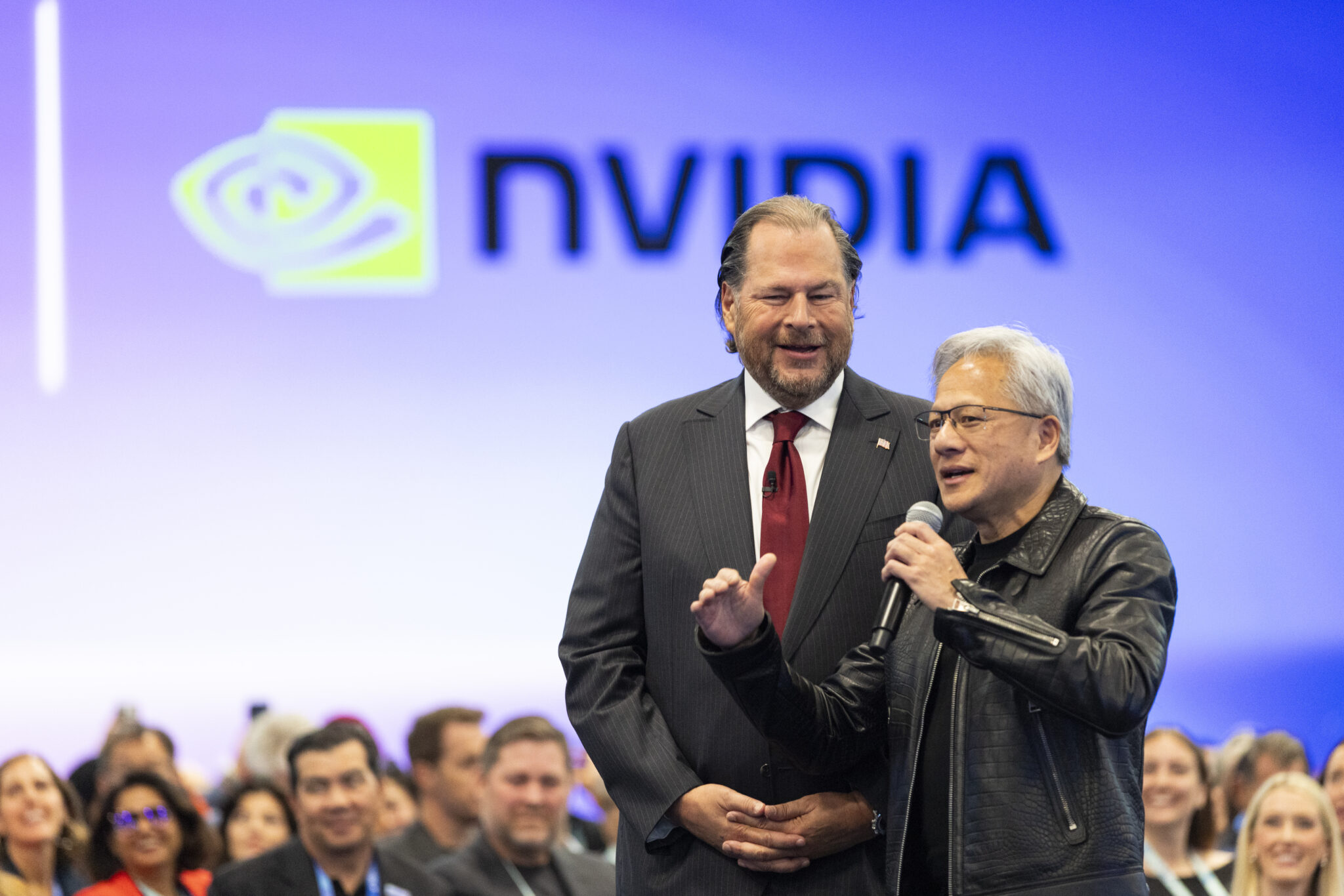
‘Now We Can Know Everything and Do Anything,’ Jensen Huang Says at Dreamforce

Know everything. Do anything. That was the message NVIDIA founder and CEO Jensen Huang brought to Salesforce Dreamforce Tuesday, joining CEO Marc Benioff onstage in an appearance that coincided with the announcement of Koa — Salesforce’s first CRM reasoning model, built on NVIDIA Nemotron 3 Super. Huang didn’t just take the stage. He walked into […]

Read source article
‘Now We Can Know Everything and Do Anything,’ Jensen Huang Says at Dreamforce
MIT Tech ReviewResearch

Roundtables: Could AI really kill us all?

Listen to the session or watch below Employees at the world’s leading AI labs are saying there’s a real possibility that advanced AI could destroy humanity. Are they right? Or is this more scaremongering and hype? Watch a conversation unpacking AI extinction fears: where they come from, whether they hold any water, and, if so,…

Read source article
NVIDIA BlogResearch

From Megawatts to Tokens: How NVIDIA Maximizes AI Factory Production

On a sweltering August evening in Silicon Valley, as the sun dropped and air conditioning loads spiked, Silicon Valley Power sent a signal to an AI factory to adjust its power consumption. Varun Sivaram was watching on Zoom with about forty others — his team at Emerald AI in their San Francisco conference room, engineers […]

Read source article
From Megawatts to Tokens: How NVIDIA Maximizes AI Factory Production
NVIDIA BlogResearch

AI Infra Summit: NVIDIA Vera Rubin and DSX Platform Advancements Showcase Energy Efficiencies of Optimizing Tokens Per Watt for AI Factories

Ian Buck, vice president of hyperscale and high-performance computing at NVIDIA, Tuesday spoke on AI factory efficiency at the AI Infra Summit, the Santa Clara Convention Center event that has morphed into a Coachella of infrastructure tech. Before a packed audience — with more than 8,000 attendees this year, up from 3,500 last year — […]

Read source article
AI Infra Summit: NVIDIA Vera Rubin and DSX Platform Advancements Showcase Energy Efficiencies of Optimizing Tokens Per Watt for AI Factories
r/MachineLearningResearch

TabPFN-3.5 is released as the next SOTA tabular foundation model [N]

<!-- SC_OFF --><div class="md"><p>Prior Labs released their latest tabular foundation model, TabPFN-3.5 today.</p> <p>The model is top of both TabArena and BeyondArena and SOTA for 1M rows and up to 20k features</p> <p>It comes with:</p> <p>- TabPFN-3.5-Fast (in alpha): This one goes 6x faster than the base model<br/> - TabPFN-3.5-Thinking: you basically exchange compute for better accuracy with this one and it's via the API<br/> - TabPFN-3.5-Plus</p> <p>On BeyondArena, TabPFN-3.5 leads on text-

Read source article