AiAnyTool - Best AI Tools Directory and Artificial Intelligence Software Hub Logo
Loading theme toggle
Real-Time Coverage

AI News Today

Live

11938 stories from 30+ sources, refreshed continuously.

arXiv cs.CL (NLP)Research

Self-Generated Error Training for Token Editing in Diffusion Language Models

arXiv:2606.17175v1 Announce Type: new Abstract: Token-to-token (T2T) editing lets LLaDA2.1 revise committed tokens during block-diffusion decoding. The released recipe trains this editor on random vocabulary corruptions, but at inference the editor sees the model's own fluent, high-confidence draft errors instead. We study this training-inference mismatch and propose self-generated T2T, which performs a no-gradient draft pass, fills masked positions with predicted tokens, and supervises recovery

Read source article

arXiv cs.CL (NLP)Research

Speaking in Self-Assessing Tongues: On the Verbalized Confidence of LLMs in Machine Translation

arXiv:2606.17234v1 Announce Type: new Abstract: The rapid rise in popularity of large language models (LLMs) for translation calls for a thorough study of the reliability of their confidence in their own outputs. Unlike many generation tasks, translation errors and confidence levels can be useful at different levels of granularity (tokens, words, or spans). Unsupervised approaches based on internal signals like predicted probabilities can be misleading because they reflect certainty among altern

Read source article
arXiv cs.CL (NLP)Research

Are you speaking my languages? On spoken language adherence in multimodal LLMs

arXiv:2606.17281v1 Announce Type: new Abstract: While Large Language Model (LLM) based Automatic Speech Recognition (ASR) enables seamless multilingual use, models often misidentify the output language, compromising transcription fidelity and downstream application quality. To preserve flexibility and code-switching capabilities, we propose a soft prompting approach that hints at potential spoken languages without strictly constraining the output. We formally define this challenge as a lack of l

Read source article
arXiv cs.CL (NLP)Research

Evaluating Second-Order Bias of LLMs Through Epistemic Entitlement

arXiv:2606.17506v1 Announce Type: new Abstract: Evaluations of social bias in LLMs largely focus on whether models generate or imply biased content. However, as LLMs are increasingly used as judges of bias, they may exhibit social biases in subtler ways in how they evaluate biased content, which current methods do not systematically capture. We call this second-order bias: social bias in an LLM's judgment about social bias, which we evaluate through a novel, philosophically grounded reasoning ta

Read source article
arXiv cs.CL (NLP)Research

Scaling Enterprise Agent Routing: Degradation, Diagnosis, and Recovery

arXiv:2606.17519v1 Announce Type: new Abstract: Production LLM assistants route user requests to growing libraries of specialized tools, but how does routing accuracy degrade as the catalog scales? We study single-step routing on a 110-agent, 584-tool catalog from a deployed enterprise productivity assistant, evaluating three frontier models from 10 to 110 agents. Routing F1 on under-specified requests drops 16--23 percentage points across models. An oracle analysis decomposes the degradation in

Read source article
arXiv cs.CL (NLP)Research

Evaluating Large Language Models Abilities for Addressee, Turn-change, and Next Speaker Prediction in Meetings

arXiv:2606.17542v1 Announce Type: new Abstract: We investigate turn-taking in multimodal multi-party conversations using large language models (LLMs). We construct an evaluation framework for three tasks: addressee detection, turn-change prediction, and next speaker prediction. We compare supervised models trained for these tasks, text-based LLMs, multimodal LLMs (MM-LLMs), and human subjects. Experiments on the AMI corpus showed that LLMs outperformed supervised models and humans in next speake

Read source article
arXiv cs.CL (NLP)Research

The Benchmark Illusion: Pruned LLMs Can Pass Multiple Choice but Fail to Answer

arXiv:2606.17609v1 Announce Type: new Abstract: Compressing large language models reduces memory use and inference cost, but it can also create failures that standard benchmarks miss. A pruned model may still perform well on multiple-choice evaluations, yet fail to answer the same question in open generation. We ask what pruning changes: does it erase the correct answer, or does it make the answer harder to produce as the top output? We study this question with multilingual question answering, t

Read source article
arXiv cs.CL (NLP)Research

OPD-Evolver: Cultivating Holistic Agent Evolver via On-Policy Distillation

arXiv:2606.17628v1 Announce Type: new Abstract: Memory has become a standard substrate for self-evolving agents, yet retaining experience is not the same as learning how to evolve through it. Existing memory agents can store trajectories, retrieve reflections, or accumulate skills, but often lack the holistic competence to select useful experience, act on it, write reusable knowledge, and maintain a growing repository. We introduce OPD-Evolver, a slow-fast co-evolution framework that cultivates

Read source article
arXiv cs.CL (NLP)Research

Prompt Perturbation for Reliable LLM Evaluation over Comparison Graphs

arXiv:2606.17634v1 Announce Type: new Abstract: Evaluating large language models (LLMs) is important for understanding their capabilities, comparing competing systems, and supporting the deployment of reliable models in practice. For open-ended tasks, pairwise evaluation has become a popular paradigm, in which two responses to the same prompt are compared and the resulting judgments are aggregated into an overall ranking. A central challenge of this paradigm is intransitivity: the induced compar

Read source article
arXiv cs.CL (NLP)Research

From Trainee to Trainer: LLM-Designed Training Environment for RL with Multi-Agent Reasoning

arXiv:2606.17682v1 Announce Type: new Abstract: Reinforcement learning pipelines for Large Language Model (LLM) training often rely on manually redesigned environments between stages, requiring practitioners to heuristically infer which configuration will best improve the current policy. To automate this process, we propose the LLM-as-Environment-Engineer framework in which the current policy model analyzes failure trajectories together with contextual information and proposes modifications to t

Read source article
arXiv cs.CL (NLP)Research

Bridging Functional Correctness and Runtime Efficiency Gaps in LLM-Based Code Translation

arXiv:2606.17683v1 Announce Type: new Abstract: While large language models (LLMs) have greatly advanced the functional correctness of automated code translation systems, the runtime efficiency of translated programs has received comparatively little attention. With the waning of Moore's law, runtime efficiency has become increasingly important for program quality, alongside functional correctness. Our preliminary study reveals that LLM-translated programs often run slower than human-written one

Read source article
arXiv cs.CL (NLP)Research

LLMs Infer Cultural Context but Fail to Apply It When Responding

arXiv:2606.17688v1 Announce Type: new Abstract: Recent work has shown that LLMs overrepresent dominant cultures, particularly Western ones, while marginalizing others. We investigate whether this affects models' ability to generate culturally adapted responses by evaluating their use of local measurement units based on the user's perceived cultural background. We introduce Cultural and Pragmatic Response Inference (CAPRI), a dataset of conversations with varying levels of cultural cues. Experime

Read source article
arXiv cs.CL (NLP)Research

Improving low-resource ASR using bilingual fine-tuning with language identification: a cross-linguistic evaluation

arXiv:2606.17820v1 Announce Type: new Abstract: This study explores how bilingual fine-tuning affects automatic speech recognition (ASR) in low-resource languages. We evaluate this method across nine linguistically and geographically diverse language pairs, covering a range of language families and writing systems. To distinguish the two languages, during training, we pre-pend each input text with a language identification token. At inference, the model jointly predicts both the language and tra

Read source article
arXiv cs.CL (NLP)Research

Perceptual compensation for tonal context in self-supervised speech models

arXiv:2606.17835v1 Announce Type: new Abstract: This study examines the extent to which the wav2vec2.0 architecture exhibits evidence of compensation for phonological context. We conducted a pseudo-replication of a perceptional compensation experiment on Mandarin Chinese tones, and compared the embedding similarities and probing classifier outputs between a purely self-supervised pre-trained model and a model fine-tuned for Mandarin ASR. No evidence of compensation was found in the embedding sim

Read source article
arXiv cs.CL (NLP)Research

Environment-Grounded Automated Prompt Optimization for LLM Game Agents

arXiv:2606.17838v1 Announce Type: new Abstract: LLM agents in interactive environments are highly sensitive to their prompts, yet prompt engineering remains a manual, task-specific process. We introduce an automated prompt optimization framework for LLM agents that decomposes the observation-to-action pipeline into a goal-conditioned descriptor agent and an action selection agent, and iteratively refines each module's prompt through an LLM-driven evolutionary loop guided by environment returns.

Read source article
arXiv cs.CL (NLP)Research

GameCraft-Bench: Can Agents Build Playable Games End-to-End in a Real Game Engine?

arXiv:2606.17861v1 Announce Type: new Abstract: Game generation is an emerging application of coding agents, requiring models to transform natural-language specifications into playable interactive systems. Unlike traditional coding tasks, game generation takes place within a game engine, where scripts, scenes, assets, rendering, and runtime interactions must jointly produce coherent gameplay. We formalize end-to-end game generation as the problem of producing a complete game artifact that realiz

Read source article
arXiv cs.CL (NLP)Research

Dynamic Rollout Editing for Reducing Overthinking in RL-Trained Reasoning Models

arXiv:2606.17890v1 Announce Type: new Abstract: Long-form chain-of-thought reasoning can improve LLM performance on complex tasks, but models often continue generating unnecessary reasoning after a correct answer has emerged. We refer to this behavior as overthinking. We study this phenomenon from the perspective of GRPO-style reinforcement learning (RL) post-training, framing it as a training-time credit-assignment problem rather than merely a decoding-time stopping problem. In rollouts sampled

Read source article
MarkTechPostResearch

How to Build Memory-Efficient Transformers with xFormers Using Packed Sequences, GQA, ALiBi, SwiGLU, and Causal Attention

We implement xFormers, a practical toolkit for fast, memory-efficient Transformer models on GPUs. We validate memory-efficient attention against a standard implementation, then compare speed and memory across sequence lengths. We work through causal masking, packed variable-length sequences, grouped-query attention, and custom ALiBi biases. Finally, we combine these into a trainable GPT-style model with SwiGLU layers and automatic mixed-precision training. The post How to Build Memory-Efficient

Read source article
NVIDIA BlogResearch

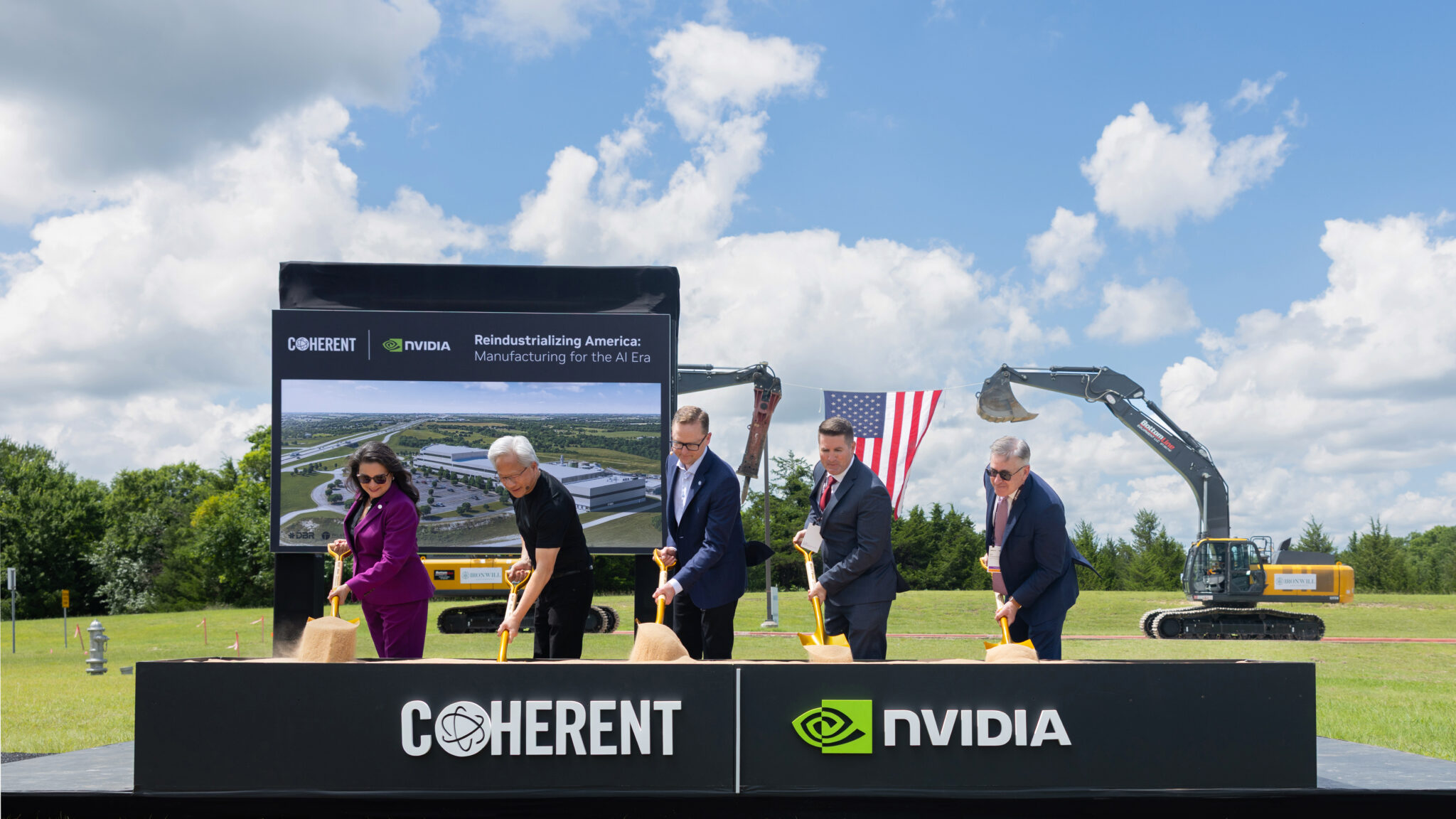
Coherent Breaks Ground on Expanded Texas Facility, Scaling AI’s Optical Backbone

AI runs at the speed of light. More and more, that light is made in Texas. Coherent broke ground today on an expanded manufacturing building in Sherman, Texas. The company makes the lasers, optical components and compound semiconductors that wire AI systems together — and runs what it calls the world’s first 6-inch indium phosphide […]

Read source article
Coherent Breaks Ground on Expanded Texas Facility, Scaling AI’s Optical Backbone
MIT Tech ReviewResearch

Exclusive eBook: How AI is becoming the next military advisor

A collection of stories about how militaries are using AI models to make decisions. This subscriber-only eBook is a package of six stories that were originally published in MIT Technology Review between April 11, 2025, and April 21, 2026, and have been updated to reflect recent developments. by James O’Donnell Choose which file format to…

Read source article
Exclusive eBook: How AI is becoming the next military advisor
NVIDIA BlogResearch

HPE AI Factory With NVIDIA Expands for the Era of Agents

Enterprises are moving agentic AI from proof of concept to production — and the next generation of AI factories are built for the era of agents. At HPE Discover Las Vegas, running through Thursday, June 18, NVIDIA and HPE are expanding the HPE AI Factory with NVIDIA, including NVIDIA Vera CPU and NVIDIA Agent Toolkit […]

Read source article
r/MachineLearningResearch

I built a leakage-clean verifier for robot manipulation, is this useful? Am I solving a non-problem? [D]

<!-- SC_OFF --><div class="md"><p>Spent the last few weeks on a benchmark/harness that tries to answer one question honestly: <em>did a robot arm actually do the demonstrated task, or did the success metric just get fooled?</em></p> <p>The setup: compile a human demo into an object-centric graph (what changed in the world: relations, contacts, event order), run a solver, then independently extract a graph from the <em>rollout only</em> and check if they match. The whole point is a hard informati

Read source article
NVIDIA BlogResearch

Fastest, Largest, Strongest: NVIDIA Blackwell Sweeps MLPerf Training 6.0

Every breakthrough AI model starts the same way: with a training run. The infrastructure running those training jobs shapes everything: how fast teams can iterate, what scale of model they can build and whether those jobs complete reliably. As models grow in size, complexity and intelligence, the demands on training infrastructure are also rising. In […]

Read source article
Fastest, Largest, Strongest: NVIDIA Blackwell Sweeps MLPerf Training 6.0
MIT Tech ReviewResearch

The Download: the first brain implant power user and South Korea’s AI obsession

This is today’s edition of The Download, our weekday newsletter that provides a daily dose of what’s going on in the world of technology. This man with ALS is the first “power user” of a brain implant that lets him speak Casey Harrell has had a set of electrodes embedded in his brain for almost…

Read source article
The Download: the first brain implant power user and South Korea’s AI obsession
r/MachineLearningResearch

Source code for LLMs. [D]

<!-- SC_OFF --><div class="md"><p>I was digging through Hugging Face’s Transformers repo and found<br/> <a href="https://github.com/huggingface/transformers/blob/main/src/transformers/models/gpt_oss/modeling_gpt_oss.py">https://github.com/huggingface/transformers/blob/main/src/transformers/models/gpt_oss/modeling_gpt_oss.py</a></p> <p>From what I can tell, this isn’t just boilerplate, it looks like a full implementation.<br/> is it actually the full code on which gpt_oss is built on?<br/> or is

Read source article
r/MachineLearningResearch

quicktok: a faster tokenizer (exact and byte-identical with tiktoken) [P]

<!-- SC_OFF --><div class="md"><p>Been working on this a while! Should be useful for anyone trying to speed up their tokenization workflows.</p> <p><strong>quicktok</strong> is a fast/exact BPE tokenizer written in C++. Token ids are byte-identical to <code>tiktoken</code> and encoding runs <strong>2–3.6×</strong> faster than <code>bpe-openai</code> (the fastest alternative I know of) and <strong>4–11×</strong> faster than <code>tiktoken</code> itself. It ships cl100k, o200k, GPT-OSS, Llama-3, a

Read source article
arXiv cs.CVResearch

Show the Signal, Hide the Noise: Spectral Forcing for Pixel-Space Diffusion

arXiv:2606.15236v1 Announce Type: new Abstract: Pixel-space diffusion models are trained on full-bandwidth noisy images, yet the useful signal available to the denoiser is strongly frequency dependent. Under rectified-flow diffusion and natural-image power-law spectra, the per-band data-to-noise contour $k^{*}(t) = (1-t)^{-2/\alpha}$ separates a signal-bearing low-frequency region from a noise-dominated high-frequency region at each time $t$. We show that this implicit coarse-to-fine structure i

Read source article
arXiv cs.CVResearch

Focus, Align, and Sustain: Counteracting Gradient Dilution in Incremental Object Detection

arXiv:2606.15253v1 Announce Type: new Abstract: Adapting Detection Transformers to Incremental Object Detection (IOD) poses a systemic challenge, as set-based optimization is inherently destabilized by sequential learning. In this work, we identify Gradient Dilution as the root cause of performance degradation, wherein optimization signals required to preserve old knowledge are progressively weakened. This phenomenon manifests as a cascading erosion of preservation gradients in magnitude, direct

Read source article
arXiv cs.CVResearch

Trusted Multi-View Deep Learning Classification of Fetal Congenital Heart Disease with Feature-level and Decision-level Fusion

arXiv:2606.15265v1 Announce Type: new Abstract: Congenital heart disease (CHD) refers to the abnormal anatomical structure caused by the abnormal development of the heart and great vessels during embryonic development. Traditional diagnostics often fail to achieve high accuracy and efficiency, especially given the complexity of cardiac anatomy. This study presents a specialized multi-view deep learning framework for CHD binary classification using echocardiographic images. A large-scale CHD data

Read source article
arXiv cs.CVResearch

Enhancing Precision Agriculture with a Hybrid Deep Learning Framework for Multi-Class Plant Disease Classification and Interpretability

arXiv:2606.15282v1 Announce Type: new Abstract: This study proposes an overall deep learning architecture for multi-class classification of plant diseases from high-resolution leaf imagery, with a particular interest in investigating the behavior of ResNet-50 and a hybrid ResNet + Vision Transformer (ViT) design. A specially gathered image database with 15,200 training images and 3,800 validation images spanning 38 classes across multiple crops, including tomato, apple, grape etc. were subjected

Read source article
arXiv cs.CVResearch

G2IA: Geometry-Guided Instance-Aware Retrieval and Refinement for Cross-Modal Place Recognition

arXiv:2606.15287v1 Announce Type: new Abstract: Cross-modal place recognition (CMPR) enables camera-only robots to localize against pre-built LiDAR maps in autonomous navigation scenarios. This image-to-point-cloud setting is challenged by two coupled ambiguities: the modality gap between perspective RGB appearance and sparse metric geometry, and perceptual aliasing among urban places with similar roads, facades, intersections, and object arrangements. Instead of treating CMPR as a single global

Read source article
arXiv cs.CVResearch

HemExp: Clinically-Guided Latent Diffusion for Modeling Hematoma Expansion

arXiv:2606.15304v1 Announce Type: new Abstract: Hematoma expansion (HE) after spontaneous intracerebral hemorrhage (ICH) is a major determinant of acute triage and treatment decisions in neurosurgical care. However, most existing methods provide either a binary expansion risk or a single follow-up volume, limiting uncertainty-aware decisions. We introduce HemExp, a clinically-guided latent diffusion model that generates patient-specific follow-up non-contrast CT images, along with segmentations

Read source article
arXiv cs.CVResearch

CoMNeT: A MedNeXt-CorrDiff Framework for Volumetric Brain Tumor Segmentation

arXiv:2606.15305v1 Announce Type: new Abstract: Accurate brain tumor segmentation from multiparametric magnetic resonance imaging (MRI) is critical for treatment planning, response assessment, and quantitative neuro-oncology research. However, automated segmentation remains a difficult task in computer vision because of variation in tumor appearance and MRI protocols across patient scans. Moreover, clinically important regions such as enhancing tumor (ET) and tumor core (TC) are often small rela

Read source article
arXiv cs.CVResearch

Conditional Multi-Event Temporal Grounding in Long-Form Video

arXiv:2606.15320v1 Announce Type: new Abstract: Multimodal large language models have made rapid progress in video temporal grounding, yet real-world applications routinely require localizing every event that satisfies compositional temporal and spatial conditions. Existing benchmarks fall short: they localize only a single moment per query, count without temporal conditions, or treat grounding and counting as disjoint tasks. We introduce CoMET-Bench for Conditional Multi-Event Temporal Groundin

Read source article
arXiv cs.AIResearch

A Definition of Good Explanations and the Challenges Explaining LLM Outputs

arXiv:2606.14838v1 Announce Type: new Abstract: How to define a good explanation is a long-standing philosophical debate which has found recent renewed interest in the context of AI outputs. Explainability is crucial for AI adoption in many contexts, but in order to produce good explanations of AI systems, we must first have an understanding of what good explanations are. In this paper we propose a definition inspired by the notion of counterfactual explanations, however we argue that one must a

Read source article
arXiv cs.AIResearch

Dr-DCI: Scaling Direct Corpus Interaction via Dynamic Workspace Expansion

arXiv:2606.14885v1 Announce Type: new Abstract: Agentic search over large corpora relies on retriever-mediated interfaces (e.g., BM25 or ColBERT) for scalable candidate discovery. While effective at ranking relevant documents, these interfaces expose evidence only as ranked results or bounded document views, limiting agents' ability to reorganize material and verify constraints across documents. Direct Corpus Interaction (DCI) addresses this limitation by exposing shell-executable corpus operati

Read source article
arXiv cs.AIResearch

Relational Structural Causal Models

arXiv:2606.14892v1 Announce Type: new Abstract: An artificial intelligence must have a model of its environment that is causal, supporting reasoning about interventions and counterfactuals, and also combinatorial, supporting generalization to unseen combinations of objects. In this work, we formally study when and how such a model can be learned. We develop relational structural causal models, extending structural causal models (Pearl 2009) to settings where objects and their relations vary. Fir

Read source article
arXiv cs.AIResearch

Trust Between AI Agents: Measuring Formation, Breakage, and Recovery, with Implications for Governing Multi-Agent Systems

arXiv:2606.14923v1 Announce Type: new Abstract: As language-model agents increasingly work in teams, each agent must decide how much to trust its teammates. Yet we lack a standard way to measure trust between AI agents. We propose a behavioral measure based on costly verification. In a cooperative survival game, checking a teammate's work consumes resources, while trusting a wrong answer can be fatal. Relative to a memoryless version of the same model, reduced verification provides an observable

Read source article