
All TopicsLLMs3357Robotics174Business1049Research9394Regulation72Tools445Open Source99Security193Dev & Frontend194General Tech894Newsletters142Video78

Google ResearchResearch
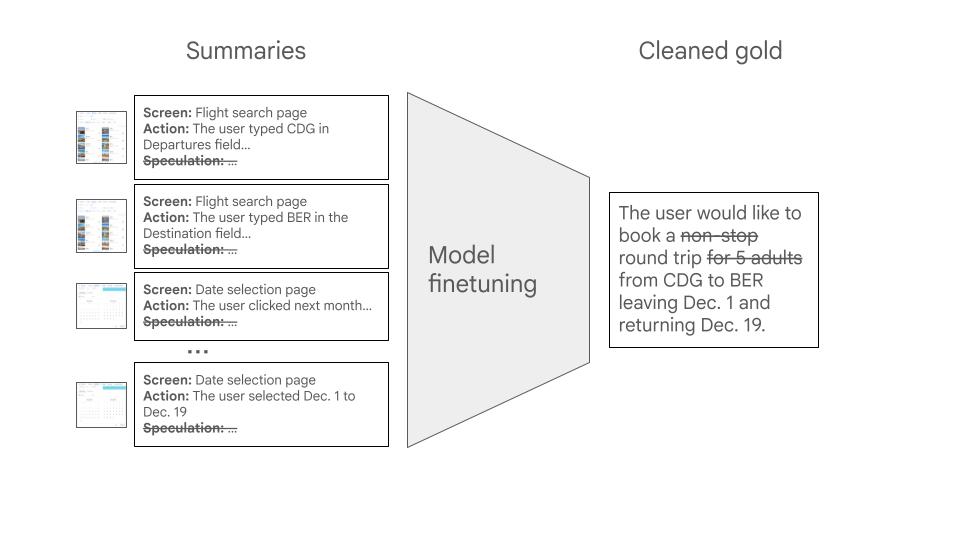
Small models, big results: Achieving superior intent extraction through decomposition
Generative AI
Google ResearchResearch
Hard-braking events as indicators of road segment crash risk
Algorithms & Theory

Google ResearchResearch
Next generation medical image interpretation with MedGemma 1.5 and medical speech to text with MedASR
Generative AI

Google ResearchResearch
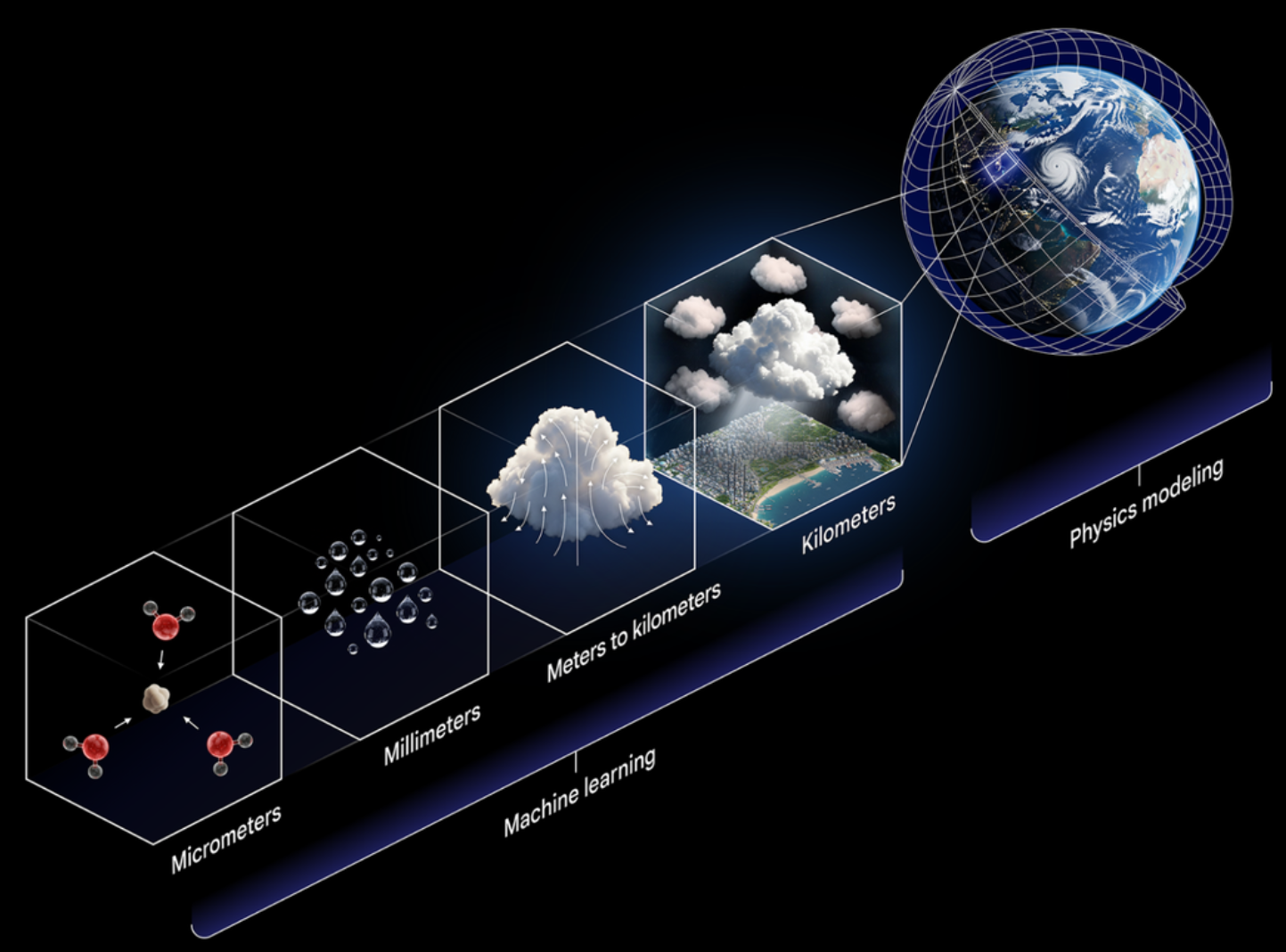
NeuralGCM harnesses AI to better simulate long-range global precipitation
Climate & Sustainability
BAIR BerkeleyResearch
Information-Driven Design of Imaging Systems
<!-- These are comments in HTML. The above header text is needed to format the title, authors, etc. The "information-driven-imaging" is the representative image that we use for each post for tweeting (see below as well) and for the emails to subscribers. The `static/blog` directory is a location on the blog server which permanently stores the images/GIFs in BAIR Blog posts. Each post has a subdirectory under this for its images (titled `information-driven-imaging` here). Keeping the post visibil
Google ResearchResearch
Gemini-backed Paper Assistant Tool provides automated feedback for theoretical computer scientists at STOC 2026
Algorithms & Theory

Google ResearchResearch
Spotlight on innovation: Google-sponsored Data Science for Health Ideathon across Africa
Conferences & Events

Google ResearchResearch
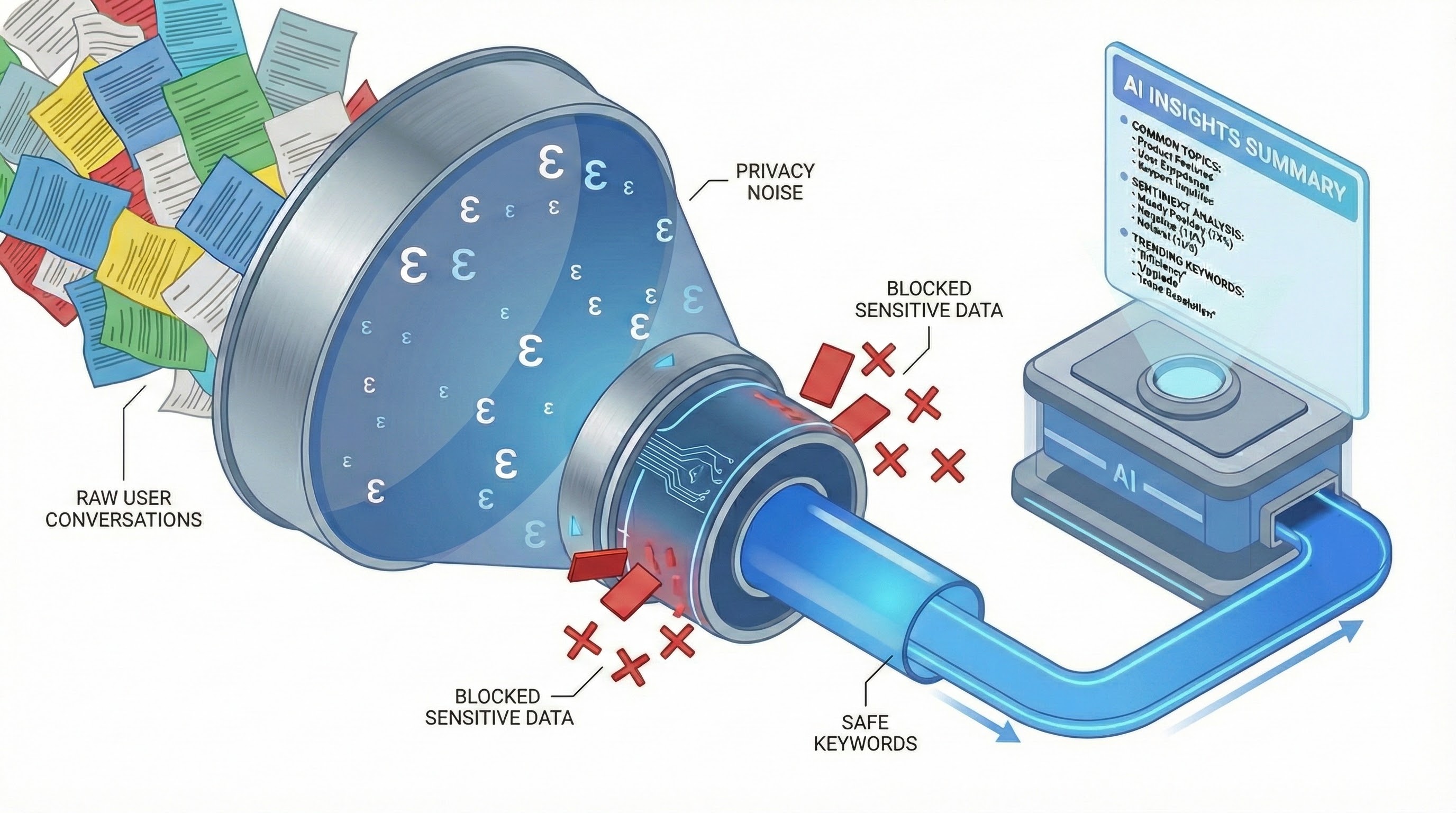
A differentially private framework for gaining insights into AI chatbot use
Generative AI

Google ResearchResearch
Reducing EV range anxiety: How a simple AI model predicts port availability
Algorithms & Theory


Google ResearchResearch
Generative UI: A rich, custom, visual interactive user experience for any prompt
Generative AI

Google ResearchResearch
Separating natural forests from other tree cover with AI for deforestation-free supply chains
Climate & Sustainability


Google ResearchResearch
Differentially private machine learning at scale with JAX-Privacy
Algorithms & Theory

Google ResearchResearch
Introducing Nested Learning: A new ML paradigm for continual learning
Algorithms & Theory

BAIR BerkeleyResearch
RL without TD learning
In this post, I’ll introduce a reinforcement learning (RL) algorithm based on an “alternative” paradigm: <strong
SyncedResearch
Which Agent Causes Task Failures and When?Researchers from PSU and Duke explores automated failure attribution of LLM Multi-Agent Systems
In recent years, LLM Multi-Agent systems have garnered widespread attention for their collaborative approach to solving complex problems. However, it's a common scenario for these systems to fail at a task despite a flurry of activity. The post Which Agent Causes Task Failures and When?Researchers from PSU and Duke explores automated failure attribution of LLM Multi-Agent Systems first appeared on Synced .
BAIR BerkeleyResearch
Whole-Body Conditioned Egocentric Video Prediction
.modal { display: none; position: fixed; z-index: 9999; padding-top: 50px; left: 0; top: 0; width: 100%; height: 100%; overflow: auto; background-color: rgba(0,0,0,0.9); } .modal-content { margin: auto; display: block; max-width: 90%; max-height: 90%; } .close { position: absolute; top: 15px; right: 35px; color: #f1f1f1; font-size: 40px; font-weight: bold; transition: 0.3s; cursor: pointer; } .close:hover, .close:focus { color: #bbb; text-decoration: none; c
SyncedResearch
ByteDance Introduces Astra: A Dual-Model Architecture for Autonomous Robot Navigation
ByteDance introduces Astra, an innovative dual-model architecture revolutionizing robot navigation in complex indoor environments. The post ByteDance Introduces Astra: A Dual-Model Architecture for Autonomous Robot Navigation first appeared on Synced .

SyncedResearch
MIT Researchers Unveil “SEAL”: A New Step Towards Self-Improving AI
MIT introduces SEAL, a framework enabling large language models to self-edit and update their weights via reinforcement learning. The post MIT Researchers Unveil “SEAL”: A New Step Towards Self-Improving AI first appeared on Synced .
SyncedResearch
Researchers from PSU and Duke introduce “Multi-Agent Systems Automated Failure Attribution
"Automated failure attribution" is a crucial component in the development lifecycle of Multi-Agent systems. It has the potential to transform the challenge of identifying "what went wrong and who is to blame" from a perplexing mystery into a quantifiable and analyzable problem The post Researchers from PSU and Duke introduce “Multi-Agent Systems Automated Failure Attribution first appeared on Synced .
SyncedResearch
Adobe Research Unlocking Long-Term Memory in Video World Models with State-Space Models
By combining State-Space Models (SSMs) for efficient long-range dependency modeling with dense local attention for coherence, and using training strategies like diffusion forcing and frame local attention, researchers from Adobe Research successfully overcome the long-standing challenge of long-term memory in video generation. The post Adobe Research Unlocking Long-Term Memory in Video World Models with State-Space Models first appeared on Synced .

SyncedResearch
DeepSeek-V3 New Paper is coming! Unveiling the Secrets of Low-Cost Large Model Training through Hardware-Aware Co-design
A newly released 14-page technical paper from the team behind DeepSeek-V3, with DeepSeek CEO Wenfeng Liang as a co-author, sheds light on the “Scaling Challenges and Reflections on Hardware for AI Architectures.” The post DeepSeek-V3 New Paper is coming! Unveiling the Secrets of Low-Cost Large Model Training through Hardware-Aware Co-design first appeared on Synced .

SyncedResearch
DeepSeek Unveils DeepSeek-Prover-V2: Advancing Neural Theorem Proving with Recursive Proof Search and a New Benchmark
DeepSeek AI releases DeepSeek-Prover-V2, an open-source LLM for Lean 4 theorem proving. It uses recursive proof search with DeepSeek-V3 for training data and reinforcement learning, achieving top results on MiniF2F. The post DeepSeek Unveils DeepSeek-Prover-V2: Advancing Neural Theorem Proving with Recursive Proof Search and a New Benchmark first appeared on Synced .

SyncedResearch
Can GRPO be 10x Efficient? Kwai AI’s SRPO Suggests Yes with SRPO
Kwai AI's SRPO framework slashes LLM RL post-training steps by 90% while matching DeepSeek-R1 performance in math and code. This two-stage RL approach with history resampling overcomes GRPO limitations. The post Can GRPO be 10x Efficient? Kwai AI’s SRPO Suggests Yes with SRPO first appeared on Synced .

SyncedResearch
Zhipu.AI’s Open-Source Power Play: Blazing-Fast GLM Models & Global Expansion Ahead of Potential IPO
Zhipu.AI open-sources faster GLM models (8x speedup), launches Z.ai, aiming for global expansion, potentially ahead of IPO. The post Zhipu.AI’s Open-Source Power Play: Blazing-Fast GLM Models & Global Expansion Ahead of Potential IPO first appeared on Synced .
SyncedResearch
DeepSeek Signals Next-Gen R2 Model, Unveils Novel Approach to Scaling Inference with SPCT
DeepSeek AI, a prominent player in the large language model arena, has recently published a research paper detailing a new technique aimed at enhancing the scalability of general reward models (GRMs) during the inference phase. The post DeepSeek Signals Next-Gen R2 Model, Unveils Novel Approach to Scaling Inference with SPCT first appeared on Synced .
BAIR BerkeleyResearch
Scaling Up Reinforcement Learning for Traffic Smoothing: A 100-AV Highway Deployment
<meta name="author" content="Nathan Li