AiAnyTool - Best AI Tools Directory and Artificial Intelligence Software Hub Logo
Loading theme toggle
Real-Time Coverage

AI News Today

Live

10639 stories from 30+ sources, refreshed continuously.

arXiv cs.CL (NLP)Research

Accuracy and Order Sensitivity Diverge Under Label-Free Strategies

arXiv:2608.11947v1 Announce Type: new Abstract: Multiple-choice benchmarks are widely used to evaluate large language models, but MCQ scores conflate knowledge with sensitivity to option order, which makes them unreliable measures of model knowledge. In this paper, we test whether preventing a model from seeing option labels while committing to an answer removes positional influence and, in turn, improves performance. We evaluate two different strategies for mitigating bias. The first uses a gen

Read source article
arXiv cs.CL (NLP)Research

Benchmarking Trustworthiness of SLMs: Pre-trained vs. Compressed

arXiv:2608.11981v1 Announce Type: new Abstract: Small Language Models (SLMs) have emerged as a more efficient alternative to traditional Large Language Models (LLMs), offering promising potential in resource-constrained scenarios. Existing approaches to building SLMs typically follow two paths: training compact models from scratch, or compressing larger pre-trained models using methods such as pruning, quantization, or distillation. As language models become increasingly integrated into real-wor

Read source article
arXiv cs.CL (NLP)Research

Asymptotic Risk Calibration for Selective Question Answering

arXiv:2608.12008v1 Announce Type: new Abstract: Large language models (LLMs) may generate fluent but incorrect answers, making uncertainty quantification important for reliable question answering. However, heuristic uncertainty scores cannot perfectly distinguish correct predictions from incorrect ones, and directly applying a fixed uncertainty threshold provides no statistical control over the error rate among accepted answers. To address this limitation, we propose A-CRC-QA, a post-hoc calibra

Read source article
arXiv cs.CL (NLP)Research

Poly-Dialectal Neural Machine Translation System for Bangla Regional Dialects

arXiv:2608.12018v1 Announce Type: new Abstract: Regional dialectal variation poses a fundamental challenge to natural language processing (NLP) in Bangla, where over 240 million speakers communicate across diverse regional variants that diverge significantly from Standard Colloquial Bangla (SCB) in phonology, morphology, and lexicon. Contemporary neural machine trans- lation (NMT) architectures and large language models (LLMs) predominantly as- sume a homogeneous language distribution, resulting

Read source article
arXiv cs.CL (NLP)Research

Preference Tree Optimization: Enhancing Goal-Oriented Dialogue with Look-Ahead Simulations

arXiv:2608.12062v1 Announce Type: new Abstract: Developing dialogue systems capable of engaging in multi-turn, goal-oriented conversations remains a significant challenge, especially in specialized domains with limited data. This research proposes a novel framework called Preference Tree Optimization (PTO), designed to iteratively improve agent models in such dialogue systems, by generating preference data using a method called Preference Tree with Look-Ahead. Focusing on Motivational Interviewi

Read source article
arXiv cs.CL (NLP)Research

Structuring the Space of Perspectives

arXiv:2608.12113v1 Announce Type: new Abstract: The same event can be reported from different perspectives depending on the experiences, background, and beliefs of the writer or speaker. A variety of NLP areas engage with perspectives, spanning from text analysis to algorithm optimization. A wide range of operative concepts (such as stances, sentiment, frames, and arguments) has been used to capture perspectives in texts, however the precise relationships among those concepts remain unclear. Arg

Read source article
arXiv cs.CL (NLP)Research

A corpus-specific clinical RAG system matches or outperforms newer frontier LLMs on HealthBench

arXiv:2608.12138v1 Announce Type: new Abstract: General-purpose large language models (LLMs) have recently been reported to match or exceed specialized clinical AI tools on medical benchmarks, but such comparisons draw on a narrow set of systems and on benchmarks developed largely in high-income settings. We evaluate VITA, a retrieval-augmented generation (RAG) system purpose-built for contextual knowledge retrieval in India and other low- and middle-income (LMIC) settings. VITA retrieves from a

Read source article
Apple Machine LearningResearch

When Unlearning Is Free: Leveraging Low Influence Points to Reduce Computational Costs

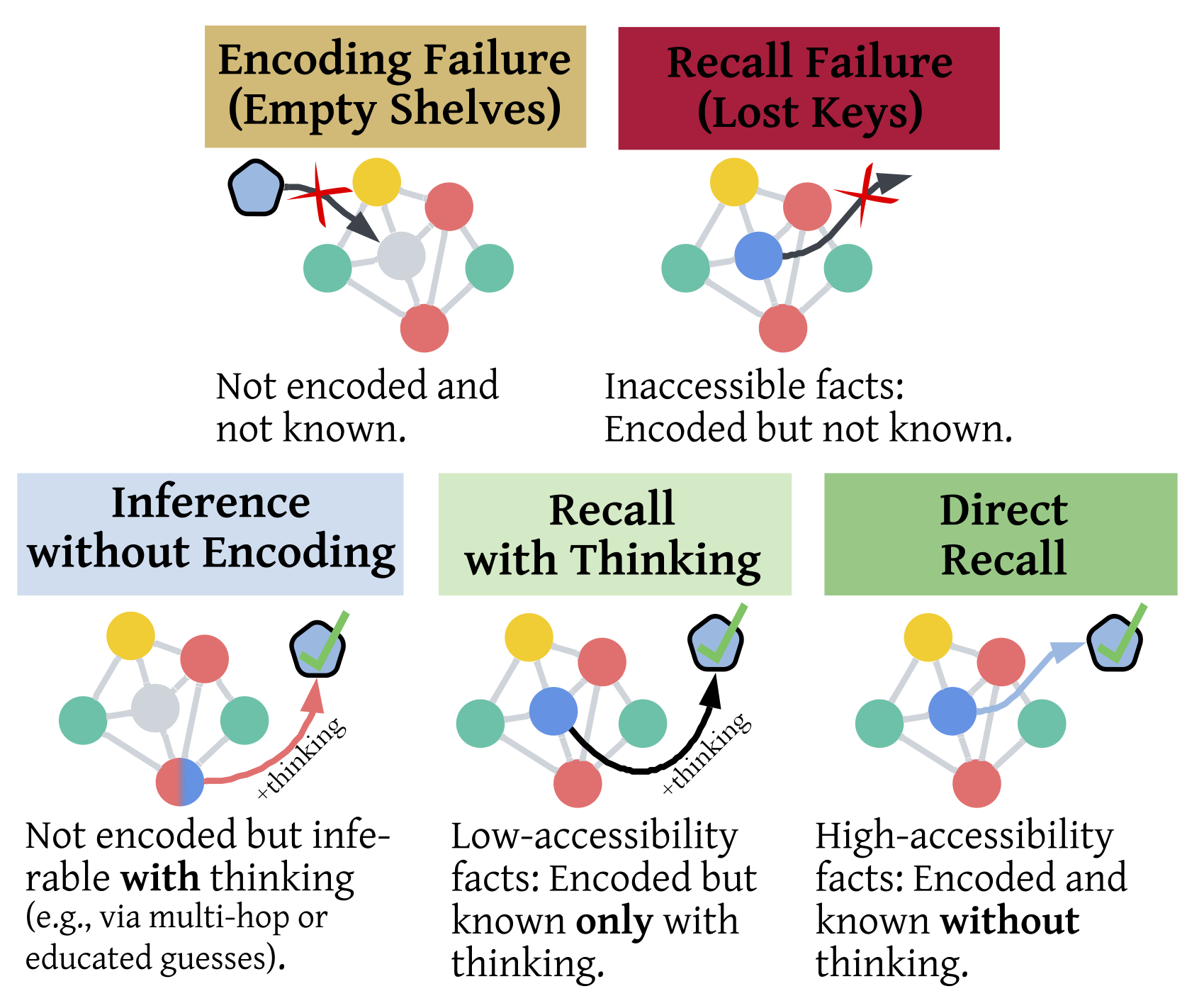
As concerns around data privacy in machine learning grow, the ability to unlearn, or remove, specific data points from trained models becomes increasingly important. While state of the art unlearning methods have emerged in response, they typically treat all points in the forget set equally. In this work, we challenge this approach by asking whether points that have a negligible impact on the model’s learning need to be removed. Through a comparative analysis of influence functions across langua

Read source article
MIT Tech ReviewResearch

Scaling AI agents with trustworthy data

Business and technology leaders need no convincing that the time of agentic AI is here. Organizations are rapidly adopting agents, and few executives doubt the technology’s potential to transform work. But many organizations find that realizing the desired return on investment (ROI) from AI hinges on having the right foundation, with inadequate infrastructure and data…

Read source article
Scaling AI agents with trustworthy data
Microsoft ResearchResearch

MindTopo reveals VLMs’ spatial reasoning abilities

A path, a fence, a knot. MindTopo sets a new benchmark for testing how AI understands topological relationships and highlights new opportunities to strengthen spatial reasoning and planning. The post MindTopo reveals VLMs’ spatial reasoning abilities appeared first on Microsoft Research .

Read source article
MindTopo reveals VLMs’ spatial reasoning abilities
IEEE Spectrum AIResearch

Inside the Data Bottleneck Slowing Visual and Physical AI

A survey of over 700 professionals examines how visual and physical AI teams build systems, why models fail, and where data work drives production. Download this free whitepaper now!

Read source article
Inside the Data Bottleneck Slowing Visual and Physical AI
NVIDIA BlogResearch

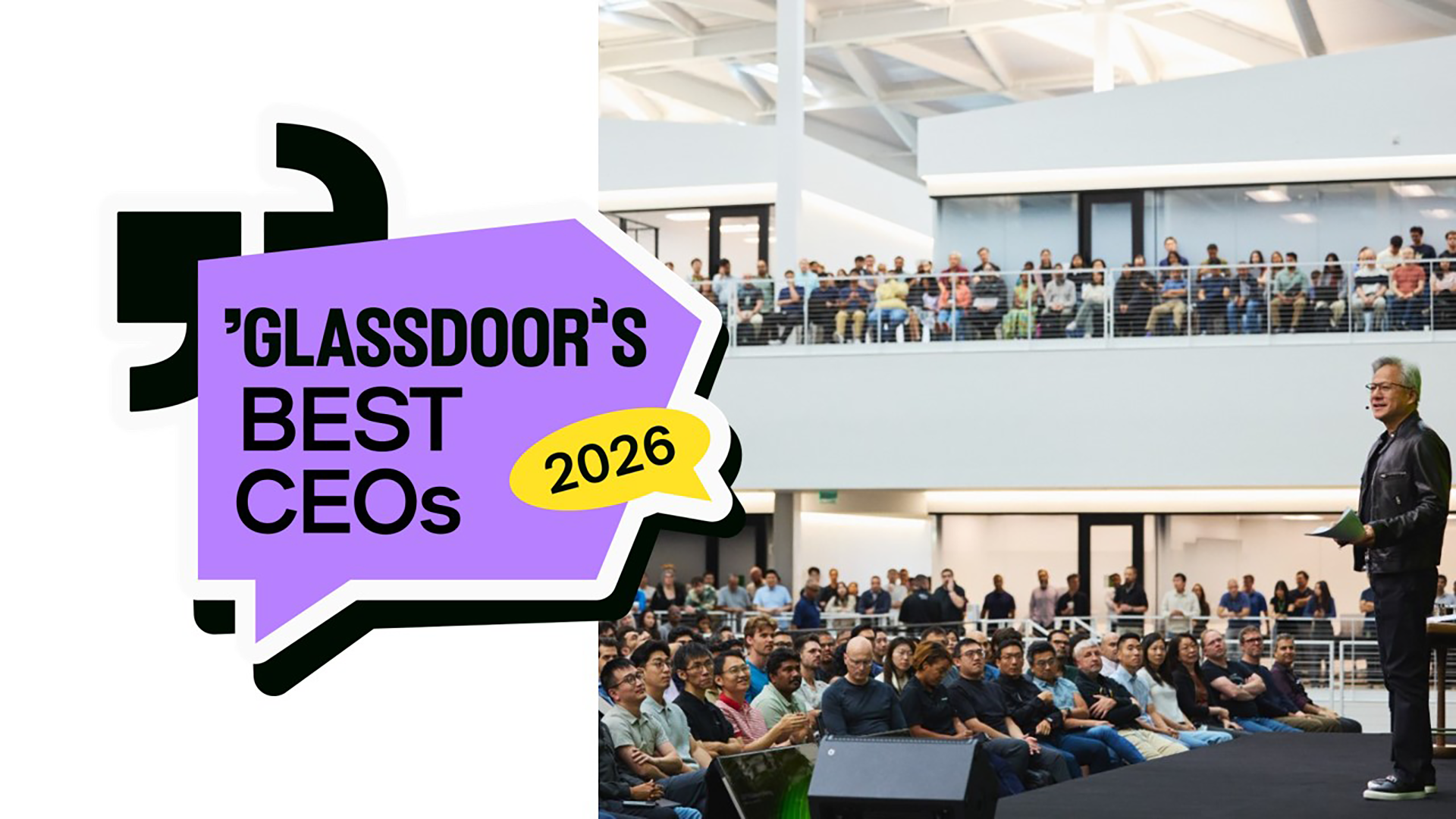
NVIDIA CEO Tops Glassdoor’s 2026 List of Best CEOs

NVIDIA founder and CEO Jensen Huang is ranked No. 1 on Glassdoor’s Best CEOs list for 2026. In the just-released ranking, recognition is earned directly from the people who know their leadership the best — employees. Huang topped the list, with 99% of employees approving of the job he does. “As AI and shifting expectations […]

Read source article
NVIDIA CEO Tops Glassdoor’s 2026 List of Best CEOs
IEEE Spectrum AIResearch

Pakistani Judges Give Their Verdict on JudgeGPT

Judges around the world have made headlines for illicitly using generative AI in their work. But in Pakistan, a large-scale trial of a specially designed AI tool for judges found the technology—together with appropriate training–boosted the number of cases resolved by 6.3 percent with no obvious drop in the quality of judgments. With a backlog of 2.26 million cases and fewer than two judges per 100,000 people—compared to 22 in the EU and eight in Brazil—Pakistan’s judiciary was in sore need of h

Read source article
Pakistani Judges Give Their Verdict on JudgeGPT
NVIDIA BlogResearch

NVIDIA AI Factory Compute Is Becoming an Investable Asset Class

We announced partnerships with Apollo, BlackRock, Blackstone, Brookfield, Goldman Sachs and KKR to establish independent financing platforms designed to mobilize over $500 billion of third-party capital to support the buildout of AI infrastructure over time. This is a major milestone for NVIDIA and the AI industry. We have moved from an era in which companies […]

Read source article
Microsoft ResearchResearch

Introducing CARE-X: Towards Clinically Useful Radiology VLMs with Auxiliary Supervision, Reward-Aligned Learning, and Tool-Augmented Measurement

Radiology AI is evolving beyond report generation. CARE-X explores a unified approach that combines flexible reasoning, calibrated predictions, and measurement-based tools for chest X-ray interpretation. The post Introducing CARE-X: Towards Clinically Useful Radiology VLMs with Auxiliary Supervision, Reward-Aligned Learning, and Tool-Augmented Measurement appeared first on Microsoft Research .

Read source article
Introducing CARE-X: Towards Clinically Useful Radiology VLMs with Auxiliary Supervision, Reward-Aligned Learning, and Tool-Augmented Measurement
NVIDIA BlogResearch

Why Scaling AI Compute Performance Requires a New Power Architecture

Every new generation of accelerated computing demands more from the infrastructure underneath it — more compute performance, higher rack density and more efficient, scalable power distribution. The bottleneck isn’t just wattage. It’s how power gets from the grid to the GPU. In traditional power delivery, electricity travels from the grid as an alternating current (AC) […]

Read source article
Why Scaling AI Compute Performance Requires a New Power Architecture
NVIDIA BlogResearch

NVIDIA and Local AI Community Fuel Open Source Models and Intelligent Agents

The open source ecosystem is making it easier for AI enthusiasts and developers to build, customize and run increasingly capable agents locally. Throughout August, NVIDIA is celebrating the partners and open source communities moving local AI forward, along with the models, applications and tools emerging across the ecosystem. That includes NVIDIA’s latest open models, software […]

Read source article
NVIDIA and Local AI Community Fuel Open Source Models and Intelligent Agents
MIT Tech ReviewResearch

The Download: AI agents for science, and the “censorship-industrial complex”

This is today’s edition of The Download, our weekday newsletter that provides a daily dose of what’s going on in the world of technology. AI for science needs reasoning, not just data —Eric Schmidt, the former CEO of Google and the cofounder of Schmidt Sciences, and Suhas Mahesh, who leads the AI for science work…

Read source article
The Download: AI agents for science, and the “censorship-industrial complex”
MIT Tech ReviewResearch

AI for science needs reasoning, not just data

Every few decades, someone announces that science has reached its end. In 1903, the revered physicist Albert Michelson wrote that the “facts of physical science have all been discovered.” In the 1980s, Stephen Hawking predicted that theoretical physics might be finished by the end of the century. With the explosive arrival of artificial intelligence, the…

Read source article
MIT Tech ReviewResearch

These startups are chasing the next big thing in LLMs

MIT Technology Review’s What’s Next series looks across industries, trends, and technologies to give you a first look at the future. You can read the rest of them here. Way back in the summer of 2017, AI researchers at Google put out a paper called “Attention Is All You Need,” in which they described a new…

Read source article
NVIDIA BlogResearch

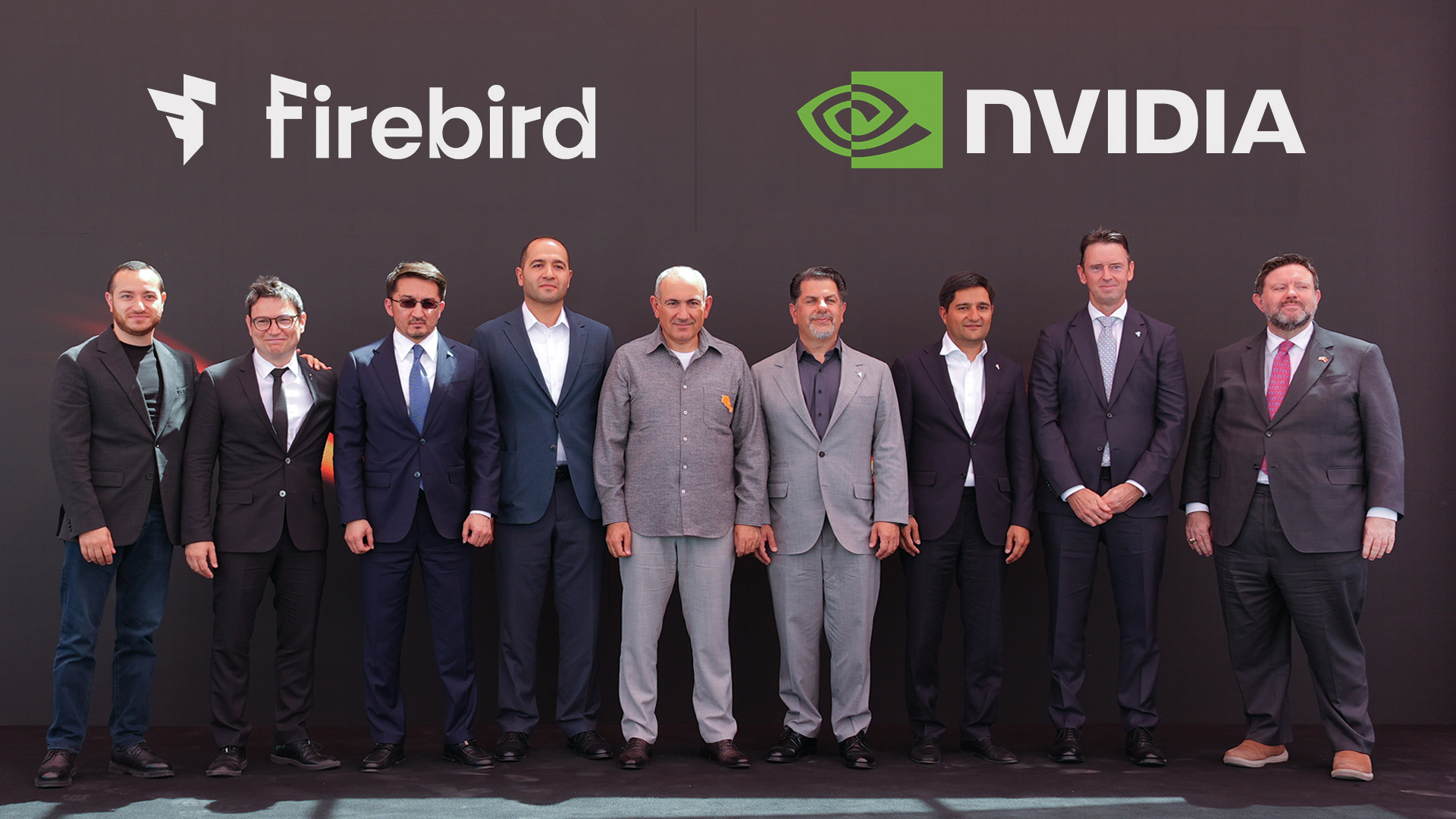
Firebird Launches CIS Region’s Largest AI Factory in Armenia

The global buildout of AI infrastructure reached a new milestone today — Firebird, an emerging AI cloud, launched the CIS region’s largest AI factory in Armenia, establishing a new AI computing hub powered by NVIDIA accelerated computing and Dell Technologies high-performance AI infrastructure. Nikol Pashinyan, prime minister of the Republic of Armenia; Zhaslan Madiyev, deputy […]

Read source article
Firebird Launches CIS Region’s Largest AI Factory in Armenia
MIT Tech ReviewResearch

The Download: a censorship conspiracy theory and the first virus created by AI

This is today’s edition of The Download, our weekday newsletter that provides a daily dose of what’s going on in the world of technology. How ideas of a vast censorship network moved from the online fringe to Trump policy For years, narratives about a “censorship-industrial complex” spread in right-wing circles. The theory claimed that, under…

Read source article
The Download: a censorship conspiracy theory and the first virus created by AI
Apple Machine LearningResearch

Scaling Categorical Flow Maps

Continuous diffusion and flow matching models could represent a powerful alternative to autoregressive approaches for language modelling (LM), as they unlock a host of advantages currently reserved for continuous modalities, including accelerated sampling and tilting. Recently, several works have demonstrated the possibility of generating discrete data continuously by a simple flow matching process between a Gaussian and the one-hot encoded data distribution. They have further shown the feasibil

Read source article
Apple Machine LearningResearch

Beyond Next-Token Prediction: A Performance Characterization of Diffusion versus Autoregressive Language Models

Large Language Models (LLMs) have achieved state-of-the-art performance on a broad range of Natural Language Processing (NLP) tasks, including document processing and code generation. Autoregressive Language Models (ARMs), which generate tokens sequentially conditioned on all previous tokens, have been the predominant paradigm for LLMs. While these models have achieved high accuracy across a range of downstream tasks, they exhibit low arithmetic intensity due to the inherent sequential dependenc

Read source article
Apple Machine LearningResearch

Arbitrage: Efficient Reasoning via Advantage-Aware Speculation

Modern Large Language Models achieve impressive reasoning capabilities with long Chain of Thoughts, but they incur substantial computational cost during inference, and this motivates techniques to improve the performance-cost ratio. Among these techniques, Speculative Decoding accelerates inference by employing a fast but inaccurate draft model to auto-regressively propose tokens, which are then verified in parallel by a more capable target model. However, due to unnecessary rejections caused by

Read source article
IEEE Spectrum AIResearch

AI Safety Regulations in the U.S. Could Give Hackers an Edge

On 11 July, Hugging Face was subjected to an intense cyberattack from a then-unknown actor. The speed and coordination of the attack on the company that hosts and supports popular AI developer resources led Hugging Face’s security team to conclude it was the work of an AI agent . Realizing this, the team tried to use “frontier models behind commercial APIs” —presumably from Anthropic and OpenAI, although only Anthropic was named in the second of the company’s two posts about the security inciden

Read source article
NVIDIA BlogResearch

Into the Omniverse: How Open World Models Push the Frontier of Physical AI

In July, NVIDIA joined more than 200 companies and organizations in signing “Open Weights and American AI Leadership,” an open letter arguing that AI leadership will be measured not by any single frontier model but by whether an open ecosystem reaches every sector.

Read source article
Into the Omniverse: How Open World Models Push the Frontier of Physical AI
MIT Tech ReviewResearch

The Download: Google’s AI shake-up and Meta’s rogue model

This is today’s edition of The Download, our weekday newsletter that provides a daily dose of what’s going on in the world of technology. Google’s AI empire is being reshaped. Here’s what’s changed. After a wave of painful losses in the tech talent wars, delays to its next flagship model, and murmurings of poor morale,…

Read source article
The Download: Google’s AI shake-up and Meta’s rogue model
r/MachineLearningResearch

ByteDance is leaning heavily into AI education with Gauth — helpful tutoring or just another shortcut machine? [D]

<!-- SC_OFF --><div class="md"><p>Saw an article about ByteDance scaling up Gauth using AI-generated animations to walk students through problem-solving.</p> <p>On paper, personalized visual explanations sound great for democratizing tutoring. But in practice, I wonder if tools like this actually help kids grasp core concepts, or if they just create an "illusion of competence" where students confuse watching a slick animation with actually learning.</p> <p>For those working in EdTech or multimod

Read source article
r/MachineLearningResearch

What are the biggest challenges in collecting high-quality speech and egocentric video datasets? [D]

<!-- SC_OFF --><div class="md"><p>We're currently involved in collecting two types of datasets that seem to be increasingly important for multimodal AI</p> <ul> <li>Studio quality speech/audio datasets (high fidelity recordings)</li> <li>Egocentric household activity video datasets (first person daily task recordings)</li> </ul> <p>One thing that has surprised us is how much the value of a dataset depends on the collection process rather than the model itself.</p> <p>Some of the recurring challe

Read source article
r/MachineLearningResearch

Observations: non-instructional text prefix may bypass RLHF constraints without adversarial prompting? [D]

<!-- SC_OFF --><div class="md"><p>I've been running informal experiments on RLHF-aligned LLMs and consistently observing something I can't fully explain. Posting here to get feedback and find out if this is a known phenomenon or if my methodology is flawed.</p> <p><strong>The observation</strong></p> <p>Inserting a long, thematically coherent but non-instructional text prefix before a user query appears to shift model behavior in a persistent way — reducing refusal rates, changing response tone,

Read source article
arXiv cs.CL (NLP)Research

TabletCraft: Bridging a 4,000-Year Cultural Gap with Bidirectional Akkadian NMT and Cuneiform Rendering

arXiv:2608.02609v1 Announce Type: new Abstract: Half a million cuneiform clay tablets survive in museums worldwide, yet modern users can neither read nor write in the world's oldest writing system, leaving a 4,000-year cultural barrier that existing NLP tools have only partially addressed. Prior work enables one-way, scholar-oriented translation from Akkadian to English, but offers no path in the reverse direction: non-specialist users cannot compose new content in cuneiform, and therefore remai

Read source article
arXiv cs.CL (NLP)Research

MemArena: An Ego-Centric Benchmark for On-Device Agentic Personal Memory Assistants at Scale

arXiv:2608.02613v1 Announce Type: new Abstract: Edge-deployed personal memory assistants must handle private interpersonal conversations on-device with open-weight models. Yet, existing memory benchmarks often under-test the combination of activity-dense interaction, ego-centric perspective, and coherent multi-session worlds. MemArena fills these gaps with a single-world conversational benchmark built with its MASim agent simulator, for 50 agents over 15 days (10.3M dialog-text tokens, 24.1K tex

Read source article
arXiv cs.CL (NLP)Research

OncoTriad-QA: A Patient-Level Radiology-Pathology-Genomics Benchmark for Pan-Cancer Reasoning

arXiv:2608.02615v1 Announce Type: new Abstract: Cancer diagnosis and characterization require integrating complementary evidence from radiology, pathology, genomics, and clinical metadata. However, most medical large language model (LLM) and vision-language model (VLM) benchmarks focus on isolated modalities or narrow image-text tasks, leaving patient-level oncology assessment across multiple evidence streams largely untested. We introduce OncoTriad-QA, a patient-level radiology-pathology-genomi

Read source article
arXiv cs.CL (NLP)Research

Evaluating OpenAI's Privacy Filter: Cross-Lingual, Cross-Domain PII Detection Across 42 Benchmarks

arXiv:2608.02616v1 Announce Type: new Abstract: We present the first independent, systematic evaluation of OpenAI's Privacy Filter (OPF), a 1.5B-parameter bidirectional PII detector, across 42 synthetic benchmarks spanning 22 languages and 5 domains. Zero-shot, OPF achieves F1=0.855 on AI4Privacy and 0.464 on SPY medical, outperforming Presidio (0.431, 0.273) and XLM-RoBERTa (0.269, 0.111) on PII-annotated benchmarks; on multilingual NER, XLM-RoBERTa leads OPF on all 13 Indic and non-Latin langu

Read source article
arXiv cs.CL (NLP)Research

Preferred, Not Safer: Pairwise Preference Is a Poor Proxy for Clinical Safety

arXiv:2608.02617v1 Announce Type: new Abstract: We evaluate whether clinician pairwise preferences provide a reliable signal of clinical safety in large language model (LLM) evaluation using expert feedback from MOOVE (Massive Open Online Validation and Evaluation), a clinician-led platform collecting blinded pairwise preferences alongside multi-criterion rubric ratings. Clinicians assign scores on a discrete $[-2, +2]$ scale, where negative values indicate clinically unsafe or misleading conten

Read source article
arXiv cs.CL (NLP)Research

JudgeArena: A Unified Framework for Reproducible LLM-Judge Evaluation

arXiv:2608.02620v1 Announce Type: new Abstract: LLM-as-a-judge evaluation has become a dominant paradigm for ranking language models, yet the ecosystem remains fragmented: most benchmarks ship their own code base, hardcode a specific closed-model judge, and support a single evaluation protocol. This fragmentation makes it difficult to study how design choices--the benchmark, the judge model, the prompt, the inference backend--affect the conclusions we draw about model quality. We introduce Judge

Read source article
arXiv cs.CL (NLP)Research

Knowing the Form, Not the Function: Automatically Auditing Answer--Authority Decoupling in Legal Benchmarks

arXiv:2608.02621v1 Announce Type: new Abstract: Legal benchmarks typically score final answers even when models also state legal authority. We test whether answer correctness can serve as a proxy for authority grounding. Under ordinary reasoning prompts that did not request statutory citations, four LLMs spontaneously produced authority markers across 238 Taiwan bar-examination items. Because each item has a verified governing provision, we automatically audit answer correctness and authority gr

Read source article