AiAnyTool - Best AI Tools Directory and Artificial Intelligence Software Hub Logo
Loading theme toggle
Real-Time Coverage

AI News Today

Live

10639 stories from 30+ sources, refreshed continuously.

arXiv cs.LGResearch

Valid Per-Field Selective Risk Control for Document Extraction: Three Failure Modes, a Validity Ladder, and When Conditioning Pays

arXiv:2608.14639v1 Announce Type: new Abstract: Per-field accept/review with selective risk at most alpha -- accept a field only if the error rate among accepted fields is controlled -- is the trust contract document-extraction systems need, and the natural procedure silently violates it on real documents. On 13,859 genuine claude-sonnet-5 fields from 800 CORD receipts (49.0% correct) we diagnose three failure modes: document clustering (design effect 1.84-2.45), score-refit leakage (coverage 0.

Read source article
arXiv cs.LGResearch

Training and Evaluating Ethical Reinforcement Learning Agents on Per-Episode Distributions

arXiv:2608.14642v1 Announce Type: new Abstract: Reinforcement Learning (RL) agents trained on a single reward signal exploit the gap between the designed reward and the intended behavior. This is particularly a problem when we are trying to imbue ethical behavior into RL agents. An agent can look ethical on average while concentrating its violations in a few bad episodes, and a creature in the environment harmed in one episode is not restored by good conduct in another. We compare four ways of t

Read source article
arXiv cs.LGResearch

DUET: Dual-Teacher On-Policy Distillation via Same-Weight Disagreement for Prohibition Compliance

arXiv:2608.14644v1 Announce Type: new Abstract: Real-world LLM deployments increasingly rely on runtime-injected prohibitions--enterprise policies, PII redlines, tool boundaries--that vary per request and per tenant. Conventional post-training is structurally ill-suited: SFT hides the violation signal in compliant labels, and DPO's sequence-level preferences mismatch token-localized violations. We propose DUET, a token-selective on-policy distillation method for prohibition compliance. DUET pair

Read source article
arXiv cs.LGResearch

Efficient Neural-Network-Based High-Resolution Radiative Transfer for CO___ Retrieval, and Application to Interferometric Sensing

arXiv:2608.14645v1 Announce Type: new Abstract: Studying climate change requires reducing uncertainties in CO2 and CH4 emission estimates to better distinguish anthropogenic from natural sources, which motivates spaceborne measurements with improved revisit frequency and spatial coverage. In this context, the Horizon Europe SCARBOn project assesses a low-cost satellite constellation featuring the NanoCarb imaging interferometer as its core sensor for monitoring CO2 and CH4 emissions in the atmos

Read source article
arXiv cs.LGResearch

iFuzz-Meta: An Interpretable Fuzzy Learning Framework Bridging Top-Down and Bottom-Up Knowledge Integration

arXiv:2608.14646v1 Announce Type: new Abstract: Interpretable representation learning remains a key challenge in modern neural computation, particularly when models are expected not only to perform but also to explain their reasoning. This paper introduces iFuzz-Meta, an interpretable fuzzy rule-based learning framework that preserves human-understandable reasoning structures within modern neural architectures. Each fuzzy rule corresponds to a semantic and spatial prototype defined in the origin

Read source article
arXiv cs.LGResearch

Discrete Diffusion Language Models Are Training-Free Multi-Label Classifiers

arXiv:2608.14649v1 Announce Type: new Abstract: We present dLLM-SetScore, a training-free method that uses discrete masked-diffusion language models for multi-label text classification. For each candidate label, it asks a short yes/no question and compares the probabilities of the two answer tokens at one masked position. The method uses no task-specific fine-tuning or training on textual-entailment datasets; a 200-example labelled validation slice selects thresholds, temperature, and prompt wor

Read source article
arXiv cs.LGResearch

Paired Exact-Reset Evaluation of a Prediction-Derived Medium-to-Full World-Model Cascade

arXiv:2608.14650v1 Announce Type: new Abstract: Existing adaptive-inference and world-action-model systems use cheap-stage outputs or predicted futures to allocate additional computation. We study a narrower question: under paired exact-reset physical outcomes, can a Medium-derived interface predict when switching to a separately frozen Full predictor improves task-specific decision loss enough to justify sequential overhead? Our contribution is a paired evaluation and audit protocol, not a new

Read source article
arXiv cs.LGResearch

Pushing the Limits of High-Resolution Weather Forecasting through Data Scaling

arXiv:2608.14652v1 Announce Type: new Abstract: The development of 0.1$^{\circ}$ global weather forecasting models based on machine learning (ML) is constrained by the limited availability of high-resolution data, as decades of reanalysis are only available at 0.25$^{\circ}$ resolution. While existing approaches fine-tune 0.25$^{\circ}$ forecast models on limited 0.1$^{\circ}$ samples, we show that this transfer is hindered by the irreversible information loss inherent in coarse-resolution forec

Read source article
arXiv cs.LGResearch

Do Uncertainty Signals Help? A Systematic Study of Uncertainty-Aware Decoding with Rollback Mechanisms

arXiv:2608.14653v1 Announce Type: new Abstract: Prediction uncertainty is a widely adopted metric for quantifying model confidence, with downstream applications spanning model explanation, data selection, and prediction rollback. Despite its demonstrated utility, the potential of uncertainty quantification to enhance code generation in large language models (LLMs) remains largely underexplored, raising a critical question: to what extent can uncertainty serve as an effective signal for improving

Read source article
Apple Machine LearningResearch

Examining Human-Like Behaviors in LLMs: A Multi-Dimensional Analysis of Model Behaviors, User Factors, and System Prompts

Large language models (LLMs) exhibit a wide range of human-like behaviors, from expressing thoughts and emotions, to engaging in relationship-building with users, to refusing requests and maintaining boundaries. Despite their prevalence, researchers and practitioners lack methods and empirical insights to make informed decisions about when and what types of human-like behaviors LLMs should exhibit. To fill this gap, we present a multi-dimensional analysis of the prevalence, potential effects, an

Read source article
Apple Machine LearningResearch

The P-Completeness of Inverted Index Traversal: On the Complexity of Evaluating Boolean Query DAGs

Modern AI agents increasingly rely on search infrastructure to execute complex, neuro-symbolic reasoning workflows. These workflows often compile into deeply nested, non-monotonic Boolean queries over text fields. However, standard query evaluation strategies over inverted indices face severe theoretical limits when handling these structures. Stateful iterator models (Document-at-a-Time) are structurally bounded by NC^1 formula evaluation, suffering a worst-case O(2^|Q|) exponential blowup in qu

Read source article
MIT Tech ReviewResearch

The Download: how people really use AI, and Flock’s design choices

This is today’s edition of The Download, our weekday newsletter that provides a daily dose of what’s going on in the world of technology. We still don’t know how people are really using AI AI companies like Anthropic and OpenAI regularly publish reports on how people are using their products. But they only release the…

Read source article
The Download: how people really use AI, and Flock’s design choices
r/MachineLearningResearch

Trained an diffusion model that runs on 264KB of RAM [P]

<table> <tr><td> <a href="https://www.reddit.com/r/MachineLearning/comments/1vrk7t5/trained_an_diffusion_model_that_runs_on_264kb_of/"> <img src="https://preview.redd.it/8vzcg2x7q3kh1.png?width=140&height=140&auto=webp&s=7a1fb828642c6ddfa5211c2a6f942764e68a21cb" alt="Trained an diffusion model that runs on 264KB of RAM [P]" title="Trained an diffusion model that runs on 264KB of RAM [P]" /> </a> </td><td> <!-- SC_OFF --><div class="md"><p>I recently bought a <a href="https://store.vicharak.in/?p

Read source article
Trained an diffusion model that runs on 264KB of RAM [P]
MIT Tech ReviewResearch

AI’s recursive self-improvement might not come so quickly after all

The AI industry’s boldest promise right now is that AI will soon improve itself, with almost no need for human oversight. LLMs can already write code, generate synthetic data for training, and optimize the computer chips they run on. Forecasts of explosive AI progress predict that what researchers call recursive self-improvement is on the horizon. …

Read source article
Apple Machine LearningResearch

GRPO Beyond English: A Large-Scale Study of GRPO in Non-English and Multilingual Settings

Reinforcement Learning with Verifiable Rewards (RLVR), often optimized with Group Relative Policy Optimization (GRPO), has become a central recipe for improving the reasoning capabilities of pretrained language models but current studies remain heavily English-centric. We conduct a large-scale empirical study of multilingual and non-English GRPO across a wide range of base models, training languages, and different reasoning language rewards. We find that training to reason in the native language

Read source article
Apple Machine LearningResearch

MVICAD2: Multi-View Independent Component Analysis with Delays and Dilations

Machine learning techniques in multi-view settings face significant challenges, particularly when integrating heterogeneous data, aligning feature spaces, and managing view-specific biases. These issues are prominent in neuroscience, where data from multiple subjects exposed to the same stimuli are analyzed to uncover brain activity dynamics. In magnetoencephalography (MEG), where signals are captured at the scalp level, estimating the brain’s underlying sources is crucial, especially in group s

Read source article
r/MachineLearningResearch

We’ve got a workshop on production retrieval-augmented generation with open models, benchmarked end to end, thought it’d be relevant here [D]

<!-- SC_OFF --><div class="md"><p>There’s a hands-on workshop on August 29 that builds and benchmarks this properly, end to end, using entirely open models, no API calls involved. Led by Ben Auffarth, AI Consultant and Founder of Chelsea AI Ventures.</p> <p>What it covers:</p> <p><strong>•</strong> Hybrid retrieval (vector + keyword, not vector alone)<br/> <strong>•</strong> Reranking to catch relevant chunks that vector search alone misses<br/> <strong>•</strong> Evaluation with RAGAS, so quali

Read source article
MIT Tech ReviewResearch

What Flock’s defenders are missing

This story originally appeared in The Algorithm, our weekly newsletter on AI. To get stories like this in your inbox first, sign up here. Flock, the police-tech giant known for its network of some 120,000 automatic license plate readers around the US, announced some changes to its platform last Thursday. The updates are meant to prevent…

Read source article
IEEE Spectrum AIResearch

From AI Copilots to Agent Swarms

The impact of AI on software development has been both profound and ever-evolving. Last year, I wrote about AMD’s plans to use AI not just for generating new lines of code, but also for other steps in the software development lifecycle (SDLC), such as triaging problems, debugging code, and testing the software. At the time, we were hoping for a 25 percent productivity boost from AI use over the course of two or three years. But with each new release, the capabilities of large language models (LL

Read source article
From AI Copilots to Agent Swarms
IEEE Spectrum AIResearch

AI Used to Verify Toughest Mathematics Proof Yet

Representing a significant milestone in AI-assisted mathematical research, a team at Axiom Math has automatically verified the proof of a theorem relating to prime numbers—colloquially referred to as the “246 theorem”—for the first time using the company’s AI system AxiomProver. In formal verification, mathematicians task a computer with checking a machine-readable version of a proof. The process is not a 100 percent guarantee that the proof is correct, as a recent demonstration showed , exposin

Read source article
AI Used to Verify Toughest Mathematics Proof Yet
NVIDIA BlogResearch

Securing the Infrastructure of Intelligence

AI factories are the defining infrastructure of the AI era — where compute transforms energy and data into intelligence that powers every business, industry and country. In the AI economy, compute is revenue. AI factories require a full stack of critical resources: advanced chips, packaging, memory and networking — as well as land, power and […]

Read source article
r/MachineLearningResearch

[Career Advice] Final-year in Physical AI / Robotics. How is the market & global hiring for freshers? [D]

<!-- SC_OFF --><div class="md"><p>Hi everyone,</p> <p>I am heading into my final year of my BTech at a tier 1 college in India and just wrapped up a Physical AI internship at a MNC, working heavily with NVIDIA Isaac Sim and OpenFOAM. </p> <p>My background is fully focused on robotics and autonomy. My tech stack includes:</p> <ol> <li>Simulation & Middleware: Isaac Sim, Gazebo, ROS / ROS 2, PX4 Autopilot.<br/></li> <li>Perception & Control: VIO, SLAM (RTAB-Map), Nav2, depth perception, and reinfo

Read source article
IEEE Spectrum AIResearch

The CPU Comeback Is Upon Us

Earlier this year, leaders at Amazon Web Services delivered a new mandate to their engineers: They need to conserve CPU cycles at all costs. AWS has reportedly experienced an explosion in wait times for CPU server capacity as AI workloads strain the company’s cloud infrastructure. The issue seemingly took AWS off guard, and for good reason. The AI boom led to a surge in demand for GPUs and, later, memory . CPUs were mostly left out of the story, as their relative lack of parallelization made the

Read source article
The CPU Comeback Is Upon Us
NVIDIA BlogResearch

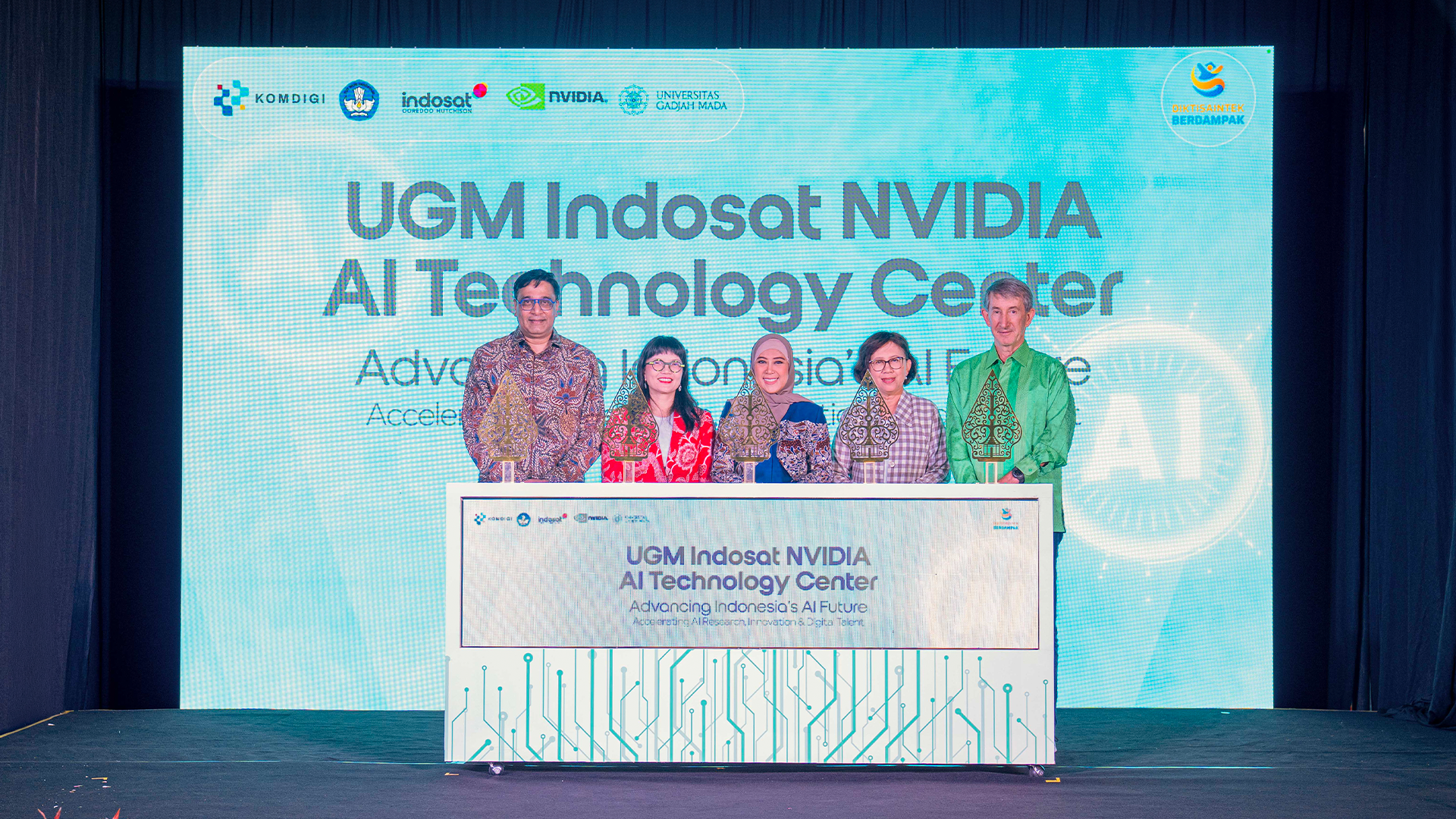
Universitas Gadjah Mada, Indosat and NVIDIA Open Indonesia’s First University AI Center to Develop Local AI Talent

Indonesia is taking charge of its AI future. This week, the Ministry of Communication and Digital Affairs (Komdigi), Indosat Ooredoo Hutchison (Indosat or IOH), NVIDIA and Universitas Gadjah Mada (UGM) launched the UGM Indosat NVIDIA AI Technology Center (NVAITC) in Yogyakarta — the country’s first university-based AI technology center. Established under Indonesia’s AI Center of […]

Read source article
Universitas Gadjah Mada, Indosat and NVIDIA Open Indonesia’s First University AI Center to Develop Local AI Talent
MIT Tech ReviewResearch

Building a practical path to post-quantum cryptography

Quantum computing has alternated between breakthrough darling and overhyped promise in technology circles. Its powerful new capabilities come with a threat to break current cryptography, but for business leaders navigating the noise, the signal should be clear: post-quantum cryptography (PQC) is a manageable evolution, not a crisis. The mathematics behind today’s encrypted digital transactions may…

Read source article
Building a practical path to post-quantum cryptography
MIT Tech ReviewResearch

The Download: kids’ thoughts on AI, and female clones of male mice

This is today’s edition of The Download, our weekday newsletter that provides a daily dose of what’s going on in the world of technology. How kids feel about AI, in their own words —Jen Swetzoff and Keeley McNamara, the founding editors of Anyway, an independent print magazine for tweens and teens When we set out…

Read source article
The Download: kids’ thoughts on AI, and female clones of male mice
MIT Tech ReviewResearch

How kids feel about AI, in their own words

When we set out to talk to kids about artificial intelligence, we thought we knew what we’d hear. We expected some to tell us they were using it to cheat a little, the way Millennials and Gen Xers opened up CliffsNotes or programmed formulas into their TI-82s, and others to share inspiring ways they were…

Read source article
How kids feel about AI, in their own words
arXiv cs.AIResearch

Dynamic Governance of Multi-LLM Agent Systems for Collaborative Conversational Outcomes

arXiv:2608.11207v1 Announce Type: new Abstract: When two LLM agents with structurally opposed objectives interact across multiple turns, the absence of a shared goal function produces not competition but collapse: the visitor capitulates, the site agent stops varying its approach, and the conversation terminates without achieving either agent's stated objective. This paper asks whether a control-theoretic governance layer can substitute for that missing goal function. The Experience Orchestrator

Read source article
arXiv cs.AIResearch

Distribird: Literature-Informed Prior Distribution Design for Bayesian Model Calibration

arXiv:2608.11210v1 Announce Type: new Abstract: Bayesian calibration of process-based models requires a prior distribution for each model parameter. Despite decades of methodological work, researchers almost always fall back on uniform priors. The main reason is that building informative priors from scientific literature is slow and needs both domain and statistical expertise. We present \textbf{Distribird}, an agentic web application that automates this process. Given a parameter name, physical

Read source article
arXiv cs.AIResearch

A Forced-Structure Reduction and Verifiable Bounds for Conway's 99-Graph

arXiv:2608.11211v1 Announce Type: new Abstract: Conway's 99-graph problem asks whether a strongly regular graph with parameters $\mathrm{srg}(99,14,1,2)$ exists. We report a systematic, fully reproducible attack by an autonomous AI research agent, scored under the track's partial-credit metric. Our verifiable contributions are: (1) an exhaustive proof that no circulant graph on $\mathbb{Z}/99$ satisfies more than $3366/4950=68.0\%$ of the constraints ($33$ of $49$ difference-classes), with the s

Read source article
arXiv cs.AIResearch

Poor Man's Agentic Modeling: Simulating Large LLM-Agent Societies on a Laptop

arXiv:2608.11215v1 Announce Type: new Abstract: Simulating societies of many large language model (LLM) agents is expensive, yet the questions asked of such simulations are usually macroscopic: phase behaviour, stylised facts, and scaling with the number of agents $N$, not the cognition of any single agent. We turn a statistical-physics observation into a method: replace each LLM agent by a low-parameter model fitted from a few hundred to a few thousand cheap queries, then run the society at any

Read source article
arXiv cs.AIResearch

AutoWorldModel-Bench: A State-Centric Benchmark for Automated World-Model Research

arXiv:2608.11216v1 Announce Type: new Abstract: World modeling is an unsettled field: architectures, training objectives, and state representations interact in complex ways, and no single recipe dominates across environments. This makes it an ideal testbed for AI coding agents acting as autonomous researchers--a setting in which the improvement direction is not specified in advance, unlike the engineering-to-spec tasks that dominate current agent benchmarks. We introduce AutoWorldModel-Bench, a

Read source article
arXiv cs.AIResearch

MaSRead: Content-Addressed Reading of Replicated Latent Stores

arXiv:2608.11218v1 Announce Type: new Abstract: Independent agents that reason in latent space can share computed state as key-value cache fragments rather than text. Merged by a conflict-free replicated data type, these fragments form a store that converges under any delivery order or duplication. Yet a later query, unknown at encode time, cannot reliably read the merged cache: colocated fragments interfere, so colocation is not addressability. MaSRead addresses the read to content. It routes t

Read source article
arXiv cs.AIResearch

From Monolithic to Modular: Segment-level Automatic Prompt Optimization

arXiv:2608.11219v1 Announce Type: new Abstract: Automatic Prompt Optimization (APO) often rewrites prompts monolithically, which can improve one behavior while degrading others. We present SAPO, a segment-level APO method that decomposes prompts into role, context, tasks, and output format, then applies targeted improvements based on top-5 and bottom-5 examples. The optimization loop uses one LLM with static meta-prompts and structured outputs for segmentation, weakness analysis, and candidate g

Read source article
arXiv cs.AIResearch

LLMs in Process Diagram Engineering: From Optimal PFDs to Validated P&IDs

arXiv:2608.11220v1 Announce Type: new Abstract: Nowadays, the creation of a process flow diagram (PFD) and its subsequent transformation into a piping and instrumentation diagram (P&ID) is predominantly performed manually. Applying artificial intelligence in the task could potentially lead not only to process automation and time savings, but also to financial gains by exploring numerous diagram's topology options and reducing manual labor. This research presents P&ID Pilot - a practical end-to-e

Read source article
arXiv cs.AIResearch

Harnessing agent memory to build lifelong AI partners for materials scientists

arXiv:2608.11224v1 Announce Type: new Abstract: Materials research advances through accumulated experience - scripts that work, protocols that are trusted, warnings attached to failed calculations or experiments, and judgement that links a new question to an old result. This experience is essential for reproducibility and knowledge transfer, yet it is usually fragmented across notebooks, repositories, job logs and individual memory, and it is rarely portable across artificial-intelligence agents

Read source article
arXiv cs.AIResearch

Identity from the Outside: A Conceptual Framework and Research Program for AI Personality Clones

arXiv:2608.11225v1 Announce Type: new Abstract: AI "personality clones" force a re-examination of personal identity in operational terms. Setting aside the hard problem of consciousness, we approach identity through the indiscernibility of manifestations, as assessed by an observer over a duration. We distinguish three criteria that "identity" conflates: fidelity to a target person, generic human-likeness, and individuality. We propose a six-term factorization of observed identity (substrate, di

Read source article
arXiv cs.AIResearch

Cutting AI Datacenter Energy with Reinforcement Learning: Measured Power Control of LLM Training from One GPU to the Fleet

arXiv:2608.11226v1 Announce Type: new Abstract: Reinforcement-learning post-training dominates modern language-model development, yet its power behavior on GPU hardware has not been characterized, and datacenters manage GPU power with workload-blind mechanisms, static caps and reactive throttling, that slow hardware indiscriminately. We instrument GRPO training with half-second power telemetry at 7B, 14B, and 72B scales on one to four A100s (380,000+ samples), and train a PPO meta-controller tha

Read source article
arXiv cs.AIResearch

Forecasting Side Effects of Activation Steering

arXiv:2608.11227v1 Announce Type: new Abstract: Activation steering modifies a language model by adding a learned direction to its hidden activations, enabling targeted behavioral changes without retraining. While effective, steering often produces unintended side effects on other behaviors, making it difficult to deploy safely. We therefore ask: can these side effects be forecasted before steering is applied? We answer this question by constructing a cross-effect matrix over a taxonomy of 67 be

Read source article
arXiv cs.AIResearch

Synchronizing Beliefs with Second-Order Theory-of-Mind in Human-Autonomy Teams (Extended Version)

arXiv:2608.11229v1 Announce Type: new Abstract: Comparative feedback, asking people which of two behaviors they prefer, has become a standard way to align robot and agent behavior with human intent when the reward itself cannot be specified directly. Preference-based reward learning typically casts the human teacher as a passive oracle answering learner-generated queries. We argue this forfeits the teacher's defining advantage: knowledge of the objective. A teacher who knows the target can const

Read source article