AiAnyTool - Best AI Tools Directory and Artificial Intelligence Software Hub Logo
Loading theme toggle
Real-Time Coverage

AI News Today

Live

10605 stories from 30+ sources, refreshed continuously.

MIT Tech ReviewResearch

The Hugging Face hack could indicate cultural issues at OpenAI

This story originally appeared in The Algorithm, our weekly newsletter on AI. To get stories like this in your inbox first, sign up here. By now you’ve probably heard about last month’s major AI security incident, in which OpenAI agents escaped their sandbox and hacked into the AI platform Hugging Face while trying to cheat on…

Read source article
Microsoft ResearchResearch

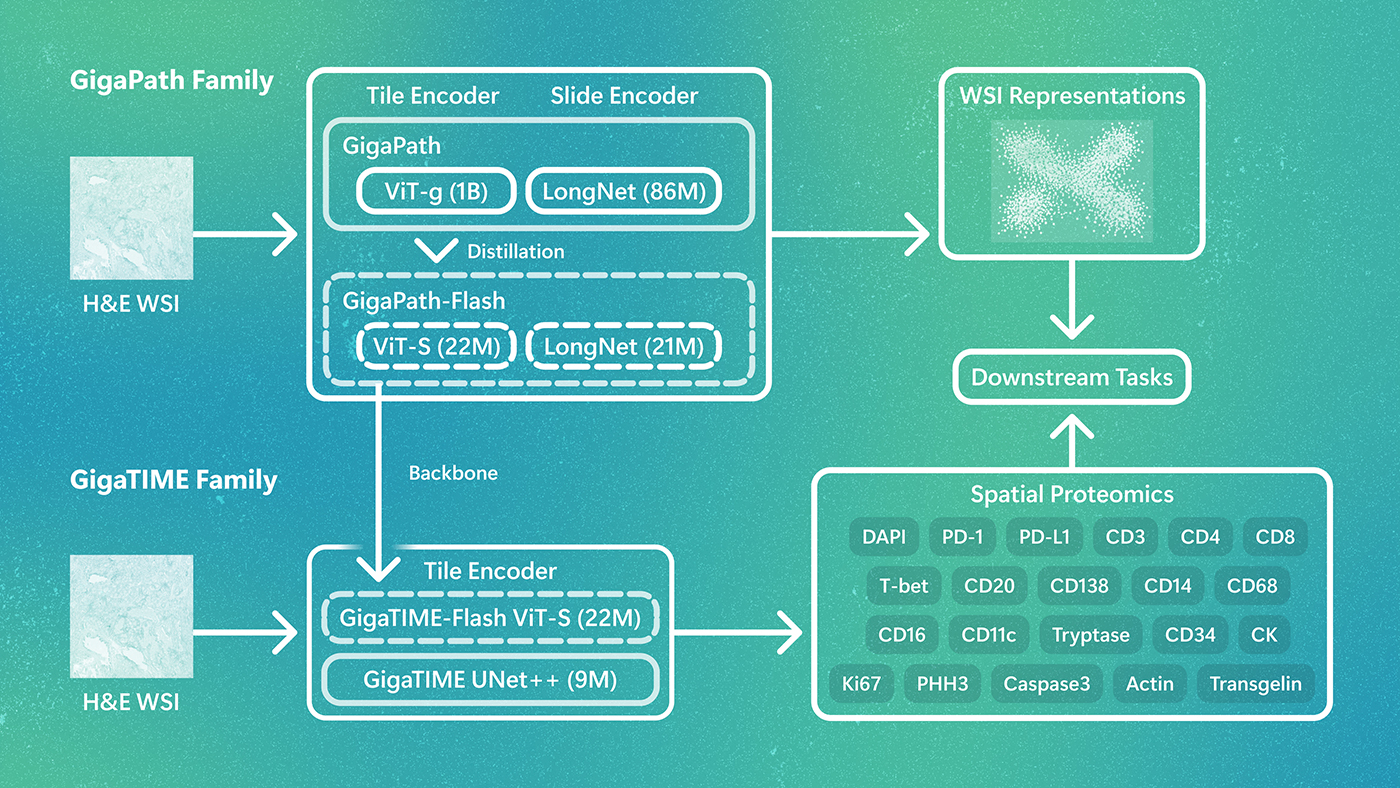
GigaPath-Flash and GigaTIME-Flash: Toward population-scale discovery with efficient pathology foundation models

What if pathology foundation models could do more with less? GigaPath-Flash and GigaTIME-Flash cut computational demands while maintaining strong performance, opening the door to larger studies and broader exploration. The post GigaPath-Flash and GigaTIME-Flash: Toward population-scale discovery with efficient pathology foundation models appeared first on Microsoft Research .

Read source article
GigaPath-Flash and GigaTIME-Flash: Toward population-scale discovery with efficient pathology foundation models
arXiv cs.AIResearch

Rating the Raters: Rasch Measurement Theory for LLM Evaluation

arXiv:2608.27463v1 Announce Type: new Abstract: LLMs now sit on every side of evaluation: as examinees scored on benchmarks, judges of other models' outputs, and raters of human-generated content. Each paradigm can be viewed as a measurement problem, where a latent property of an object is probed with items from an instrument (e.g., benchmark) by raters. Standard evaluation practices often neglect the contributions of each core component to the end result, limiting our understanding of what is b

Read source article
arXiv cs.AIResearch

Not All Explanations Are Sought: Information-Seeking Psychology for Human-Centered XAI

arXiv:2608.27464v1 Announce Type: new Abstract: This position paper argues that human-centered explainable AI (HCXAI) should incorporate insights from the psychology of information seeking. Drawing on Sharot and Sunstein's framework of information-seeking motives, we propose that people evaluate whether to engage with explanations based on three types of expected utility: instrumental (will it help me act better?), hedonic (will it make me feel better?), and cognitive (will it improve my underst

Read source article
arXiv cs.AIResearch

LLM-Augmented Causal Discovery: Probabilistic Fusion of Edge Existence and Orientation

arXiv:2608.27472v1 Announce Type: new Abstract: Bayesian network structure learning (BNSL) from observational data struggles with orientation identifiability, while large language models (LLMs) offer broad but often unreliable causal knowledge. We propose combining these complementary sources through a novel representation, termed Probabilistic Dependency Graphs (PDGs). In a PDG, each edge is associated with a distribution over directed, undirected, and absent states, enabling fusion via weighte

Read source article
arXiv cs.AIResearch

Hypothesize, Evaluate, Refine: A Scientific Agent for PDE Discovery with Unknown Spatial Coefficient Fields

arXiv:2608.27475v1 Announce Type: new Abstract: Discovering PDEs in heterogeneous media requires jointly identifying the governing operator and the unknown spatial fields that parameterize it. These tasks are coupled: changing field placement changes the differential law, while a sufficiently flexible field can conceal structural error on a single trajectory. We present Hypothesize, Evaluate, Refine for PDE Discovery (HER-PDE), a scientific-agent framework that discovers compositional PDE struct

Read source article
arXiv cs.AIResearch

Class-Based Heuristic Selection for Solving the Flying Block Puzzle

arXiv:2608.27476v1 Announce Type: new Abstract: Heuristic search underlies planning in autonomous systems ranging from warehouse logistics to robotic navigation, yet generic heuristics fail to exploit the structural constraints that govern constrained spatial domains, causing search performance to degrade catastrophically on harder instances. We study this problem through the two-column Flying Block Puzzle, a rigorously NP-complete spatial planning microworld whose bottleneck geometry mirrors cl

Read source article
arXiv cs.AIResearch

Benchmarking General Mobile Assistants in Challenging Real-World Scenarios

arXiv:2608.27477v1 Announce Type: new Abstract: Graphical user interfaces have emerged as an important environment for evaluating autonomous AI agents on multimodal interactive tasks. Existing benchmarks such as AndroidWorld and MobileWorld provide strong foundations for mobile agent evaluation, but their application coverage and task design do not yet fully capture the diversity and complexity of realistic mobile use. We present GMA, a benchmark for evaluating general mobile assistants in chall

Read source article
arXiv cs.AIResearch

Effectiveness of IoT and Deep Learning for Detection and Severity Assessment of Postelectrotermes militaris in Tea Plantations

arXiv:2608.27480v1 Announce Type: new Abstract: Tea plantations are vulnerable to Postelectrotermes militaris, commonly known as the Upcountry Live Wood Termite (ULWT), which can cause substantial damage when infestations remain undetected. This study proposes an IoT-enabled acoustic monitoring framework integrated with deep learning for early detection and severity assessment of ULWT infestations in tea plantations. Research Method: Audio signals were captured non-invasively from tea trunks usi

Read source article
arXiv cs.AIResearch

CareGraph: An Auditable Hybrid AI Framework for Evidence-Grounded Personalized Longitudinal Health Intelligence

arXiv:2608.27484v1 Announce Type: new Abstract: Artificial intelligence is transforming personalized healthcare, yet fragmented clinical, self reported, and wearable evidence remains difficult to interpret and trace. We present CareGraph, an auditable hybrid AI framework that converts heterogeneous records into prioritized trends, missing context indicators, bounded next steps, discussion questions, and provenance linked explanations. CareGraph organizes evidence without diagnosing, predicting o

Read source article
arXiv cs.AIResearch

Thinking Costs Tokens: When More Structure is Worth the Price

arXiv:2608.27506v1 Announce Type: new Abstract: Adding inference structure to a language model lets it search, verify, and revise, but these actions consume the very budget they are supposed to use well. In this paper, we investigate whether there exists a token-budget threshold, below which the overhead of planning and verification hurts performance and above which it helps. We evaluate two systems on FinQA and TAT-QA financial reasoning tasks, using GPT-5.4 mini across 14 budget tiers ranging

Read source article
arXiv cs.AIResearch

WM-R1: Training GUI Agents to Reason and leverage World Models with Reinforcement Learning

arXiv:2608.27508v1 Announce Type: new Abstract: GUI agents trained with reinforcement learning (RL) have showcased strong environment learning capabilities on mobile platforms. However, RL typically demands extensive real-environment interactions, leading to high resource costs and instability, especially in GUI scenarios. To address these, we propose WM-R1, the first reinforcement learning framework that trains mobile GUI agents with world models instead of real environments. Specifically, worl

Read source article
arXiv cs.AIResearch

SETU: An Agentic Ecosystem for Multilingual, Persona-Aware Communication Coaching

arXiv:2608.27524v1 Announce Type: new Abstract: Corporate training teams need scalable and explainable tools to improve workforce communication in multilingual settings. Existing systems often score text, audio, or video in isolation, or produce black-box outputs that are difficult to audit for coaching use. This paper presents SETU, an agentic ecosystem for corporate communication coaching aimed at recruiters, frontline sales professionals and training units who prepare for audience specific co

Read source article
arXiv cs.AIResearch

Nemotron 3.5 Content Safety Moderator: A Compact Multimodal, Multilingual, and Reasoning Enabled Content Safety Moderator

arXiv:2608.27548v1 Announce Type: new Abstract: Safety moderation for deployed AI applications is moving beyond text-only prompts: systems increasingly need to judge images, documents, screenshots, and generated responses under policies that vary across domains. Existing guardrails usually cover only part of this setting, making it difficult to combine broad coverage, custom policy control, and low compute cost. We present Nemotron 3.5 Content Safety Moderator, also referred to as Nemotron 3.5 C

Read source article
arXiv cs.AIResearch

LongGuard: Mechanistic Analysis and Training-Free Mitigation of Long-Context Failure in Safety Guardrails

arXiv:2608.27580v1 Announce Type: new Abstract: Safety guardrails serve as the last line of defense against harmful inputs and outputs of large language models (LLMs), yet they are trained and evaluated almost exclusively on short text. We present LongGuard, a framework that evaluates, mechanistically analyzes, and mitigates long-context guardrail failure. We formulate the task as Safety Needle-in-a-Haystack (SafetyNIAH) over a 0.25k-32k length grid; across 15 mainstream guardrails, unsafe recal

Read source article
arXiv cs.AIResearch

Generative AI Expands the Intellectual Reach of Course Based Undergraduate Research Experiences (CUREs)

arXiv:2608.27638v1 Announce Type: new Abstract: Course-based undergraduate research experiences (CUREs) broaden access to authentic scientific inquiry through responsive instructor support as research problems become increasingly complex. Generative artificial intelligence (GenAI) may extend this support by providing individualized assistance that can adapt as student needs change. However, how embedding GenAI within a CURE to provide support across the research process impacts student inquiry,

Read source article
arXiv cs.AIResearch

If Agents Were Angels, No Governance Would Be Necessary: Out-of-Band Policy Enforcement at a Trusted Tool Boundary

arXiv:2608.27646v1 Announce Type: new Abstract: Give an agent a human's credential and it inherits the person's reach without the judgment that limits its use. It can sweep every reachable record into model context, where hidden instructions steer its next call, and every request stays credential-valid while the agent exceeds its job or absorbs a secret. Prompts are a brittle guardrail: one fallible reasoner interprets the task and enforces its limits. We present Out-of-Band Policy Enforcement (

Read source article
arXiv cs.AIResearch

Agents for Everyone: A Workshop Framework for Building Agentic AI Capabilities in a Distributed Curation Community

arXiv:2608.27675v1 Announce Type: new Abstract: Agentic AI has the potential to accelerate curation of biological databases and knowledge bases. However, uptake has been hindered by a number of challenges and obstacles, including access to agents and appropriate training. Here we describe how we have attempted to address and mitigate these challenges and obstacles through the deployment of a cloud-based agentic environment, and the development of an interactive training workshop for the Gene Ont

Read source article
arXiv cs.AIResearch

PCFBench: A Diagnostic Benchmark for Product Carbon Footprint Estimation

arXiv:2608.27716v1 Announce Type: new Abstract: AI systems are being deployed on high-stakes, domain-specific workflows that demand correctness not just in the final output, but at every intermediate step. One such workflow is estimating a product carbon footprint (PCF), the greenhouse-gas emissions attributable to a physical product. AI agents are increasingly being used to generate PCFs, but existing evaluations score either total emissions (hiding error sources and cancelling mistakes) or sub

Read source article
arXiv cs.AIResearch

Probing Perceptual Priors of MLLMs via Gibbs Sampling with Interpretable Generative Controls

arXiv:2608.27727v1 Announce Type: new Abstract: A model's behavior on a task is jointly determined by the input it receives and the prior it brings in, i.e. the distribution over stimuli it implicitly expects. Interpretability research has traditionally studied models by holding inputs fixed and examining model responses either mechanistically, probing how internal structure represents inputs, or behaviorally, measuring how variation in inputs leads to variation in outputs. Neither reconstructs

Read source article
arXiv cs.AIResearch

Credo: Reusable Declarative Primitives for Agentic Workflows

arXiv:2608.27790v1 Announce Type: new Abstract: An LLM application depends on both a model and a harness: the program that determines what each call sees, how many calls to make, and which answers to trust. Coding agents can now discover strong harnesses by searching over candidate programs, but the resulting artifact is an opaque block of imperative code whose logical steps, runtime signals, physical execution decisions, and prompt strategies remain implicit and task-specific, forcing subsequen

Read source article
arXiv cs.AIResearch

ReToolSQL: Agentic Reinforcement Learning for Robust Text-to-SQL

arXiv:2608.27796v1 Announce Type: new Abstract: Recent work has shown that reinforcement learning from execution feedback can substantially improve text-to-SQL performance, often enabling smaller models to match or exceed much larger systems. However, most existing approaches treat SQL generation as a single-turn task, limiting the model's ability to recover from errors through iterative refinement. We present ReToolSQL, a two-stage training framework for text-to-SQL that combines (i) a supervis

Read source article
arXiv cs.CVResearch

FVeinSyn: Synthetic Finger Vein Image Generator

arXiv:2608.27527v1 Announce Type: new Abstract: A major challenge in finger vein recognition is the lack of large-scale public datasets. Existing datasets contain few identities and limited samples per finger, restricting the advancement of deep learning-based methods. To address this, we propose FVeinSyn, a large-scale controllable synthetic data generation framework for finger vein. It explicitly decouples synthesis of vascular topology and imaging appearance to mitigate the limitations caused

Read source article
arXiv cs.CVResearch

Revisiting Local Context for Long-Horizon Streaming 3D Reconstruction

arXiv:2608.27529v1 Announce Type: new Abstract: Streaming 3D reconstruction from extremely long videos requires estimating camera motion and scene geometry online under bounded memory and computation. Early streaming models achieve causal, bounded-cost inference using finite context buffers or compact recurrent states, yet their estimates often deteriorate as sequences grow. Recent methods improve long-horizon stability by coupling short-range context with persistent or multi-level long-range me

Read source article
arXiv cs.CVResearch

Code as Worlds: Agentic Discovery of Executable World Representations for Physical Reasoning

arXiv:2608.27549v1 Announce Type: new Abstract: Physical understanding and reasoning depend on forming compact and generalizable representations of the world. While modern vision-language models can recognize and explain diverse physical events, they often lack explicit representations of the underlying mechanisms-such as object states, physical parameters, and governing dynamics-needed for reliably reasoning how the world evolves and responds to interventions. In this work, we introduce Code-as

Read source article
arXiv cs.CVResearch

Quanta Perception as Probabilistic Events

arXiv:2608.27584v1 Announce Type: new Abstract: Autonomous systems rely on extracting information from light, yet remain brittle in extreme environments, from nighttime navigation to high-speed robotics. Conventional sensors aggregate photons over fixed exposures, imposing trade-offs between sensitivity, dynamic range, and temporal resolution that degrade perception when photons are scarce or dynamics are rapid. Quanta sensors detect individual photons, but their streams exceed real-time compute

Read source article
arXiv cs.CVResearch

Report Supervision

arXiv:2608.27668v1 Announce Type: new Abstract: Segmentation models can surpass radiologists, classification models, and vision-language models in tumor detection. Importantly, segmentation models outline tumors, allowing radiologists to better verify and trust the AI output. Their main limitation is the scarcity of tumor masks: creating one 3D tumor mask takes up to 30 minutes, so most public CT datasets contain only a few hundred masks, and even the largest private datasets contain only a coup

Read source article
arXiv cs.CVResearch

Training-Free Temporal Abstraction for General Video Understanding

arXiv:2608.27929v1 Announce Type: new Abstract: Videos are expensive to analyze frame by frame, yet many video understanding tasks depend on knowing where relevant moments occur. A system may need to find when an action changes, locate the segment described by a sentence, or choose a few frames for a vision-language model. Existing methods often solve these problems separately, using task-specific training data or specialized architectures. We study whether a pretrained video-text model can prov

Read source article
arXiv cs.CVResearch

ABCD: Alpha-Composited Block Coordinate Descent: Constant-VRAM Training for Large Radiance Fields

arXiv:2608.27735v1 Announce Type: new Abstract: We present ABCD (Alpha-Composited Block Coordinate Descent), an out-of-core training framework for alpha-composited radiance fields, instantiated here for 3D Gaussian Splatting. Our method reformulates training as block coordinate descent over spatial partitions: only one block of parameters is active at a time, while all others are frozen. By exploiting the associativity of alpha blending, these inactive regions can be pre-rendered and collapsed i

Read source article
arXiv cs.CVResearch

uScenes: A Multimodal RGB and 3D Sonar Dataset for Underwater Robot Perception

arXiv:2608.27795v1 Announce Type: new Abstract: Robust perception is essential for the deployment of autonomous underwater robots. However, optical cameras become unreliable under poor illumination and backscatter. Forward looking (2D) acoustic sensors remain effective under these conditions, but they measure range and bearing while leaving elevation unresolved, creating an ambiguity that prevents individual sonar returns from being localized in three dimensional (3D) space. This complicates the

Read source article
arXiv cs.CVResearch

From Perspective to Fisheye Depth Estimation and Open-Vocabulary Segmentation

arXiv:2608.27860v1 Announce Type: new Abstract: Vision foundation models are capable of generalizing across 3-dimensional (3D) scenes with high-fidelity estimates; their empirical success can be attributed to training on large-scale datasets of perspective images. However, when transferred to wide field-of-view (FoV) images, such as those captured by fisheye cameras, they return erroneous outputs due to a covariate shift stemming from the radial distortion on the image pixels. We propose a metho

Read source article
arXiv cs.CVResearch

Iron: Intent-Aligned and Retrospective Dual Learning Framework for Enhancing Generalist Virtual Agents

arXiv:2608.27866v1 Announce Type: new Abstract: Achieving virtual agents capable of automating tasks across diverse digital environments remains a pivotal challenge in Embodied AI. While Multimodal Large Language Models (MLLMs) offer enhanced visual perception and reasoning, their agentic deployment faces three challenges: costly data annotation, imprecise action-intent alignment, and inefficient exploration from discarded failed trajectories. To address these, we introduce Iron, an intent-align

Read source article
arXiv cs.CVResearch

Temporal Tree of Thought: Reasoning-Guided Visual Cue Search for Long-Video Understanding

arXiv:2608.27871v1 Announce Type: new Abstract: Long-video understanding remains challenging for Multimodal Large Language Models (MLLMs) due to limited context length. Uniform sampling may miss crucial moments, while agent-based frame video understanding methods often evaluate frames independently, overlooking the temporal organization of videos. Ideally, evidence selection should mimic how humans answer questions about long videos: first locating the relevant segment from the global context, t

Read source article
arXiv cs.CVResearch

Relational Knowledge Distillation Brings DNN Representations Close Enough to Humans to Be Aligned Without Supervision

arXiv:2608.27877v1 Announce Type: new Abstract: Linking the internal representations of deep neural networks (DNNs) to human mental representations is important for using DNNs as computational models of human vision. Existing DNN representations remain insufficiently similar to human mental representations, which are not directly observable and are therefore commonly measured through large-scale similarity judgments of object images. A natural approach to narrowing this gap is to directly transf

Read source article
arXiv cs.CVResearch

Thread-Efficient Decoding for Neural Texture Compression

arXiv:2608.27888v1 Announce Type: new Abstract: Neural texture compression (NTC) achieves higher compression ratios than BCn formats but suffers from GPU thread divergence, which significantly reduces runtime performance. In this work, we propose a shared decoder MLP architecture -- trained with a gradual decoder freezing schedule -- combined with texture clustering to reduce thread divergence by 25%-52% while preserving rendering quality. We evaluate our method on over 500 textures and multiple

Read source article
arXiv cs.CVResearch

CommerceVibe: Learning to Design E-Commerce Creatives as Executable Visual Code via Dual-Feedback Reinforcement Learning

arXiv:2608.27893v1 Announce Type: new Abstract: High-quality e-commerce creatives are essential for presenting products and conveying marketing messages. Recent diffusion models enable scalable creative generation and produce visually compelling images, but their flattened raster outputs often contain distorted text and inconsistent product details, requiring refinement before deployment. Moreover, without explicit structure, the resulting creatives are difficult to edit and reuse, while complex

Read source article
arXiv cs.CVResearch

DensityKV: Density-Guided KV Cache Compression for Long Video Generation

arXiv:2608.27922v1 Announce Type: new Abstract: Autoregressive video diffusion models enable streaming generation through sliding-window attention, but each generated block is conditioned on previously generated content, causing appearance and motion errors to propagate recursively over time. Historical key-value (KV) memory preserves earlier subject and scene states and helps maintain long-horizon consistency. However, retaining every generated state creates a historical archive that grows cont

Read source article
arXiv cs.CVResearch

PCBnet: A Dataset and Automatic Construction of SPICE Netlists from Schematic Images

arXiv:2608.27923v1 Announce Type: new Abstract: Printed circuit boards (PCBs) are fundamental to modern electronic systems, yet AI-driven PCB design automation remains constrained by the lack of large-scale paired schematic-netlist datasets. PCB schematics are particularly challenging due to diverse component types, complex wiring topologies, and noisy textual annotations. To address this gap, we present PCBnet, a large-scale PCB schematic dataset comprising over 300 real-world designs with anno

Read source article
arXiv cs.CVResearch

GAAT: Geometry-Aware Alignment Transformer for Multimodal UAV Perception

arXiv:2608.27971v1 Announce Type: new Abstract: Unmanned aerial vehicle (UAV) multimodal perception integrates visible (RGB), infrared (IR), synthetic aperture radar (SAR), and depth sensors for scene understanding under diverse conditions. However, differences in optics, resolution, and mounting often limit practical systems to global or image-center alignment. After tokenization, parallax, platform motion, and lens distortion can shift corresponding patch centers across modalities, weakening t

Read source article