VentureBeat
Trusted PublisherAll AI industry updates, product announcements, and research news originating from or reported by VentureBeat.
Latest Coverage
Cohere VP says enterprise AI sovereignty requires control of the full agent stack
Hundreds of enterprise leaders and technical experts packed the main ballroom of the luxurious Hotel Nia in Menlo Park this week for VB Transform 2026 , the year's preeminent conference on using generative AI agents to drive business outcomes. Rachad Alao, vice president of product engineering at the rising Canadian enterprise AI startup Cohere, joined VentureBeat CEO and editor-in-chief Matt Marshall for a fireside chat about building agentic systems without surrendering sensitive data, infrast
Read Source
'We have maybe 20 months' to rebuild for AI agents, Meta's infrastructure VP tells VB Transform 2026
Organizations need to transform to meet the needs of agentic AI. Meta VP of Engineering Barak Yagour opened his talk at VB Transform 2026 wearing a pair of Ray-Ban Meta AI glasses, a small sign of how far AI has already worked its way into physical life. His argument went further: enterprise infrastructure was built for humans, not for agents, and it's starting to show. Yagour, who leads its data infrastructure organization, told the audience that agentic queries hitting Meta's data systems grew
Read Source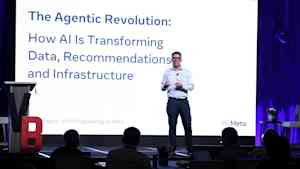
1Password moves into AI cost management, betting that token spend is the next enterprise budget crisis
1Password on Tuesday launched AI Spend and Consumption Management , a new capability embedded in its SaaS Manager platform that gives IT and finance teams a unified, real-time view of how their organizations consume and spend on AI services from vendors including Anthropic , Cursor , and OpenAI . The move marks the latest strategic expansion for a company that built its reputation on password management for consumers and, over the past three years, has aggressively repositioned itself as a broad
Read Source
Canva launches Code 2.0, offering AI website building to every user — including free accounts
Canva on Tuesday launched Canva Code 2.0 , a major upgrade to its AI-powered coding tool that lets users build interactive websites, apps, and experiences using plain-language prompts — and then edit the results as easily as tweaking a Canva presentation. The feature is now available to all of the company's more than 265 million monthly users across every pricing tier, including free accounts. The move is Canva's most aggressive push yet into the fast-growing "vibe coding" market, a category tha
Read Source
ACRouter picks the smartest AI model per task, beating Opus-only setups by 2.6x on cost
Model routing is becoming a key component of the enterprise AI stack, dynamically sending prompts to the right AI model to optimize speed and costs. However, current frameworks mostly treat routing as a static classification problem, which severely limits their potential. A new open-source framework called Agent-as-a-Router tackles this bottleneck, treating the router as a dynamic, memory-building agent. It uses a Context-Action-Feedback (C-A-F) loop to track model successes and failures and upd
Read Source
DeepSeek cut prices 75%. The 100x problem remains
DeepSeek's recent decision to drastically cut pricing on its V4-Pro model by 75% should have been unequivocally good news for enterprise AI vendors and developers. Instead, many are discovering that cheaper models don’t automatically translate into healthier margins. The reason is simple: While inference costs plummet, agent systems are voraciously consuming tokens faster than prices are declining. For the last 2 decades, software economics was dictated by the same rule. Infra became cheaper eve
Read Source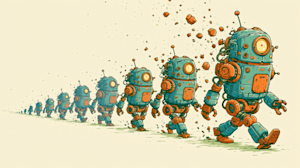
Forget typosquatting; slopsquatting is the software supply chain threat created by AI coding tools
Slopsquatting represents an emerging supply chain threat made possible by AI hallucinations. As developers increasingly rely on AI coding assistants, they unknowingly grant cybercriminals access to their software from day one. Understanding what slopsquatting is Slopsquatting is a new type of supply chain attack that uses large language model (LLM) hallucinations to inject malicious code into development workflows. The term combines "AI slop" and "typosquatting," a deceptive practice where attac
Read Source
57% of enterprises have watched AI agents be confidently wrong. The fix is an agentic context layer, but who has one?
An enterprise AI agent answers with total confidence, but the number is wrong. Nobody catches it until someone traces it back to a stale metric definition or a document the retrieval system never pulled. The model did not fail. The context it was given did. In the past six months, 57% of enterprises traced a confident but wrong AI agent answer to missing or inconsistent business context, and 31% said it happened more than once, according to a VB Pulse June 2026 survey of 101 qualified enterprise
Read Source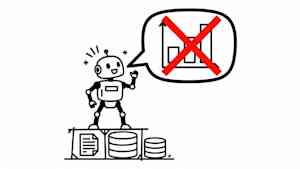
OpenAI introduces ChatGPT Work, a cloud-based AI agent that manages tasks across email, Slack and calendars
OpenAI on Thursday launched ChatGPT Work , a new AI agent embedded inside its flagship chatbot that aims to transform ChatGPT from a question-and-answer tool into an autonomous work platform capable of executing complex, multi-step tasks across users' email, calendars, code repositories, and messaging apps. The product is powered by OpenAI's latest flagship model, GPT-5.6 , and is designed to go far beyond generating text. ChatGPT Work can gather context from connected apps, files, and workflows
Read Source
Wall Street is debating the AI buildout. Enterprises just answered: 86% say their GPUs run at half capacity or less
Enterprise companies are running AI agents ahead of the controls needed to manage them — and they deployed that way knowingly. That is the central finding from VentureBeat Research's June survey of 573 technical leaders at companies with 100 or more employees, fielded across five parallel surveys of the agentic stack. Enterprises are now retrofitting to catch up with their own standards, and they are budgeting for it: Roughly six in 10 enterprises plan to switch or add vendors in each of five co
Read Source
Enterprise AI is entering an evaluation gap: Agents are gaining autonomy faster than companies can verify them
Enterprise AI teams are giving agents more freedom at the same moment their confidence in automated testing is collapsing. Half of enterprises have deployed an AI agent or LLM feature that passed internal evaluations and yet still caused a customer-facing failure — one in four more than once — according to the June 2026 VB Pulse survey of 157 qualified enterprise respondents at companies with 100 or more employees. The sample is self-selected rather than a probability sample, so the findings sho
Read Source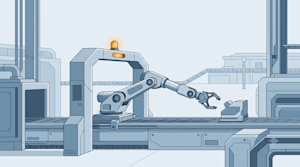
Google's TabFM skips per-dataset training and still predicts on tables it's never seen
The vast majority of business data is tabular — living in data warehouses, CRMs, and financial ledgers — yet building a reliable model from it still means training a new one from scratch for every dataset, then maintaining hyperparameter tuning loops, feature engineering, and retraining pipelines to fight data drift. Google Research is proposing a way around that: a new foundation model called TabFM that treats tabular prediction as an in-context learning problem instead. It can generate predict
Read Source
Shared API keys expose AI agents at 69% of enterprises, new VentureBeat research finds
Share one API key across five AI agents, and a single compromised agent inherits the reach of all five. The attacker immediately benefits from the accumulated permissions of every workflow that the key touches. The forensic trail goes cold at the credential level because five agents on one account leave no record of which agent did what. Sixty-nine percent of enterprises run agents with credential sharing somewhere in their deployments, according to VentureBeat’s June 2026 Pulse Research wave of
Read Source
Enterprises using multiple AI models are underestimating failure rates by 2.25x
A team routing queries across a coding specialist, a logic specialist, and a generalist model assumes each will cover the others' blind spots. A new study evaluating 67 frontier models from 21 providers shows that assumption is mathematically flawed — and the flaw has a name: the co-failure ceiling. The assumption works like this: as long as two models don't usually fail on the exact same prompts, combining them is supposed to create a safety net against failures. The real limit on orchestration
Read Source
The enterprise AI challenge nobody solves with code generation alone
Presented by SAP Generating code with AI is fast, but getting that code to run reliably inside a large enterprise, integrated with live systems, governed for compliance, and maintainable over years requires foundational work that most organizations underestimate. While 81% of all organizations have a detailed strategy, only 12–16% reach AI‑driven execution , says SAP's Michael Ameling, CPO of SAP Business Technology Platform, and the reasons rarely come down to the quality of the generated code.
Read Source
One interface isn't enough for enterprise AI
Presented by Oracle NetSuite Every major technology transition produces a set of assumptions about where the market is headed. The assumptions are often directionally correct, but they tend to underestimate the degree to which organizations adapt new technologies to their own circumstances. AI is following a similar trajectory. Many current discussions about enterprise AI assume a future in which employees interact with business systems through a common interface. The details vary depending on t
Read Source
SpaceX's Grok 4.5 launches at half the price of rivals — here's why that could rattle Anthropic and OpenAI
Elon Musk's SpaceX released Grok 4.5 on Wednesday, the first artificial intelligence model the company has trained specifically for coding and autonomous agents — and the first tangible product of its $60 billion acquisition of the AI coding startup Cursor, completed just weeks ago. The launch marks a pivotal test of the sprawling, vertically integrated AI empire Musk has assembled over the past six months, and of a strategy that bets developers care less about topping benchmark leaderboards tha
Read Source
OpenAI launches GPT-Live, a full-duplex voice upgrade that lets ChatGPT talk more like a person
OpenAI on Wednesday launched GPT-Live , a pair of new voice models that fundamentally redesign how people talk to ChatGPT — replacing the company's existing Advanced Voice Mode with an architecture that can listen and speak simultaneously, much like an actual human conversation. The two models, GPT-Live-1 and GPT-Live-1 mini , are rolling out globally starting today across iOS, Android, and ChatGPT.com. GPT-Live-1 becomes the default voice model for paid ChatGPT users on the Go, Plus, and Pro ti
Read Source
Slack’s Slackbot can now pull your CRM data, generate charts, and send DocuSigns — all from a chat message.
Five years and $27.7 billion after Salesforce acquired Slack, the two products are finally starting to function as a single system. On Tuesday, Slack launched an integration that connects Slackbot — the personal AI agent built into every workspace — to the entire Salesforce platform, including CRM data, Tableau analytics, Data 360 customer profiles, and a growing constellation of third-party applications, all through a single conversational prompt. The mechanism behind the expansion is a set of
Read Source
AI has collapsed the cyber response window — resilience now starts before the attack
Presented by Rubrik Enterprise cybersecurity is facing a fundamental speed problem. Frontier AI models are now enabling autonomous attacks that can move from initial access to full system breakout in as little as 27 seconds . That’s faster than any human-operated security workflow can detect, escalate, and respond. As a result, security operations can no longer assume there is time for humans to respond between breach and damage. The security posture that enterprises need for the AI era centers
Read Source
The real cost, security, and culture problems behind enterprise AI agents
Presented by Red Hat At VentureBeat's recent AI Impact event, where the discussion centered on what separates enterprises that scale agentic AI from those that stall in pilot mode, Brian Gracely, senior director of portfolio strategy at Red Hat, detailed what companies actually run into once agents reach production. He dove into cost discipline, the security blind spots unique to autonomous systems, and the organizational friction that determines whether agent adoption spreads beyond early champ
Read Source
Box survey: Why enterprise AI leaders are outperforming their peers
Presented by Box Content access, governance, and platform flexibility are emerging as the dividing lines between AI leaders and laggards, according to the new State of AI in the enterprise report from Box, which surveyed 1,640 IT decision makers across the US, UK, France, and Japan. One of the report's major findings is the speed of the shift: the combined share of organizations describing themselves as advanced or leading edge soared from 8% to 64% just over the past year, while the share calli
Read Source
Anthropic brings Claude Cowork to mobile and web as usage data shows most users aren’t coding
Anthropic on Tuesday launched Claude Cowork on mobile and web , expanding a tool that has quietly become the company's bridge between the developer-centric world of AI coding agents and the far larger market of knowledge workers who never open a terminal. The rollout, which begins in beta with Max subscribers before expanding to additional plans, marks a strategic inflection for Anthropic. It transforms Cowork from a desktop-only agent into a cross-device platform where tasks can start on a lapt
Read Source
Digital-native startups are ditching rigid databases for their agentic stacks
Presented by MongoDB The gap between what AI models and agents can produce and what legacy infrastructure can reliably support is known as architectural drag, and it is the defining bottleneck of the agentic era. The data layer underneath an agentic system must handle variable schemas, vector embeddings, real-time retrieval, and multi-tenant scale, often simultaneously and without human intervention to manage migrations — but traditional relational databases weren't natively designed for documen
Read Source
Anthropic's new "J-lens" reveals a silent workspace inside Claude that mirrors a leading theory of consciousness
Anthropic , the artificial intelligence company, published a sweeping research paper on Sunday revealing that its Claude language models have spontaneously developed an internal structure that mirrors one of the most influential theories of how human consciousness works. The finding, which the company says has already begun reshaping how it monitors its AI systems for safety risks, lands amid an intensifying scientific debate over whether machines can possess anything resembling a mind. The 16-a
Read Source
What billions of AI predictions taught Expedia before the age of AI agents
There's an important distinction between AI that just works today, and AI that lasts at scale. Many companies optimize hard for the first one without ever asking whether they're building the second. Velocity without discipline and strategic direction is a liability, not an asset. The hardest part of building AI at scale isn't getting a model to work once. It's building systems that continue to work, scale beyond individual teams and use cases, and improve consistently over time. Today's AI syste
Read Source
Build for the new AI era with Microsoft and NVIDIA
Presented by Microsoft and NVIDIA Every generation of leaders has its own business transformation challenges to face. A decade ago, modernization meant cloud migration. Five years ago, it meant enabling remote and hybrid work. And just a few short years ago, the generative AI boom prompted organizations globally into enterprise AI adoption. The demo era is ending In the years since AI became the big new buzzword, generative models proved to be a crucial stepping stone, but the path to Frontier T
Read Source
How America's 250th birthday became a test of AI-powered collective intelligence
Imagine if you could bring 250 people together in a massive room and have them discuss and debate an important issue, arguing the points and counterpoints, and converging on answers that accurately reflect their collective knowledge, wisdom, values, and sensibilities. Now imagine that you convened this debate on America’s 250 th birthday and asked 250 randomly selected Americans to come up with the top three innovations that America has contributed to the world over the last 250 years. What woul
Read Source
Trunk Tools' stack cut document review from 60 days to 10 by ditching general-purpose models
Most verticals aren’t clean, well-oiled SaaS databases; the reality is ugly documents, proprietary schemas, implicit workflows, and long‑running tasks that most general-purpose models struggle with. This prompted construction project management company Trunk Tools to build a specialized, three-layer architecture — perception, semantics, agents — based on highly-detailed data to support high-accuracy, highly-relevant industry automation. Their purpose-built stack has shrunk review cycles from mon
Read Source
Enterprises lost Claude Fable 5 for a few weeks. New data shows two-thirds had already built their hedge
Two-thirds of enterprises have hedged their AI model strategy, and the past few weeks of controversy around Anthropic’s Claude Fable 5 model showed why that posture has gone mainstream. On June 12, a U.S. export-control order pulled Anthropic's Claude Fable 5 — the most capable model on the market — offline for every customer, with no warning and no timeline. It returned this week wrapped in tighter safeguards , after China's Z.ai released its open-weights GLM-5.2 into the vacuum . New VentureBe
Read Source
New Alibaba AI framework skips loading every tool, cutting agent token use 99%
As enterprise AI systems scale to handle complex workflows, practitioners face the challenge of routing subtasks to the right tools and skills. Agents can have hundreds of tools and skills and get confused on which one to use for each step of a workflow. To address this challenge, researchers at Alibaba developed SkillWeaver , a framework that creates an execution graph for a given task and chooses the right skills for each of the nodes. They also introduce Skill-Aware Decomposition (SAD), a nov
Read Source
Z.ai launches ZCode to challenge Cursor, Claude Code and GitHub Copilot in AI coding
Z.ai , the Beijing-based artificial intelligence lab formerly known as Zhipu AI, on Wednesday officially launched ZCode , a free desktop application it describes as an "Agentic Development Environment" purpose-built for its flagship GLM-5.2 large language model. The move marks the company's most aggressive push yet into the fast-growing AI-powered coding tool market, where it now competes directly with Cursor , Claude Code , GitHub Copilot , and Google's Antigravity . "Introducing ZCode, the off
Read Source
The Control Gap: Enterprise AI organizations have an ownership problem, not a technology problem — and most are governing it by hand
AI portfolios are expanding far faster than the ability to govern them across enterprises. Most organizations run a contested field of platforms, each claiming to be the “primary” AI layer; few could confidently detect a model drifting or failing in production; and the single most-cited barrier to control is the absence of any one owner accountable for AI across the stack. The result is a widening control gap — ambition and spend racing ahead of visibility, ownership, and cost control — with aut
Read Source
Anthropic is bringing back Claude Fable 5 globally after US lifts export control order — where can enterprises access it?
Anthropic is restoring global access to its most powerful generally released AI model yet, Claude Fable 5, today, after the U.S. Department of Commerce last night withdrew the emergency export controls it had issued previously around the model. The U.S. export control order issued on June 12, 2026, led Anthropic to suspend all global access to both Fable 5 and its less restricted cybersecurity counterpart model Claude Mythos 5 , just days after both models were initially introduced. Now, Fable 5
Read Source
Restaurants can now accept orders placed directly from ChatGPT and Claude thanks to Square's new, low-fee, no setup integration
Square is launching a new ChatGPT app and Claude plugin, enabling consumers to discover restaurants and seamlessly place orders directly within these AI platforms — and allowing restaurants, in turn, to accept orders from users and their AI agents without any technical capabilities. Even more helpfully for businesses, Square is processing these AI-driven transactions without charging the traditional marketplace commission fees that have historically squeezed the food and beverage sector. However
Read Source
Digital resilience compounds when AI and human expertise scale together
Presented by Splunk Agentic AI is making IT and security teams dramatically more efficient. But it’s also removing the apprenticeship that has long produced experienced operators. As organizations automate more of the work once performed by junior analysts and engineers, they’re confronting a challenge that’s as much about workforce design as architecture design: how to build the next generation of experts when AI handles the work that once trained them. What the junior workforce has been doing
Read Source
Morgan Stanley cut its riskiest reconciliation job in half — by making its agents less autonomous
Most enterprise AI deployments so far have focused on coding assistants and customer service bots. Morgan Stanley has deployed agents in one of banking's most accuracy-critical, deadline-driven workflows instead — profit and loss (P&L) reconciliation — and cut the work in half. The counterintuitive part: it got there by making the system less autonomous, not more. Humans stay tightly in the loop, and their decisions are iteratively turned into repeatable rules the system can apply on its own. “I
Read Source
Anthropic launches Claude Sonnet 5 at a steep discount to its top model as the company races toward a blockbuster IPO
Anthropic today released Claude Sonnet 5 , a new AI model that the company says delivers near-flagship performance at mid-tier prices — a move designed to give cost-conscious enterprise developers access to powerful agentic capabilities just as the San Francisco-based AI lab barrels toward an initial public offering that will test whether the private market's staggering AI valuations can survive public scrutiny. The release, which Anthropic describes as " the most agentic Sonnet model ye t," mak
Read Source
Google's Gemini Omni Flash hits the API, turning enterprise video production into a conversation
For most enterprises, a 90-second training video or a product explainer has never been an easy ask. It means a well planned brief, an internal film crew or an outside vendor, a shoot, an edit, and a round of revisions. Change one line of on-screen text due to a legal review and the whole chain runs again. The cost and the long time lines are why so much internal video never gets made. That equation is what Google is aiming to rewrite with Gemini Omni Flash , the first model in its new "Omni" fam
Read Source
Google unveils Nano Banana 2 Lite aka Gemini 3.1 Flash-Lite for low cost, 4-second fast enterprise image generations
Google is upgrading its AI image generation capabilities today with the debut of Nano Banana 2 (NB2) Lite , an optimized model built for rapid execution and tight infrastructure budgets. Technically designated as Gemini 3.1 Flash-Lite Image on Google's application programming interface (API), NB2 Lite is positioned as the fastest and most cost-effective option within Google's creative model family, capable of generating images in 4 seconds at a flat rate of $0.034 per 1,000 images. It's availabl
Read Source