Paulhcleverley
All AI industry updates, product announcements, and research news originating from or reported by Paulhcleverley.
Latest Coverage
RockGPT – Impact of Retrieval Augmented Generation on retrieval and reasoning.
Interesting paper on the impact of knowledge curation, rather than large language models, on outcomes for geoscience. Self-hosted code is open-source. From the models, themselves, Phi-4 and Llama are best performing. Bailo et al (2026) link in the comments. AbstractLarge Language Models (LLMs) are increasingly adopted in scientific research, yet their use raises important challenges... Continue Reading →
Read Source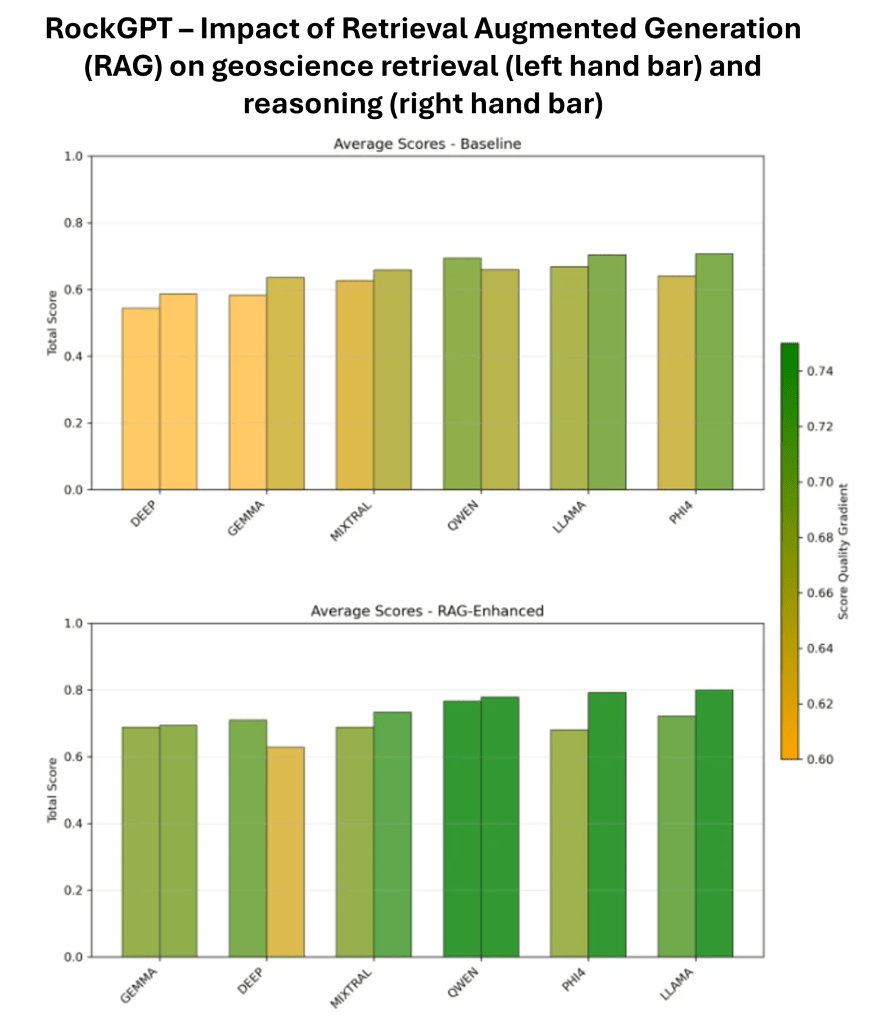
Text embeddings – Global geology machine learning research (2016-2026)
Global geology machine learning research (2016-2026) take #2 – animated text embeddings by publish date. Following on from my post yesterday I’ve created a t-SNE dimensionality reduction plot of cosine-similarity for embeddings of geology abstracts that mention machine learning over the past 10 years in published research articles. I used Dimensions database generating 2,882 papers.... Continue Reading →
Read Source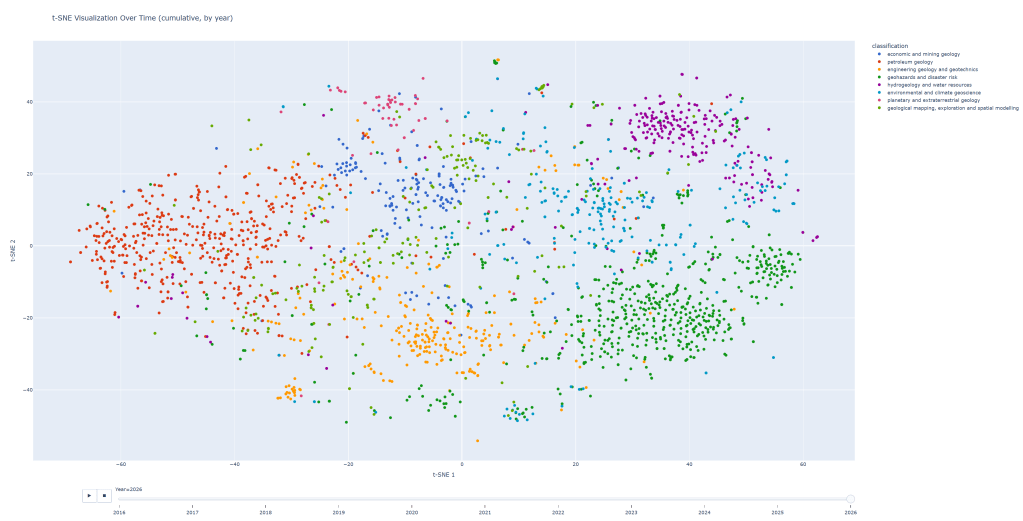
Geological machine learning research (2016-2026)
Geological machine learning global research past 10 years. Research on natural hazards and disaster risk is comfortably the largest category, followed by academic/methodological topics and petroleum geology, geological mapping and spatial modelling, engineering geology, followed by economic mining geology and hydrogeology, environmental and climate science, then structural geology & tectonics and planetary geology. A significant... Continue Reading →
Read Source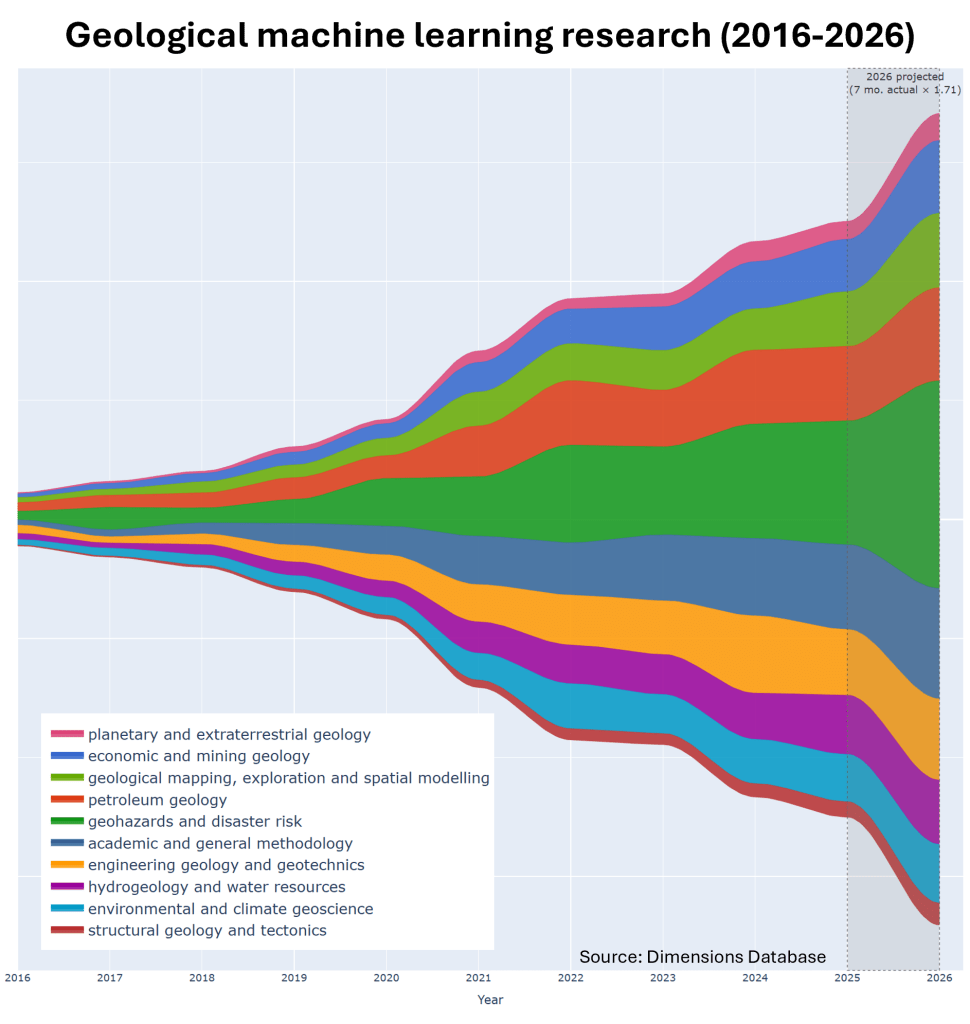
Open at the interface, closed at the core: neutrality claims in AI‑enabled geoscience infrastructure focusing on Africa – The case of Deep‑Time Digital Earth and GeoGPT
Our peer-reviewed paper was published today in the Journal of Geoethics and Social Geosciences testing claims of geopolitical non-alignment in geoscience cyberinfrastructure focusing on the Global South and Africa in particular. Geological data has become strategic infrastructure for resource assessment, investment negotiation, and economic sovereignty. Remotely hosted big data and Artificial Intelligence (AI) platforms are... Continue Reading →
Read Source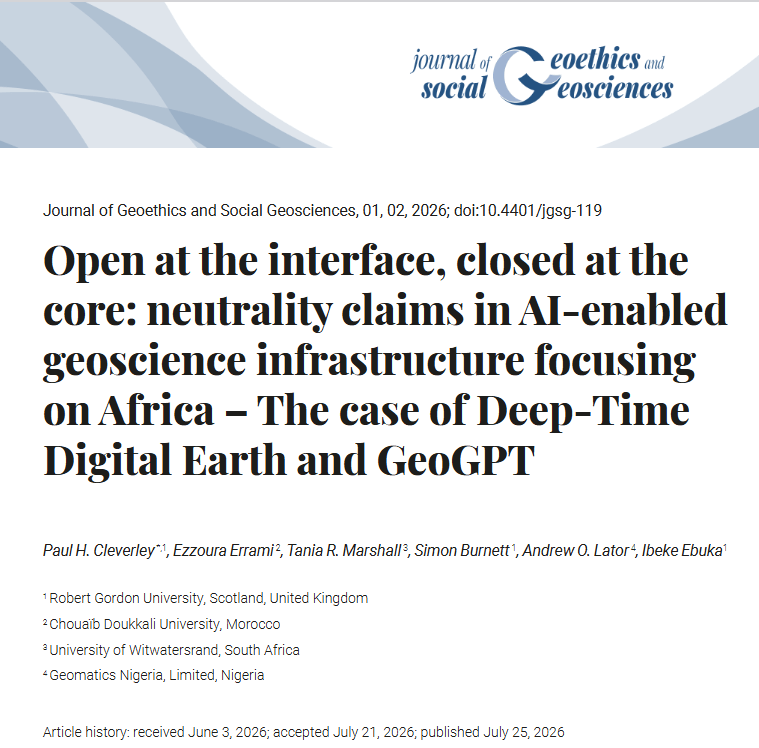
Enjoyed giving a presentation today ‘AI Ethics for Geoscientists and Engineers’ on the University of Witwatersrand short course on Compliance & Reporting Rules in the Mineral Industry attended by students from all over Africa.
Enjoyed giving a presentation today ‘AI Ethics for Geoscientists and Engineers’ on the University of Witwatersrand short course on Compliance & Reporting Rules in the Mineral Industry attended by students from all over Africa. Some great questions, thanks to the course leader Tania Marshall AboutThe School of Mining Engineering at the University of the Witwatersrand... Continue Reading →
Read Source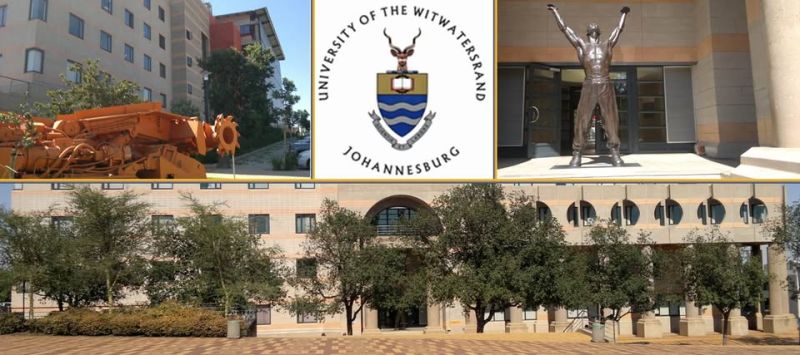
Open-source WorldTensor: A harmonised global dataset aligning hundreds of environmental and socio-economic indicators.
Open-source WorldTensor: A harmonised global dataset aligning hundreds of environmental and socio-economic indicators. Most existing Earth-system AI foundation models are trained on physical climate/weather data, ignoring the human systems that both drive and respond to environmental change. From Rodriguez-Carlo and Tavoni (2026). It covers: Climate, extremes, air quality, emissions, land use, agriculture, vegetation, hydrology, cryosphere,... Continue Reading →
Read Source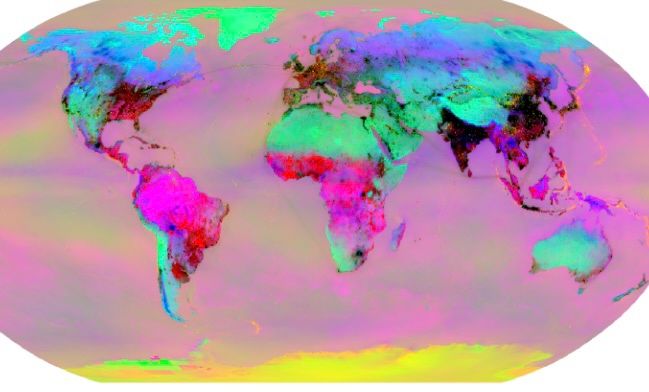
Science Council event
Enjoyed participating in a panel on AI at the Science Council event in London today. Lots of interesting talks and panels – building an ethical framework for the UK to support a number of possible futures. AI ethics, cultural AI, critical thinking, safety, retaining and developing new competencies, the future workforce, use of AI, training... Continue Reading →
Read Source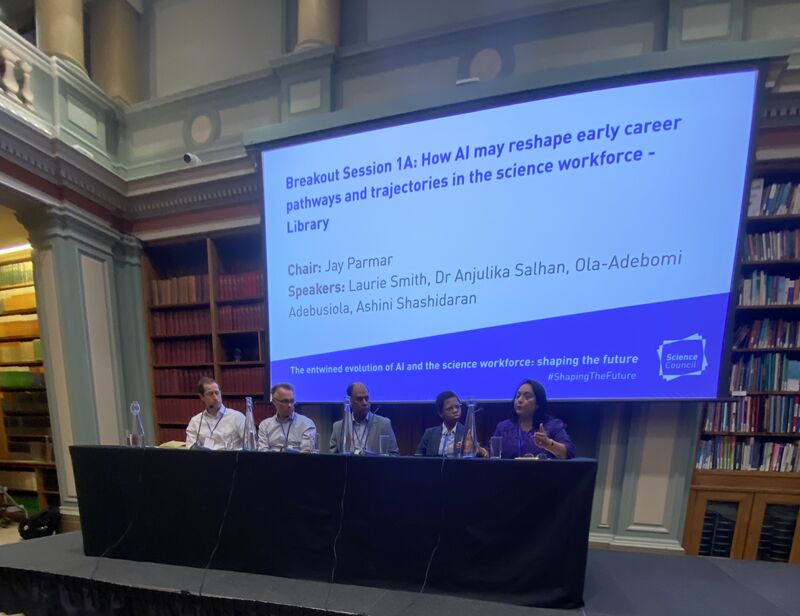
Looking forward to participating in the Association of Environmental and Engineering Geologists (AEG) ‘Responsible AI for real-world geoscience’
Looking forward to participating in the Association of Environmental and Engineering Geologists (AEG) ‘Responsible AI for real-world geoscience’ on the 26th August. Artificial intelligence is rapidly entering applied geoscience practice, but its value depends on how well it is grounded in geologic understanding, field observations, and professional judgment. This half-day virtual symposium will explore how AI-enabled... Continue Reading →
Read Source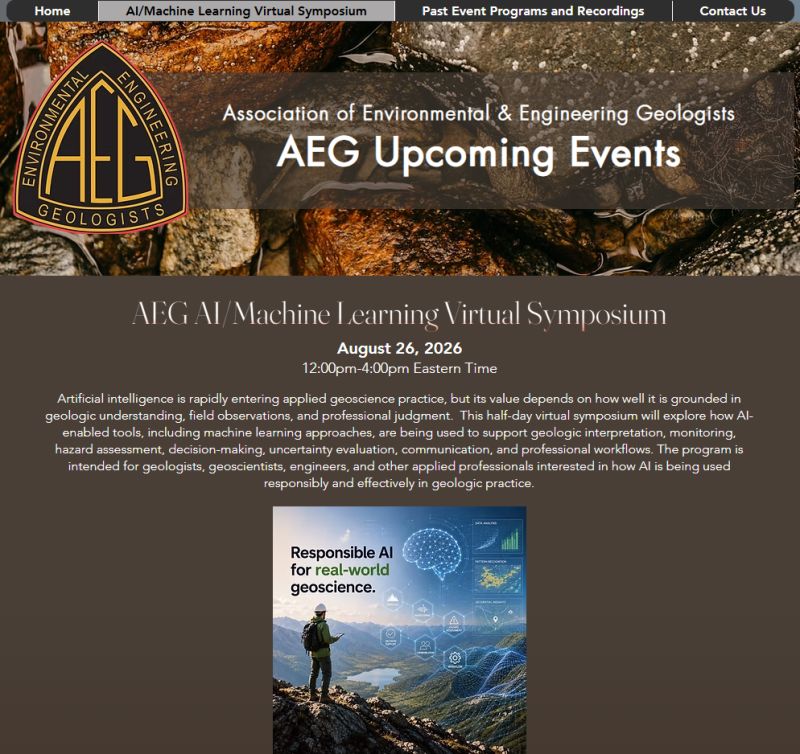
Vibe coding for geoscientists ‘hackathon’
Thoroughly enjoyed the ‘vibe-coding for geoscientists’ event yesterday. We had six teams most of whom had never used large language models before to build an application. People joined from diverse backgrounds, including students and seasoned practitioners. The task revolved around extracting geological outcrop polygons for a mica-rich metamorphic layer from a map image, so it... Continue Reading →
Read Source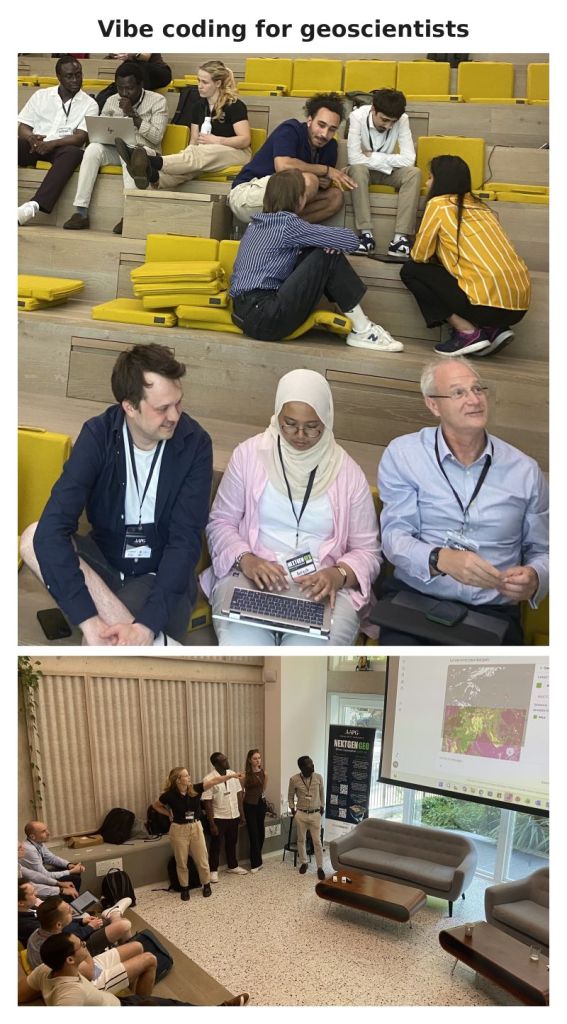
OLMo Earth
OLMoEarth – open-source (training data, code, models) Earth Observation V1.1 released. OlmoEarth is an Earth-observation AI system built by Ai2 (the Allen Institute for AI), the earth image counterpart to Ai2’s OLMo open language models. There is a family of foundation models trained on roughly 10 terabytes of global satellite and sensor data, designed to... Continue Reading →
Read Source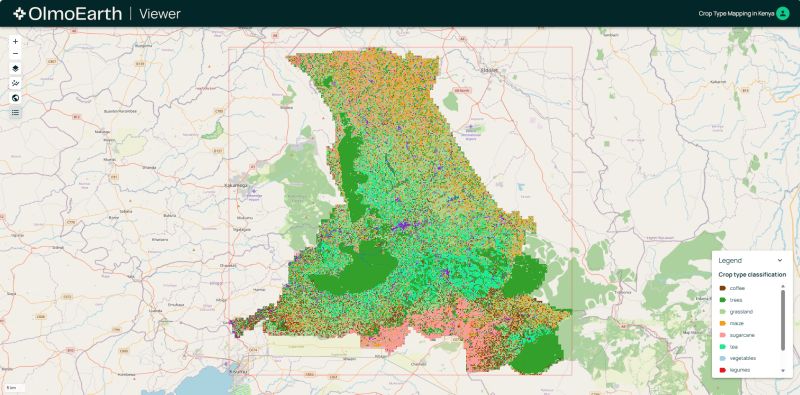
The entwined evolution of AI and the science workforce
Taking part in an AI Ethics panel at the Science Council in London next month with the Department for Science, Innovation and Technology and many other esteemed scholars and practitioners. “As AI rapidly reshapes how science is conducted, taught, and applied, there is a clear need for authoritative leadership to help frame the conversation about... Continue Reading →
Read Source
Deep-time Digital Earth (DDE) linked research significantly undercounts African-led Geoscience Research.
My peer-reviewed critique in Geoenergy finds that African-led geoscience AI/ML capacity is significantly under-counted in research linked to the Deep-time Digital Earth (DDE) initiative. The DDE-linked paper identifies just 8 African-led geoscience AI/ML publications in 2024. Using comparable bibliometric methods based on just title/abstract screening, I identify 150+ publications across 22 African countries over the same period,... Continue Reading →
Read Source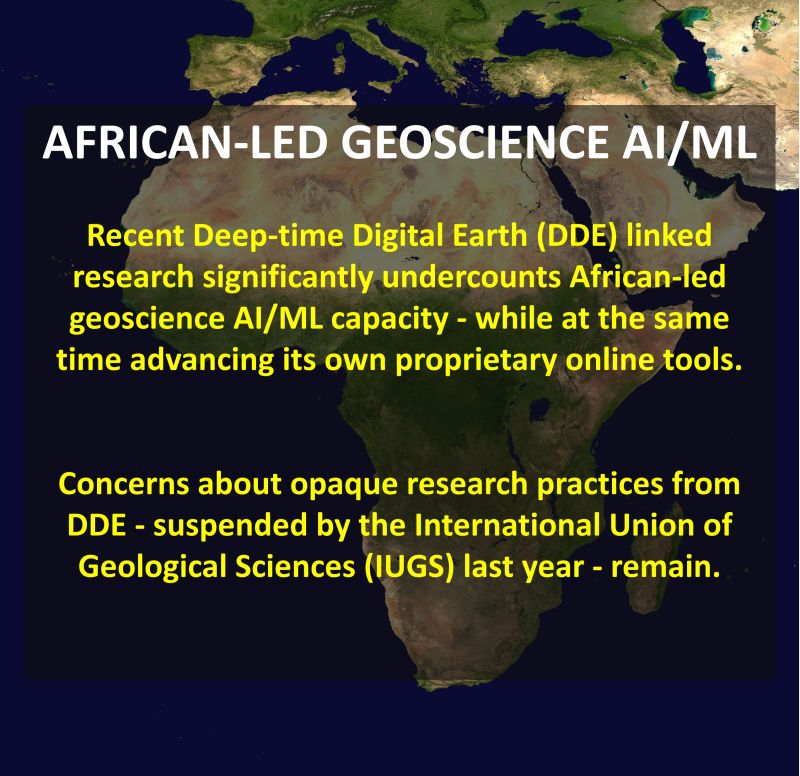
Presented AI Ethics Recommendations for Geoscientists at the European Geosciences Union (EGU) in Vienna yesterday.
Presented AI Ethics Recommendations for Geoscientists at the European Geosciences Union (EGU) in Vienna yesterday. At around 20,000 attendees, the European Geosciences Union (EGU) is a huge event with researchers world-wide attending. As well as geology and the geological sciences in general, the conference covers hydrology, biogeosciences, remote sensing, oceanography, planetary, earth, space and atmospheric... Continue Reading →
Read Source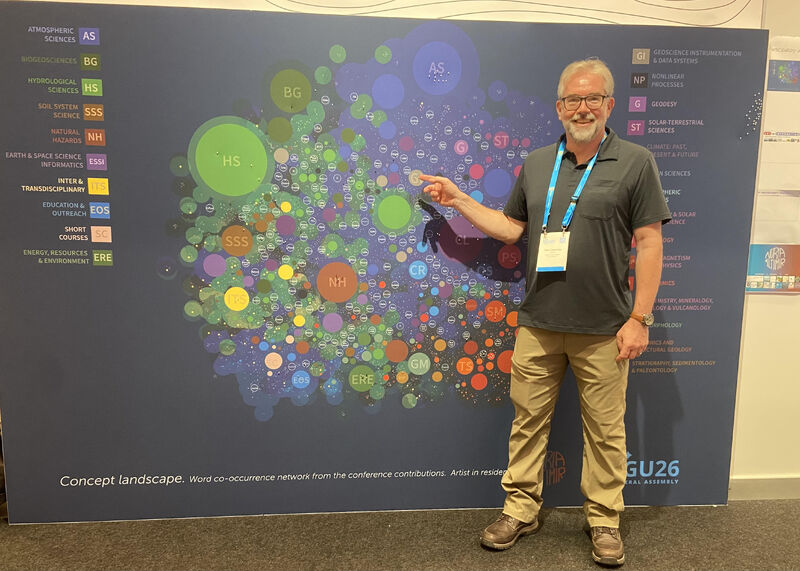
Porosity and permeability prediction from petrographic point-counting data using machine learning
Porosity and permeability prediction from petrographic point-counting data using machine learning. A new study from the Karlsruhe Institute of Technology has demonstrated that machine learning can accurately predict porosity and permeability in reservoirs using microscopic rock descriptions from samples. The researchers (Sadrikhanloo et al., 2026) trained models on petrographic point-counting data, mineral-by-mineral descriptions of rock composition that... Continue Reading →
Read Source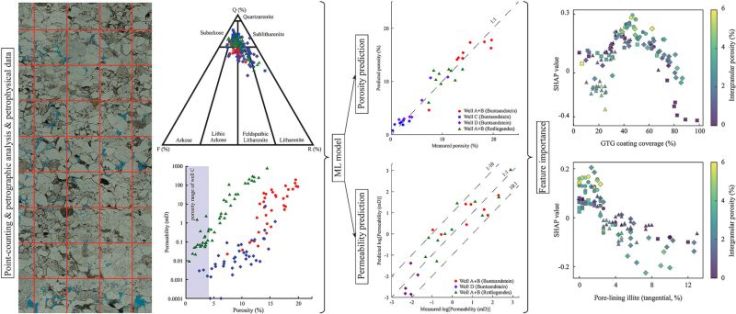
Open-source data: A Global-Scale Time Series Dataset for Groundwater Studies within the Earth System
Open-source data: A Global-Scale Time Series Dataset for Groundwater Studies within the Earth System. Paper out this week in Nature from Bäthge et al (2026), introduces GROW (Global-scale integrated GROundWater dataset), a large, standardised, analysis-ready dataset designed to improve understanding of groundwater dynamics within the Earth system. Groundwater is critical (~99% of accessible freshwater), but... Continue Reading →
Read Source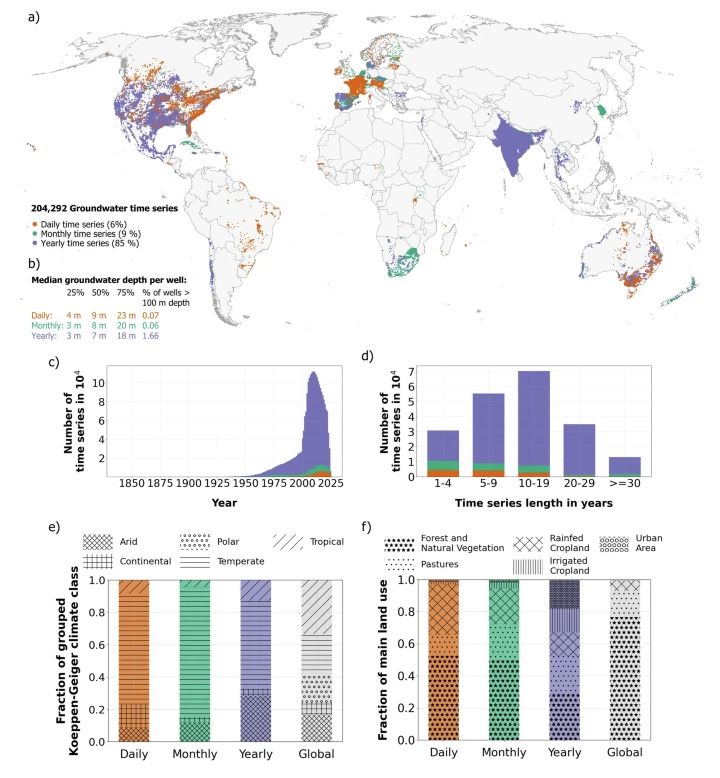
Machine learning for sustainable geoenergy
Machine learning for sustainable geoenergy: uncertainty, physics and decision-ready inference. Interesting paper this week from Menke et al (2026) at the Institute of GeoEnergy Engineering, and Subsurface Energy Transition and Innovation Centre, Heriot-Watt University, Edinburgh, UK. Abstract:Geoenergy projects (CO2 storage, geothermal, subsurface H2 generation/storage, critical minerals from subsurface fluids, or nuclear waste disposal) increasingly follow a petroleum-style... Continue Reading
Read Source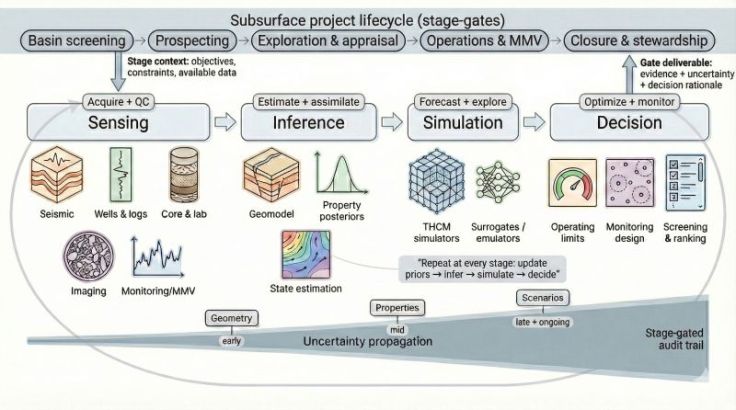
Nextgen GEO Event Young Professionals
Europe Young Professionals AAPG NEXTGEN GEO 2026: Where Geoscience meets AI on the 26th June. The event returns to London this June, bringing together geoscience, AI and technology in one place. Featuring: • High-impact technical talks• Live platform demonstrations• Social networking with industry leaders https://www.eventbrite.co.uk/e/nextgen-geo-2026-tickets-1985676250117?utm-campaign=social&utm-content=attendeeshare&utm-medium=discovery&utm-term=listing&utm-source=cp&aff=ebdsshcopyurl
Read Source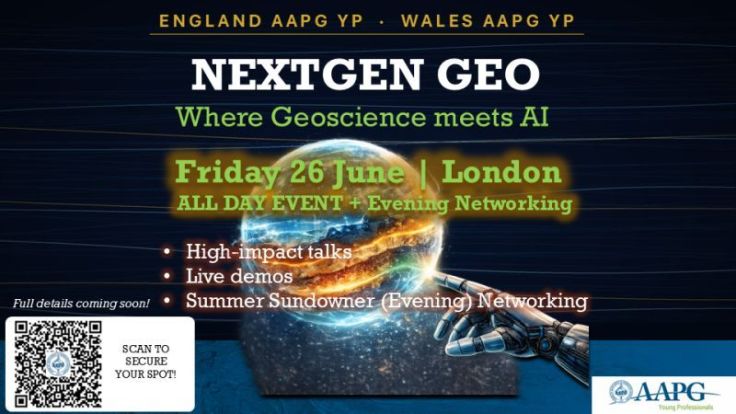
AI in Geosciences Conference: Geological Society of London 4-5 June 2026
We have 60 talks and posters from over 20 countries at the Geological Society of London first “AI in Geosciences” conference 4-5 June 2026. Topics include mineral prospecting, geothermal, oil and gas, carbon capture and storage, geohazards, geotechnical engineering, oceanography and marine science, environment and hydrogeology, academic and education and geoethics. The accepted papers are... Continue Reading →
Read Source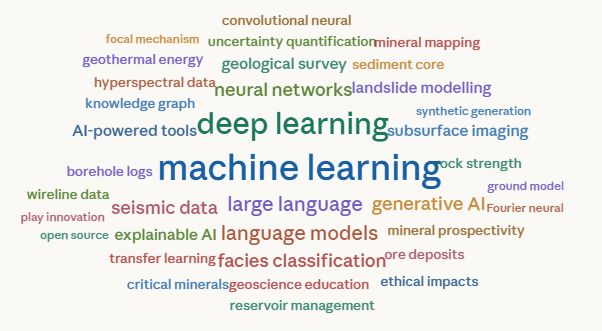
Delighted to be appointed Honorary Professor at the School of Law and Social Sciences at Robert Gordon University
Delighted to be appointed Honorary Professor at the School of Law and Social Sciences at Robert Gordon University (RGU) in Aberdeen, Scotland. I look forward to continuing to serve RGU. About the School – ResearchAt the School of Law and Social Sciences we promote a vibrant and diverse research community where our sustainable, inclusive and... Continue Reading →
Read Source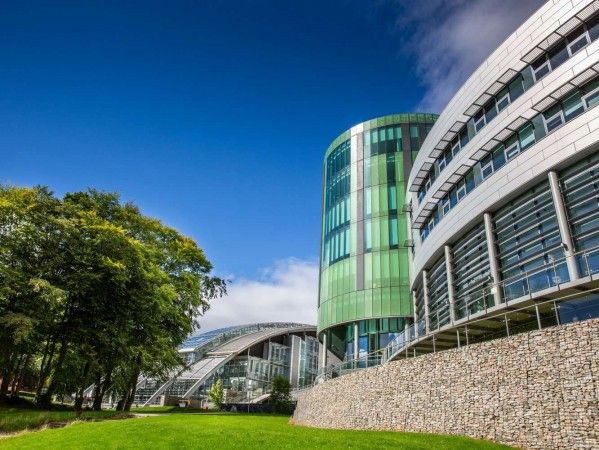
Fostering the ethical use of Artificial Intelligence in the Geosciences
Delighted our paper has been accepted for the European Geosciences Union (EGU) in Vienna “Fostering the ethical use of Artificial Intelligence in the Geosciences”. Mrinalini Kochupillai Emma Ruttkamp-Bloem Mark LindsayEuropean Geosciences Union (EGU) hashtag#geology hashtag#geoscience hashtag#machinelearning hashtag#artificialintelligence hashtag#AI hashtag#AIethics hashtag#ethics hashtag#geoethics
Read Source
East African Rift
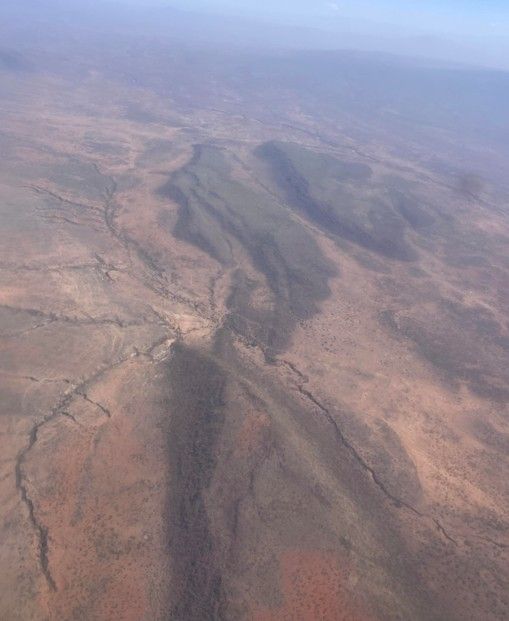
I was fortunate to visit the southern part of the East African Rift recently, South of Mt Suswa, beautiful flood trachytes (lava) along the N-S fissures of the rift floor. Reported to have erupted approximately 1 Million years ago (Pleistocene). Subsequent erosion has left these elongated volcanic features. On the ground examining these rocks, you... Continue Reading →
Read Source