
Datarobot
All AI industry updates, product announcements, and research news originating from or reported by Datarobot.
Latest Coverage
Do you need enterprise AI orchestration? A 3-question readiness framework
An internal payment agent used by five employees may need more orchestration than a customer-facing assistant serving 50,000 users that only drafts responses for human review. The payment agent can move money before anyone intervenes. The drafting assistant remains behind a human checkpoint. That contrast exposes the problem with treating orchestration as a late-stage requirement... The post Do you need enterprise AI orchestration? A 3-question readiness framework appeared first on DataRobot .
Read Source
Stop managing infrastructure: A new way to deploy AI agents and models
Standing up an agent as a production service on Kubernetes means five YAML files, a few hundred lines between them, and (in most enterprises) a ticket in someone else’s queue. On the Workload API it means one spec file, one command, and about five minutes to a live URL. No manifests, no kubectl, no namespace,... The post Stop managing infrastructure: A new way to deploy AI agents and models appeared first on DataRobot .
Read SourceLocal tracing in the DataRobot CLI: catch issues before production
DataRobot local tracing puts an OpenTelemetry dashboard on your localhost from the first line of code, so you can debug agent behavior before it ever reaches production. The post Local tracing in the DataRobot CLI: catch issues before production appeared first on DataRobot .
Read Source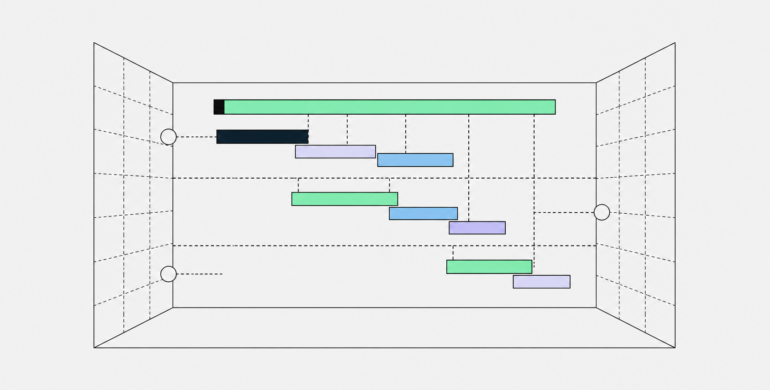
Stop Rate-Limiting Requests. Start Scheduling Tokens: Introducing DataRobot TokenGrid
Authors: Sudeeptha Jothiprakash, Venkat Bala, Tushar Pandey, Romi Datta The real bottleneck in the modern AI stack Enterprise IT has a strange problem: token spend and third-party model subscription costs keep climbing, while the GPU clusters running these workloads sit at just 20% utilization. That gap comes down to one thing: the tools managing access... The post Stop Rate-Limiting Requests. Start Scheduling Tokens: Introducing DataRobot TokenGrid appeared first on DataRobot .
Read SourceYour predictive AI foundation is the fastest path to agentic AI value
What if your predictive AI investments could start delivering agentic AI value now? According to DataRobot Chief Product Officer Venky Veeraraghavan and Dell Technologies Senior Director of AI Solutions Brad Maltz, they can. And now is the time to go after it. Production models, clean data pipelines, optimization engines, and governance controls give agents the... The post Your predictive AI foundation is the fastest path to agentic AI value appeared first on DataRobot .
Read SourceThe first 30 days of agentic AI governance: A practical checklist
Every agent you deploy expands your blast radius. A predictive model can produce a bad response, but an agent can act on it. Agents can retrieve sensitive data, change systems of record, trigger workflows, or pass errors to other agents. The risk is no longer just model quality. It is the authority an agent holds,... The post The first 30 days of agentic AI governance: A practical checklist appeared first on DataRobot .
Read SourceIdentity as a lifecycle, not a setting
Agents are not configured once and left alone. They get built, published, deployed, and retired. An identity that does not track that whole arc is a record you wrote and forgot, which is how you end up with credentials outliving the agents they belonged to. So treat identity as a lifecycle. Credentials provision at a... The post Identity as a lifecycle, not a setting appeared first on DataRobot .
Read SourceGovern natively, federate outward, and what breaks across trust domains
Govern natively, federate outward, and what breaks across trust domains By now the agent has its own identity and you can carry that identity through a chain of calls. The next question is where the rules live. Who decides what an agent is allowed to do, and where does that decision get made? Two answers,... The post Govern natively, federate outward, and what breaks across trust domains appeared first on DataRobot .
Read SourceCredentials should never reach the model
Credentials should never reach the model An engineer wires an agent to a payments API. The agent needs the API token, so the token goes where tokens usually go: an environment variable, a config file, or straight into the prompt. The agent reads it and makes the call. It works. It also just placed a... The post Credentials should never reach the model appeared first on DataRobot .
Read SourceDataRobot OpenCode: your coding agent, your model choice
DataRobot OpenCode: your coding agent, your model choice There are over 70 coding agents on the market: Claude Code, Codex, Cursor, Copilot, Devin, and a long tail of smaller entrants showing up in engineers’ newsfeeds every week. Someone runs a benchmark, posts the leaderboard, and by the end of the week, half the org wants... The post DataRobot OpenCode: your coding agent, your model choice appeared first on DataRobot .
Read Source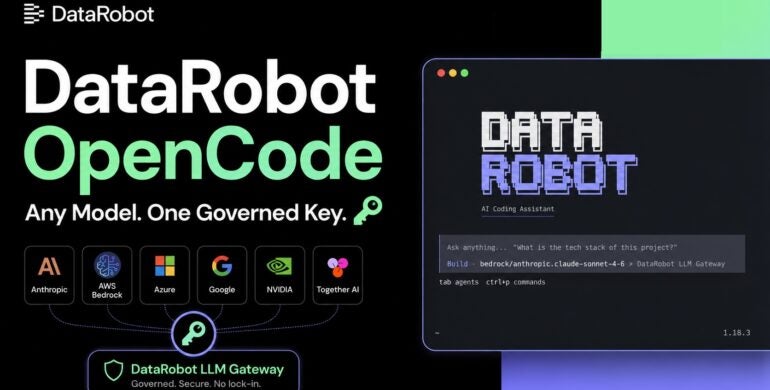
Delegation chains, the confused deputy, and the protocols you actually deploy
Delegation chains, the confused deputy, and the protocols you actually deploy Agents rarely act alone. A user asks an agent to do something. The agent calls a tool. The tool calls another agent. By the time work gets done, three or four actors have touched the request, each acting on behalf of the one before... The post Delegation chains, the confused deputy, and the protocols you actually deploy appeared first on DataRobot .
Read SourceAI agent governance at scale: from 5 agents to a 500-agent workforce
Governing 5 agents is a review process. Governing 500 agents is an infrastructure problem. Manual reviews and team-level approvals work when a handful of agents are visible and closely watched. Once agents spread across business units, tools, and environments, that oversight breaks down. Enterprises need an AI agent governance model that includes centralized identity, reusable... The post AI agent governance at scale: from 5 agents to a 500-agent workforce appeared first on DataRobot .
Read SourceWhat a first-class agent identity actually is, and whether it is just workload identity
What a first-class agent identity actually is, and whether it is just workload identity The previous post left you with a borrowed credential and a non-deterministic actor that a static grant cannot govern. The fix is to stop borrowing. Give the agent a stable, verifiable runtime principal you can authorize against, attribute actions to, and... The post What a first-class agent identity actually is, and whether it is just workload identity appeared first on DataRobot .
Read SourceYour agents are using your credentials, and that is the problem
Your agents are using your credentials, and that is the problem An engineer ships an agent to production. It needs to call an internal API, so it uses the key already sitting in the engineer’s environment. The agent runs. It also now holds every permission that engineer holds. That is the default state of most... The post Your agents are using your credentials, and that is the problem appeared first on DataRobot .
Read SourceYour identity stack was built for two kinds of actor. Agents are a third.
Your identity stack was built for two kinds of actor. Agents are a third. An engineer ships an agent to production this week. It needs to call an internal API, so it uses the key already sitting in the engineer’s environment. The agent runs. It also now holds every permission that engineer holds. That is... The post Your identity stack was built for two kinds of actor. Agents are a third. appeared first on DataRobot .
Read SourceA decade of open source at DataRobot: from predictive AI to the agent lifecycle
A decade of open source at DataRobot: from predictive AI to the agent lifecycle Every era of DataRobot has shipped open source. The latest open-source contributions from DataRobot map directly onto where agents actually break in production. Building an agent has never been easier. Pick a framework, wire up a model and a retriever, add... The post A decade of open source at DataRobot: from predictive AI to the agent lifecycle appeared first on DataRobot .
Read SourceHow can enterprises govern MCP connections at scale?
Enterprises can govern model context protocol (MCP) connections at scale by treating them as part of the agentic AI control plane. Every MCP server, exposed tool, permission, and agent relationship needs ownership, scope, monitoring, and auditability before it supports autonomous work. MCP governance is the discipline of controlling how AI agents discover, select, invoke, and... The post How can enterprises govern MCP connections at scale? appeared first on DataRobot .
Read SourceDataRobot Agent Skills are now discoverable through Agentic Resource Discovery
DataRobot now supports the Agentic Resource Discovery Specification, making DataRobot Agent Skills easier for AI clients, registries, and developers to find. Agents are only as useful as the capabilities they can reach. A coding agent can write code. A workflow agent can call tools. An enterprise agent can reason across systems. But all of that... The post DataRobot Agent Skills are now discoverable through Agentic Resource Discovery appeared first on DataRobot .
Read SourceShadow agents: find and govern unsanctioned AI agents
Teams are moving AI agents from prototype to workflow fast. One agent gets connected to a document store. Another starts calling internal tools. A third begins touching customer data. Soon, agents are operating across systems before governance teams have a clear record of what they can access, who owns them, or what they’ve done. AI... The post Shadow agents: find and govern unsanctioned AI agents appeared first on DataRobot .
Read SourceDataRobot for Developers — integrating with the Google Antigravity CLI
Antigravity CLI is the newest agentic coding CLI from Google, replacing the now-deprecated Gemini CLI. It inherits the asynchronous subagent model that makes Antigravity stand out from the field, syncs bidirectionally with Antigravity Desktop, and is optimized for speed on Gemini 3.5 Flash. DataRobot ships a full plugin for Antigravity CLI directly from the same... The post DataRobot for Developers — integrating with the Google Antigravity CLI appeared first on DataRobot .
Read SourceThe DataRobot platform as skills in Claude Code
Claude Code is a genuinely good agent builder. You describe what you want, it reasons through the problem, picks tools, and ships working code. For greenfield projects against well-documented libraries, the experience is close to magic. Where it gets harder is the same place every coding agent struggles: building on a specialized platform with its... The post The DataRobot platform as skills in Claude Code appeared first on DataRobot .
Read SourceBuild with Cursor and deploy production-ready AI agents on DataRobot
Cursor has changed how developers write code. The agent mode is good: you describe what you want, it reasons through the problem, picks the right tools, and ships working code. For greenfield projects and standard libraries, it works smoothly. Where it gets harder is when you’re building agents on a specialized platform with its own... The post Build with Cursor and deploy production-ready AI agents on DataRobot appeared first on DataRobot .
Read SourceBuild an agent that writes its own tools
The third post from Build Club, our weekly live build session. The companion GitHub repo can be found here, docs here and you can try the agent live in the hosted playground. Your agent framework is not the bottleneck. The bottleneck is that every new external system your agent needs to talk to requires another... The post Build an agent that writes its own tools appeared first on DataRobot .
Read SourceHow to build a digital twin agent (with guardrails)
The second post from Build Club, our weekly live build session. A companion GitHub repo can be found here. Your inbox is not the problem. The problem is that you are the person other people are waiting on. Some of those messages need you specifically. Most of them need an answer you have already given... The post How to build a digital twin agent (with guardrails) appeared first on DataRobot .
Read SourceIndustry-standard LLM benchmarks in DataRobot
Every LLM deployment has a ceiling, a latency curve, and a unit cost. Most teams operate blindly, discovering their deployment limits only when over-provisioning exhausts their GPU budget or peak traffic causes a catastrophic failure. Three numbers matter: maximum sustained concurrency before GPU saturation, end-to-end latency at that concurrency, and cost per million tokens at... The post Industry-standard LLM benchmarks in DataRobot appeared first on DataRobot .
Read SourceA practical guide for platform teams managing shared AI deployments
Rate Limiting vs. Quota Reservations: when to use each You have a single gpt-oss-20b deployment. Six teams want to use it. Marketing is running batch summarization jobs at 3am. The fraud team needs sub-second responses 24/7. An intern’s Jupyter notebook is accidentally hammering the endpoint in a tight loop. And your GPU bill is already... The post A practical guide for platform teams managing shared AI deployments appeared first on DataRobot .
Read SourceDataRobot for Developers: Skills in Cursor, Gemini, and Claude
The hardest part of building against a new platform is teaching your tools about it. Your coding agent doesn’t know the SDK’s conventions. Your IDE doesn’t know the CLI commands. Your terminal doesn’t know the auth pattern. Every gap is a context switch, and every context switch is time spent away from the work. DataRobot... The post DataRobot for Developers: Skills in Cursor, Gemini, and Claude appeared first on DataRobot .
Read SourceDataRobot for Developers: Skills, MCP, and the agentic developer surface
You shouldn’t have to leave Cursor to build, deploy, or monitor a production-grade agent. You can wire together LangChain, a vector DB, a monitoring tool, and a deployment pipeline yourself, but you’ll spend more time on that plumbing than on the agent itself. DataRobot is the shortcut. It now lives where you build, integrating directly... The post DataRobot for Developers: Skills, MCP, and the agentic developer surface appeared first on DataRobot .
Read SourceBuilding the enterprise agentic AI factory with DataRobot and Dell
The race to production-ready agentic AI is on — but for most enterprises, the finish line keeps moving. Models get built, pilots get run, and then teams hit a wall: the infrastructure, security, governance, and operational requirements for running AI agents at enterprise scale are far more complex than any single tool or vendor anticipated.... The post Building the enterprise agentic AI factory with DataRobot and Dell appeared first on DataRobot .
Read SourceA playbook to run an agent Build Club
This is Build Club. We’ve been running it for two months. It is the single highest-signal hour of our week, and it is genuinely easy to copy. Every Friday afternoon, twenty-something DataRobot employees pile into a Google Meet. Someone shares their screen. They start typing. There are no slides, no demo script, no agenda beyond... The post A playbook to run an agent Build Club appeared first on DataRobot .
Read SourceFrom Planning to Action: SAP Enterprise Planning enhanced by DataRobot
A demand signal drops. A supplier goes dark. A competitor cuts prices. Your planning system gives you a dashboard. What you actually need is a decision in minutes, not weeks. That’s the gap SAP and DataRobot are closing together. Enterprise planning is undergoing a fundamental shift. For decades, organizations have relied on structured planning cycles,... The post From Planning to Action: SAP Enterprise Planning enhanced by DataRobot appeared first on DataRobot .
Read Source