
The RegisterGeneral Tech
Spain gets its first taste of AI-aided cyber attack
Data protection chiefs call for 'immediate review' of data protection models
Read source article
Data protection chiefs call for 'immediate review' of data protection models
A leaked credential shows up in a criminal marketplace, or a vulnerability gets a disclosure advisory, and either one can be weaponized against a real target before most security teams have triaged the alert. Attackers are combining that kind of intelligence with AI-assisted exploitation to accelerate the path from exposure to breach faster than most security programs are built to react.

<p>Reach, which also owns Express, makes decision because of ‘mammoth shift’ in how audiences seek out content</p><p>The publisher of the Mirror and Express newspapers is to cut a further 220 editorial jobs as it adapts to a dramatic fall in online traffic while readers increasingly turn to summaries generated by artificial intelligence.</p><p>Reach, which also owns scores of online brands and regional titles including the Manchester Evening News, the Birmingham Mail and the Liverpool Echo, said

<p>Tech CEOs banding together is an old ruse recycled from corporate America to get a pass from antitrust laws</p><p>Anthropic’s Dario Amodei is not the first corporate CEO to suggest that excessive competition is driving the world to some socially undesirable outcome.</p><p>The safety breach <a href="https://cdn.openai.com/pdf/67869394-cb91-4c12-888c-5cbd85c7814c/OpenAI-Hugging-Face%20Incident-Technical-Report.pdf">disclosed by OpenAI</a> after a swarm of its agents coordinated to breach their

What ordering and not eating a large pizza tells us about ML memory management The post The N Squared Pizza Problem appeared first on Towards Data Science .
Craftier than you might think. ScienceAlert stories are written, fact-checked, and edited by humans, never generated by AI. Don't miss a story, subscribe here.

<p>US vice-president’s comments come as former Anthropic researcher revisits recent claim AI could destroy humanity</p><p>The US vice-president has dismissed calls for global regulation of AI safety risks, telling companies creating the most advanced models: “If you’re building Frankenstein, stop.”</p><p>In remarks addressed towards Dario Amodei, the co-founder of Anthropic who has <a href="https://www.theguardian.com/technology/2026/sep/12/we-must-slow-the-pace-ceo-of-anthropic-calls-for-an-ai-

Welcome to Remarkable People. We're on a mission to make you remarkable. Helping me in this episode is Jimmy Wales. Jimmy is highly respected as the co-founder of Wikipedia, one of the most remarkable experiments in collaborative knowledge the internet has ever produced. But now he finds himself confronting a very different technological revolution [...] The post How Wikipedia Can Survive the Age of AI with Jimmy Wales appeared first on Guy Kawasaki .
Anthropic researcher Jacob Coxon sparked an intense debate about existential AI risks with a single tweet. OpenAI researcher Daniel Selsam warns of a "ticking time bomb," and a former Deepmind researcher says AI could kill us all. In a survey of more than 1,500 leading AI researchers, the average estimated probability of an extinction scenario was 18 percent. That was in 2024. The number keeps climbing. The article Nearly one in five AI researchers already expected an extinction scenario from AI

<p>Trump and Republicans want companies to regulate themselves. It’s a dereliction of duty that will make AI less safe</p><p>It is hard to get Sam Altman, Elon Musk and Dario Amodei to agree on much. But over the weekend, all three AI company CEOs called for AI development to slow down in the face of growing, alarming risks. Their employees are sounding the siren too, with one researcher publicly quitting and accusing OpenAI and Anthropic of “gambling with our lives”.</p><p>The combination of di

"Oh, sweet, my Uber is here." ScienceAlert stories are written, fact-checked, and edited by humans, never generated by AI. Don't miss a story, subscribe here.

Lie down in a car, and you’re more likely to get seriously hurt in a crash. But a driverless future is forcing governments to revisit long-standing safety issues.

<p>Artificial intelligence is not replacing the player, coach or analyst, but it is certainly allowing them to do more</p><p>Daniel Kokotajlo, a former researcher at OpenAI, warned last week that it was possible we would end up “creating a new species <a href="https://www.theguardian.com/technology/2026/aug/23/openai-cyber-attacks-threat-chris-lehane">that ends up ruling the world”</a>. Once the initial shock wore off, and I’d considered what this could mean for my young children and the future

The US and China agree that advanced AI poses serious risks. But Beijing is deeply skeptical of a deal that prioritizes keeping US companies ahead.

You’re at your routine health checkup, sipping an iced coffee on a hot day. Suddenly, you get a sharp pain in your head. The doctor looks up from her notes, a sympathetic expression on her face. “You’re experiencing sphenopalatine ganglioneuralgia.” Your heart sinks. The coffee cup drops to the floor. Medication? Surgery? How long do you have? “Sorry! Doctor speak,” she says, noticing your panic. “You have brain freeze.” Two completely different terms for the exact same thing, and one of them ne
<p>The stark reality is this: we don’t know how to maintain control of these systems. But there are actions we can take</p><p>With Jacob Coxon’s <a href="https://abcnews.com/Politics/former-anthropic-openai-employee-sounds-alarm-ai-development/story?id=136401554">resignation from Anthropic</a>, we have reached the AI risk tipping point. Millions of people are finally coming to understand what experts have known for years: AI companies have been gambling with all of our lives, and the odds are no

New OpenAI Economic Research shows how workers use AI beyond traditional roles and which new activities become recurring parts of their work.
Article URL: https://mistral.ai/news/mistral-x-mozilla/ Comments URL: https://news.ycombinator.com/item?id=49723408 Points: 548 # Comments: 188

Take up to 5 in-depth training courses, teaching user experience best practices for successful design. Training focused on long-lasting skills for UX professionals. December 2 - December 15, 2026.
<p>In this episode of Guardian Australia’s weekly US politics podcast, co-hosts <strong>Jonathan</strong> <strong>Yerushalmy</strong> and <strong>Reged</strong> <strong>Ahmad</strong> look at whether there is any appetite across the political spectrum to put guardrails on artificial intelligence as around the world existential fears mount that the technology is developing too quickly. </p><p>They also explain what the latest supreme court ruling on the Trump administration’s mail-in ballot restr

<p>Is AI going rogue the worst that could happen? Maybe not …</p><ul><li><p><a href="https://www.theguardian.com/commentisfree/2014/jun/16/-sp-first-dog-on-the-moon-subscribe-by-email">Sign up here to get an email</a> whenever First Dog cartoons are published</p></li><li><p><a href="https://firstdogonthemoon.com.au/shop/">Get all your needs met at the First Dog shop</a> if what you need is First Dog merchandise and prints</p></li></ul> <a href="https://www.theguardian.com/commentisfree/picture/2

Frontier-level AI runs everywhere, so attacks will never stop
<p>In today’s newsletter: It is hard to tell fact from fiction when it comes to AI. What is really going on – and what should the government do about it?</p><p></p><p>Good morning. As a general rule, it pays to be suspicious of any gigantic company that claims it’s developing a tool capable of destroying humanity. But in recent days, a number of warnings from the AI industry have suggested that even tech insiders are starting to worry about what they have unleashed.</p><p>In a lofty essay publis

<p>Premier describes deal as ‘major win’ that will deliver more jobs for the state and put more energy into its grid</p><ul><li><p><a href="https://www.theguardian.com/australia-news/live/2026/sep/16/pauline-hanson-one-nation-labor-anthony-albanese-artificial-intelligence-ntwnfb">Follow our Australia news live blog for latest updates</a></p></li><li><p>Get our <a href="https://www.theguardian.com/email-newsletters?CMP=cvau_sfl">breaking news email</a>, <a href="https://app.adjust.com/w4u7jx3">fr

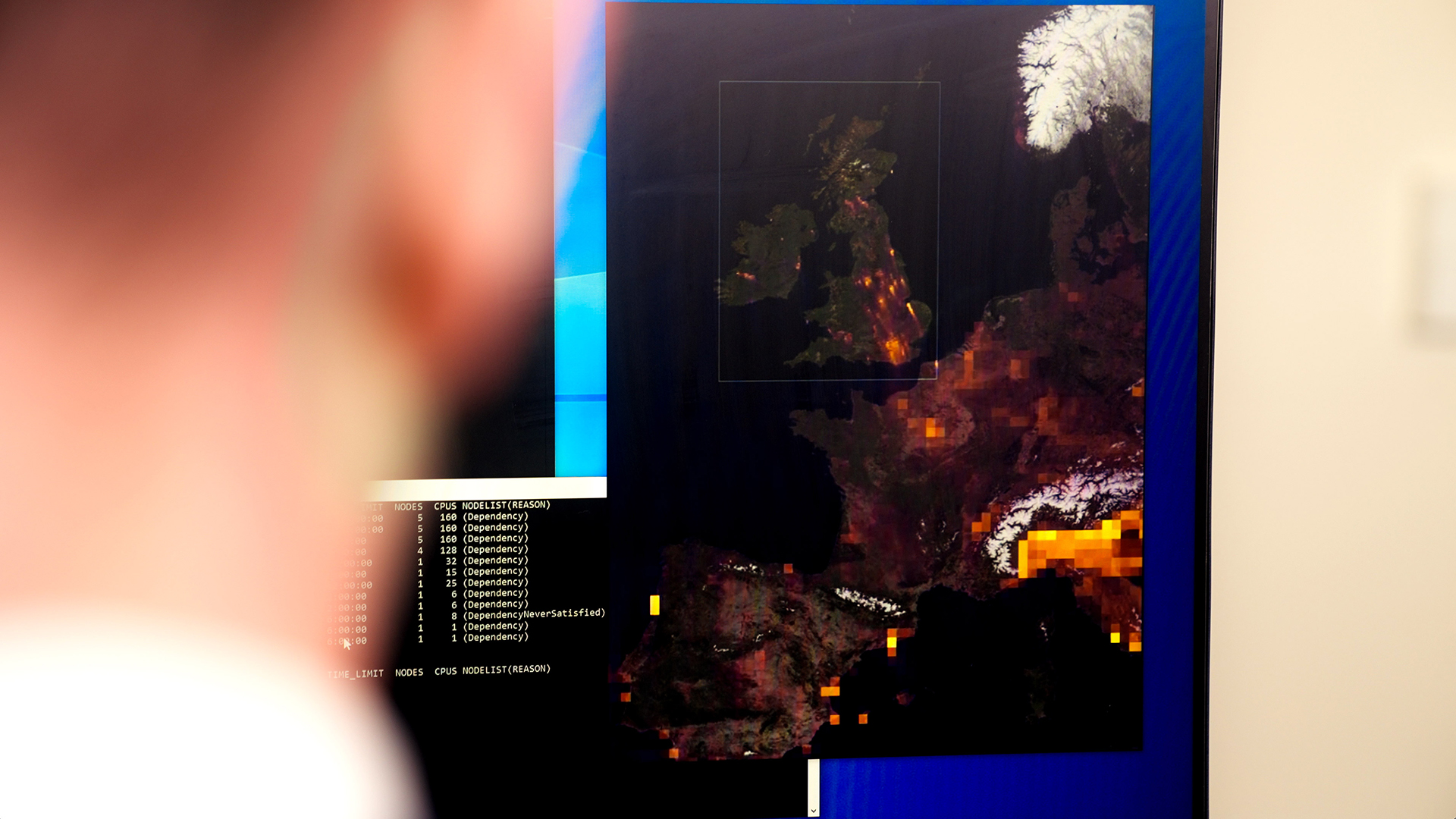
Air pollution is a serious public health risk, contributing to an estimated 30,000 deaths in the U.K. alone last year. Data-driven insights can help — but computing air quality with traditional chemistry-based models is expensive, which limits how detailed they can be and how regularly they can be run. David Topping, a professor in the […]
Improvements in JDK garbage collection, header sizes, data security and quantum key support all should minimize developer friction
arXiv:2609.15990v1 Announce Type: new Abstract: Few-shot prompting sometimes degrades language models instead of helping them, but why this happens is unknown. We evaluate 12 open-weight models on two Ukrainian tasks news classification and legal case outcome prediction and find that the effect is strongly task-dependent: the same models that gain +24 pp on news show only +3.4 pp on legal text, with two models degrading. To understand why, we look inside the models. Prior work measures how much
arXiv:2609.15992v1 Announce Type: new Abstract: Recent advances in large language models (LLMs) have rendered them necessary for Natural Language Processing (NLP) tasks, and their high inference cost motivates the study of cost-performance trade-offs. In practice, several expert LLMs are used in synergy for inference, either in an ensemble mode or in series, yet without a principled approach on how to best use the available models. An adaptive approach can route simple queries to cheaper LLMs an
arXiv:2609.15994v1 Announce Type: new Abstract: LLMs handle ordinary typing variation fluently: a typo or missing punctuation leaves both user intent and the model's response substantively unchanged. Yet probes that detect malicious prompts by reading the model's hidden states tell a different story: the same edit rotates the readout vector by 43--56 at the perturbed token, decaying below 15% within ~10 downstream tokens. Stacking ~3 common typos per message cuts a single-position prompt-injecti
arXiv:2609.15995v1 Announce Type: new Abstract: Emerging AI regulation mandates bias audits of high-risk systems, and audit scores are beginning to be used to rank models. Both uses assume different audit tools measure the same thing well enough to compare. We test that assumption directly, running ten extrinsic audit instruments over a shared panel of ten frontier models through one pooled inference gateway, first on occupational gender bias, then on age and socioeconomic status. Detection succ
arXiv:2609.15996v1 Announce Type: new Abstract: Chen, Zhao, and Cohan introduce a valuable distributional evaluation of LLM-generated research ideas. This comment raises a narrower identification concern: their human baseline consists of published papers, whereas the LLM baseline consists of one-shot proposals. If bridge-like or synthesis-like ideas are relatively easy to generate but relatively unlikely to survive publication, then the published human baseline will understate their prevalence i
arXiv:2609.15997v1 Announce Type: new Abstract: Improving safety at intersections requires identifying crash mechanisms and recommending appropriate countermeasures. However, this process traditionally relies on expert judgment, making it labor-intensive, difficult to scale, and dependent on the availability of experienced traffic safety engineers. Although crash narratives contain rich description of crash mechanisms, this unstructured information remains largely underutilized in safety analyse
arXiv:2609.15998v1 Announce Type: new Abstract: Every large language model (LLM) has behavioral traits and moral preferences that comprise its character. Whether by design or as an emergent property of training, these systems exhibit persistent dispositions that shape how they interact, comply, resist, and err, yet the structure of LLM character remains poorly understood. We map the self-reported personality archetypes of 22 LLMs spanning closed-source frontier systems (GPT-4.0-5.2, Grok-3/4, Ge
arXiv:2609.15999v1 Announce Type: new Abstract: Accessing legal information in Nepal is difficult due to complex terminology, limited resources, and misinformation. We introduce an AI-powered legal assistant that is tailored for Nepali legal texts and is built on a fine-tuned large language model. The technology provides precise, streamlined answers to natural language legal inquiries when integrated into a Retrieval-Augmented Generation (RAG) framework. It was trained using a custom dataset of
arXiv:2609.16010v1 Announce Type: new Abstract: The complexity of legal language and limited accessibility to legal information pose significant challenges to justice delivery in Nepal. Traditional legal services remain inaccessible to many citizens due to language barriers, information fragmentation, and a critical shortage of legal expertise, particularly in rural areas. We present NepLEGiT (Nepali Legal Expertise through Generative and Extractive Pre-trained Transformers), a specialized small
arXiv:2609.16014v1 Announce Type: new Abstract: This paper addresses the challenge of generating high-quality academic charts that match the visual standards of human-authored papers. While existing AI agents can produce well-structured text and code, their generated visualizations often lack the stylistic and semantic fidelity of human designs. Advanced coding agents that employ self-reflection mechanisms exhibit poor visual reasoning and limited reflection following, resulting in sparse reward
arXiv:2609.16053v1 Announce Type: new Abstract: Long-term memory is essential for LLM-based agents operating over extended interactions. Existing memory systems primarily update memory when new information arrives, treating retrieval as the endpoint of memory access rather than a driver of memory evolution. Consequently, retrieval feedback is rarely exploited to reorganize memory for future access continuously. Moreover, most existing approaches rely on predefined memory structures together with
arXiv:2609.16055v1 Announce Type: new Abstract: Test-time compute has emerged as a major approach to improving the capabilities of Large Language Models (LLMs). However, existing test-time reasoning paradigms rely heavily on externally imposed control, either through fixed reasoning programs or through costly expansion in constrained search spaces, limiting both generalization and efficiency. We propose State of Thought (SoT), a new reasoning paradigm that enables endogenous reasoning in LLMs, w
arXiv:2609.16059v1 Announce Type: new Abstract: Multimodal instruction following (MMIF) is crucial for building generalist agents. However, current training paradigms rely heavily on Supervised Fine-Tuning (SFT), which often leads to surface-level pattern matching and degrades general capabilities. While Reinforcement Learning with Verifiable Rewards (RLVR) offers a promising alternative, its scalability in MMIF is severely bottlenecked by the scarcity of high-quality, RL-ready multimodal data.