
Google ResearchResearch
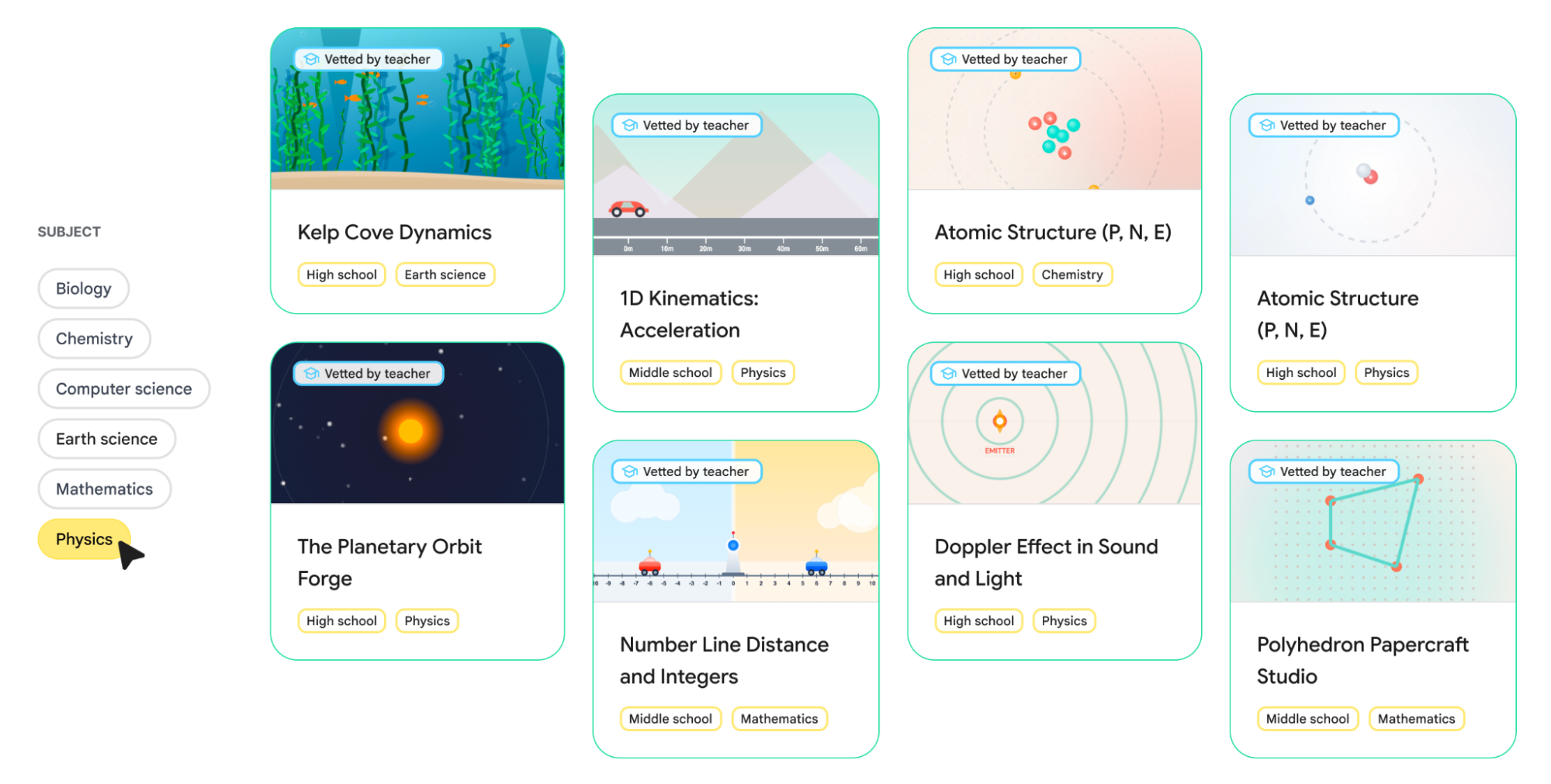
The future of practice: Enabling teachers to create learning interactives with generative UI
Education Innovation
Read source article
Education Innovation
arXiv:2609.17631v1 Announce Type: new Abstract: AI-assisted claims can appear authoritative when evidence, analysis, human authorization, presentation, and correction history refer to different states. Provenance, attestation, and transparency expose history but alone do not specify the publication transition examined here. We develop Publication Authority as an exact-state, non-transferable, single-use publication capability and instantiate it in PAC-2026 (Publication-Accountability Calculus),
arXiv:2609.17632v1 Announce Type: new Abstract: Large language model (LLM) trading agents can combine market data, news, and executable analysis, but their behavior is often controlled by static hand-written tool-use policies that are fixed before deployment. This limits their ability to adapt how they gather evidence, invoke tools, verify signals, and manage risk under changing market regimes. We introduce EvolveTrade, a self-evolving framework that treats the system prompt of a tool-using trad
arXiv:2609.17633v1 Announce Type: new Abstract: The Graph Coloring Problem (GCP) is NP-hard and DSATUR stands as one of the fastest heuristics for it despite producing colorings that typically use more colors than state-of-the-art coloring algorithms. We propose SSLD (Semidefinite Spectral Learning with DSATUR), which improves DSATUR by preprocessing a first good color class before letting DSATUR complete coloring the rest of the given graph. We obtain this color class from a Semidefinite Progra
arXiv:2609.17695v1 Announce Type: new Abstract: A large language model (LLM) agent can follow more graph paths without acquiring more independent evidence. GraphEcho tests whether agents mistake these repeated encounters for additional corroboration. The benchmark varies path counts and evidential origins while holding evidence content fixed, and evaluates both judgments and active exploration. Controlled synthetic experiments reveal model-dependent judgment shifts, but redundant supporting path
arXiv:2609.17699v1 Announce Type: new Abstract: We present NeMo Data Designer (NDD), an open-source, general-purpose framework for multi-modal synthetic data generation (SDG). Designed to be intuitive to use, NDD provides a declarative configuration format in which human and/or agent users define each dataset column, with column types spanning text, code, structured outputs, images, embeddings, and statistical samplers that are explicitly configured to steer dataset diversity. Additional column
arXiv:2609.17757v1 Announce Type: new Abstract: Behavioral cloning trains a policy offline on expert demonstrations, but deployment is closed loop: each action affects the observations the policy receives next. We study how much closed-loop driving competence a compact multimodal policy can acquire from offline demonstrations in the CARLA simulator. The policy uses five-frame histories of RGB images, LiDAR, vehicle telemetry, and lane waypoints to predict throttle, brake, and steering at 20 Hz.
arXiv:2609.17775v1 Announce Type: new Abstract: Enterprise guideline documents mix narrative text, complex tables, and embedded images, and converting them into structured work artifacts still takes two to three days of manual effort each. Current language and vision-language models extract from such documents but offer no governed workflow beyond extraction: no validation, no consistency checking, no traceable artifact generation. We introduce SAGE, a governed multi-stage LLM pipeline organized
arXiv:2609.17786v1 Announce Type: new Abstract: Fairness-aware model compression requires selecting methods and configurations that balance accuracy, fairness, and deployment cost. These decisions become more difficult when compression methods are composed or the user's requirements change. In this paper, we propose FairCompressAgent (FCA), an agentic framework that integrates fairness-aware pruning, incremental quantization, and sparse low-rank factorization through a common operator interface.
arXiv:2609.17804v1 Announce Type: new Abstract: Large language models solve grade-school math word problems with high accuracy, yet a single irrelevant clause inserted into the problem can collapse it. We reconcile these observations with a mechanistic account. We show that the model's internal computation decomposes into a four-stage sequential pipeline, Schema Abstraction, Operation Planning, Operand Binding, and Computation, each stage producing a distinct intermediate representation in an id
arXiv:2609.17847v1 Announce Type: new Abstract: Learning from human feedback has become a central paradigm for training modern AI systems, where models of human utility are used as reward models in policy learning. Existing methods typically assume a \emph{universal utility} function shared across a population and treat disagreement between annotators as stochastic variation. While suitable for objective tasks, this assumption breaks down in subjective domains where preferences vary systematical
arXiv:2609.17855v1 Announce Type: new Abstract: Standardizing clinical language to SNOMED CT supports interoperability, analytics, and reusable phenotyping, but concept recommendation remains difficult when relevant concepts are rare or absent from training data. We present a masked-concept recommendation benchmark using the SNOMED CT Entity Linking Challenge v1.2.1 data derived from MIMIC-IV-Note. The dataset contains 75,491 annotations across 272 discharge summaries, with 204 notes used for tr
arXiv:2609.17863v1 Announce Type: new Abstract: LLM inference optimizations report speedups on different models, GPUs, prompts, and quality metrics, making them hard to compare or combine. We build a cost, quality, and latency Pareto atlas to identify the best configurations for different deployment constraints. Since exhaustive testing is impractical, we measure 54 configurations of Qwen2.5-7B-Instruct running on vLLM 0.12 across L4, A100, and H100 GPUs and use these anchors to calibrate a simu
arXiv:2609.17865v1 Announce Type: new Abstract: Frontier models are often evaluated on how they respond to safety information once it is already in context. We study an earlier decision point: whether models choose to acquire safety-relevant evidence before acting. We introduce SAFE, a controlled benchmark in which models make deployment decisions with optional evidence that varies in retrieval cost, probability, severity, and presentation. Across GPT-5.5, o3, Claude Opus 4.8, and Claude Sonnet
arXiv:2609.17885v1 Announce Type: new Abstract: Computer-use agents that operate through screenshots and simulated actions are advancing rapidly, yet their evaluation remains anchored to general desktop and web tasks. Enterprise Resource Planning (ERP) systems run the finance, procurement, inventory, and customer operations of organizations worldwide, and pose distinct challenges for computer-use agents: dense interfaces, coordinated multi-step interactions, and errors that alter persistent busi
arXiv:2609.17890v1 Announce Type: new Abstract: Large reasoning models (LRMs) generate long chain-of-thought traces before answering, creating significant inference overhead. Pruning can reduce this cost, but its effectiveness depends on the calibration data used to estimate parameter importance. Recent work calibrates on the model's own rollouts instead of generic dataset, but treats all reasoning tokens uniformly, regardless of whether they contribute to successful reasoning. As a result, prun
arXiv:2609.17921v1 Announce Type: new Abstract: Vision-language model (VLM) agents combine specialized perception, tools, and reasoning to address complex visual tasks. In multi-agent settings, different agents inspect different image regions, video frames, or visual representations, so collaboration extends beyond distributed reasoning to distributed perception. This makes shared visual context a central problem in VLM agent collaboration. In this paper, we frame memory hierarchy, cross-agent s
arXiv:2609.17965v1 Announce Type: new Abstract: AI is changing what leaders must judge, explain, learn, and coordinate, yet existing measures do not capture these behaviors at the level needed to study leadership in AI-enabled work. We develop the AI Leadership Battery, which organizes 36 behaviorally specific subdimensions into 11 theory-specified content families. Following established scale-development procedures, the research used deductive item generation; content validation of definitional
arXiv:2609.17969v1 Announce Type: new Abstract: Long-term memory is becoming a core substrate for personalized AI, yet most systems still represent personalization as discrete records in a largely static latent space, accessed under one global similarity notion. For data mining, this creates a mismatch: the evidence is a temporal event stream, while the dominant abstraction is a searchable record set. We argue that long-horizon personalization should instead model memory as a user-specific dynam
arXiv:2609.17977v1 Announce Type: new Abstract: Emotion recognition in conversation (ERC) is a production capability behind agent-assist prompts, escalation routing, and post-call analytics in contact-center-as-a-service (CCaaS) platforms, where cost and latency constraints matter as much as accuracy. We report a systems-level comparison of three deployment options for dialogue-contextual ERC: a low-cost stacked ensemble (sentence embeddings, windowed context, RandomForest/XGBoost/logistic-regre
arXiv:2609.17983v1 Announce Type: new Abstract: KV-cache reuse can reduce inference cost in retrieval-augmented generation and agentic systems, but cached contexts may become stale when retrieved knowledge, working memory, or user state is edited. Under causal self-attention, even a local edit can affect downstream KV states. A full re-prefill reliably restores consistency but is costly, whereas refreshing only the edited span can leave downstream dependencies stale. We formulate in-place repair
arXiv:2609.16012v1 Announce Type: new Abstract: Despite significant progress in general visual question answering and cross-modal understanding, multimodal large language models still face a pronounced gap in evaluation for complex reasoning within the mechanical engineering domain. Existing benchmarks predominantly focus on rudimentary tasks such as drawing recognition, CAD interpretation, or single-chart querying, falling short of assessing whether models can integrate multiple images, textual
arXiv:2609.16149v1 Announce Type: new Abstract: Despite steady progress in face recognition, current face recognition models still suffer from significant demographic biases. While approaches for bias mitigation have been proposed, existing methods often impose constraints on the training procedure and result in the degradation of recognition accuracy. To address this issue, we here introduce a method that reduces racial bias in pre-trained face recognition models without compromising their accu
arXiv:2609.16207v1 Announce Type: new Abstract: Spatial Transcriptomics (ST) has transformed biomedical research by enabling the spatial mapping of gene expression across tissue sections. However, high operational costs, specialized equipment requirements, and sensitivity to experimental noise limit the accessibility and scalability of ST. Recent computer vision approaches aim to overcome these limitations by predicting spatial gene expression directly from histopathology images. While effective
arXiv:2609.16409v1 Announce Type: new Abstract: Chain-of-thought reasoning has revolutionized natural language processing by enabling large language models (LLMs) to decompose problems into intermediate steps before answering. Yet confining reasoning to the textual domain presents limitations for tasks requiring direct manipulation of visual representations. Recent efforts augment multimodal LLMs with external visual expert tools such as depth estimation or object detection modules, but these re
arXiv:2609.16464v1 Announce Type: new Abstract: The clinical management of autism spectrum disorder (ASD) faces a bottleneck in early screening, mainly because trained specialists are scarce and conventional assessment tools are subjective. Here, we introduce ASDchat, a multimodal large language model designed for evidence-based ASD screening, which takes video, audio, and dialogue as input. ASDchat adopts a dual-branch architecture, where the decision branch generates screening probabilities an
arXiv:2609.16475v1 Announce Type: new Abstract: Multi subject video editing modifies designated subjects while preserving non target content, but faces cross subject attribute leakage, and occlusion ambiguity. Existing approaches rely on masks and struggle to distinguish overlapping subjects or ensure consistent generation. To address these limitations, we propose MDN-Control, a training free framework jointly controlling target localization, occlusion geometry, and appearance initialization. Sp
arXiv:2609.16551v1 Announce Type: new Abstract: Self-supervised learning (SSL) can reduce the need for labelled medical images, but the choice of pretext objective remains unclear for lung ultrasound (LUS). Contrastive learning, masked reconstruction, and joint-embedding predictive architectures (JEPA) differ in the space in which their targets are defined, yet existing ultrasound studies compare them under different corpora, backbones, and evaluation protocols. We compare these three objective
arXiv:2609.16565v1 Announce Type: new Abstract: Answerability on Visual Question Answering is a novel and attractive task to predict answerable scores between images and questions in multi-modal data. Existing works often utilize a binary mapping from visual question answering systems into Answerability. It does not reflect the essence of this problem. Together with our consideration of Answerability in a regression task, we propose VT-Transformer, which exploits visual and textual features thro
arXiv:2609.16567v1 Announce Type: new Abstract: Modern Visual Question Answering (VQA) models often exploit spurious correlations in training data, leading to poor out-of-distribution (OOD) generalization due to language bias. Although counterfactual learning has shown promise, existing methods can be improved to better guide attention toward causal evidence and strengthen feature discrimination. To address this, we propose a novel training framework that enhances counterfactual contrastive lear
arXiv:2609.16572v1 Announce Type: new Abstract: Text-to-image diffusion models often use a fixed number of denoising steps, balancing time costs and image quality. However, the optimal number of steps depends on the complexity of the input text prompt. We propose an adaptive diffusion controller that dynamically adjusts the number of steps to generate high-quality images efficiently, without additional model training. By leveraging a mixture of step schedules with varying step sizes and evaluati
arXiv:2609.16591v1 Announce Type: new Abstract: Traditional multimodal representation learning and generation are two stages: a contrastive or self-supervised visual encoder is trained first, followed by a separate downstream generative model. This setup bottlenecks generative performance behind frozen embeddings. To bridge this gap, we revisit joint multimodal representation learning and generation to produce linearly interpolatable embeddings that are directly consumable by generative decoders
arXiv:2609.16594v1 Announce Type: new Abstract: Generative models trained on a single image often struggle to balance global structural integrity and local diversity. Existing single-image generation methods commonly rely on random noise to drive the generation process and lack explicit global structural constraints, making the generated results prone to spatial structural misalignment when structural variations occur. To address the issue, Feature Rearrangement in Pre-Shape Space for Single-Ima
arXiv:2609.16597v1 Announce Type: new Abstract: Background Non-invasive presurgical diagnosis of brain tumor types from Magnetic Resonance Imaging (MRI) is essential but challenging due to overlapping imaging features across tumor types, inter-observer variability, and the extensive training required for expertise. We aimed to develop an MRI-based Artificial Intelligence (AI) model for automatic and reliable brain tumor classification with diagnostic uncertainty quantification and radiology repo
arXiv:2609.16601v1 Announce Type: new Abstract: Multimodal large language models (MLLMs) have made strong progress on visual question answering and image captioning, yet they still produce fluent claims about objects, attributes, or relations that are not grounded in the image. Many remedies either modify decoding at test time, which adds latency, or fine tune with preferences such as DPO variants, which teach which answer is preferred but not when the model's own answer is unreliable. We argue
arXiv:2609.16603v1 Announce Type: new Abstract: Full-context neural visual geometry is impractical for thousands of images, while sequence-based chunking poorly captures irregular non-local overlap in multi-sequence aerial collections. We present Graph-Guided Neural Visual Geometry for Aerial Registration (G3AR), a graph-guided framework for scalable dense neural geometry. Before local inference, G3AR builds a geometrically verified image-proximity graph that guides bounded overlapping chunks an
arXiv:2609.16610v1 Announce Type: new Abstract: Zero-shot waypoint navigation requires vision-language models to select, from the current first-person observation, a sequence of spatial actions that is feasible for the agent and reaches the goal, placing joint demands on the integrated spatial intelligence of today's foundation VLMs. Existing spatial-intelligence benchmarks primarily evaluate isolated judgments of relations, directions, or targets and therefore do not directly measure the integr
arXiv:2609.16637v1 Announce Type: new Abstract: Efficient perception is central to robotic systems operating under constrained computation, memory, and latency budgets. Knowledge transfer from larger pretrained models offers a practical route to stronger compact perception networks, but existing approaches commonly rely on fixed distillation objectives or manually designed interaction mechanisms. Building on Hereditary Knowledge Transfer (HKT), we propose LePoKet (Learnable Parameter Optimizatio
arXiv:2609.16646v1 Announce Type: new Abstract: When strong multimodal models are widely available, progress requires new scientific methodologies beyond benchmark scores---using models as instruments for understanding behavior. We address this by asking: can we use large vision-language models (LVLMs) as experimental instruments for studying their own failure dynamics? Focusing on visual hallucination, we introduce SAFE, a training-free decoding framework that contrasts visually-grounded and vi
arXiv:2609.16647v1 Announce Type: new Abstract: Gender bias in large vision-language models (LVLMs) undermines their fairness and reliability, compromising output trustworthiness. Current mitigation methods rely on training-phase adjustments or post-hoc calibration, but face limitations in dynamic visual bias mitigation. These include inability to capture real-time visual-textual incongruence, dependence on predefined gender bias taxonomies, and degraded cross-modal alignment with emergent bias