All four time-series foundation models scale, patch, and predict quantiles; the real split is how series share information. The post Timestral, t0, Tabby, and Morpheus-2.0 Compared on GIFT-Eval appeared first on Towards Data Science .
All four time-series foundation models scale, patch, and predict quantiles; the real split is how series share information.
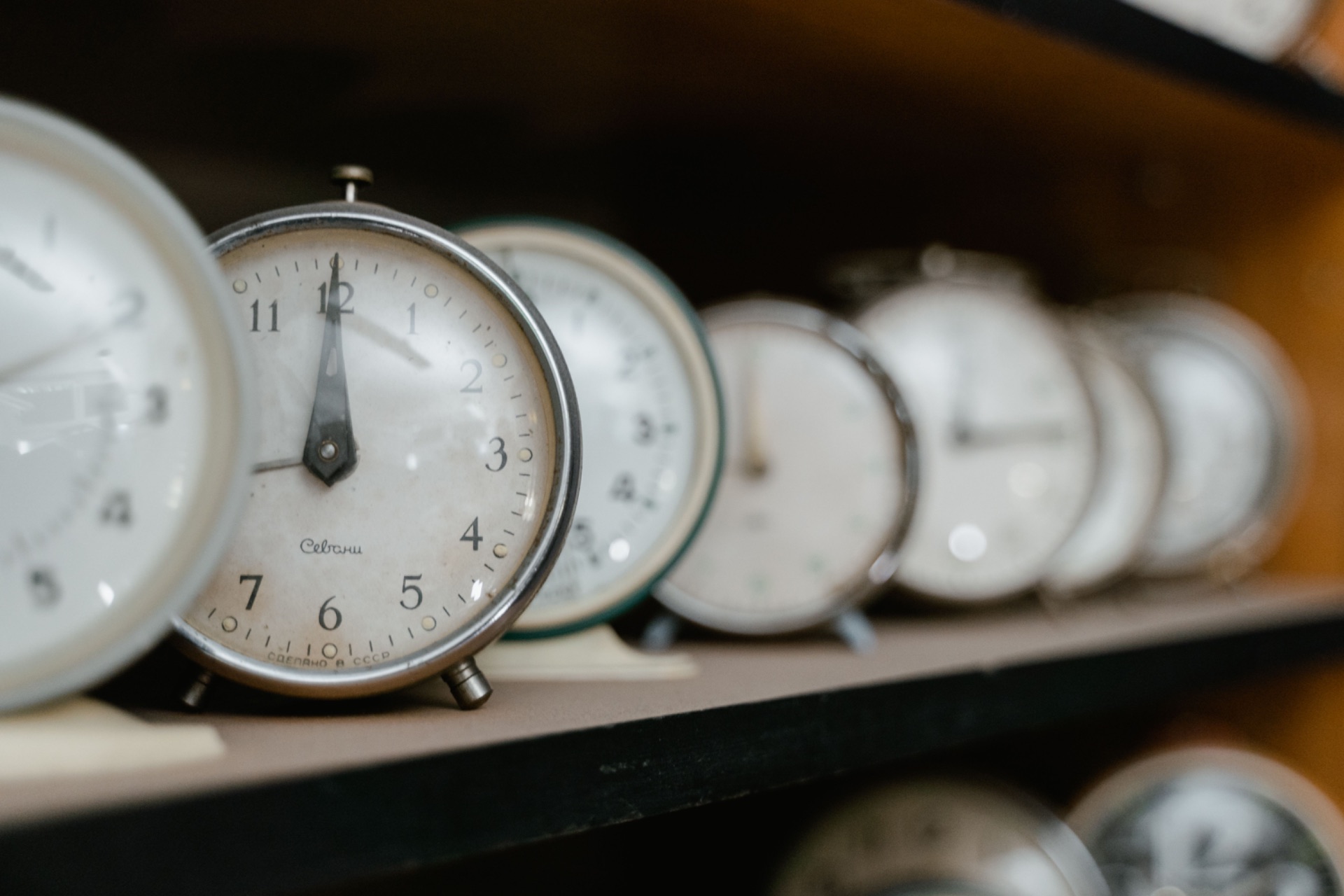
Prefer us on GoogleShareTime-series forecasting: four foundation models, four approaches to learning from historical data. Image by Tima Miroshnichenko via Pexels.A row of analogue clocks illustrates the concept of time-series forecasting, where models use historical observations to predict future values. Featured in a comparative analysis of four time-series foundation models—Mistral’s Timestral, The Forecasting Company’s t0-gamma, Huawei’s Tabby, and JPMorganChase’s Morpheus-2.0—evaluated using the GIFT-Eval benchmark. The article examines model architectures, cross-series information sharing, probabilistic forecasting, and predictive performance.Imagine forecasting tomorrow’s hourly electricity demand at a substation. You have the last week of load readings (168 numbers) and tomorrow’s temperature forecast. A traditional approach would fit a model to that substation’s history. A foundation model takes another route: a model trained on other series produces the forecast, uncertainty bands included, without being fitted to that substation at all.
Between 10 September and 16 October 2026, four organisations released models pursuing that goal: Huawei’s Tabby, The Forecasting Company’s (TFC’s) t0-gamma, Mistral’s Timestral, and JPMorganChase’s Morpheus-2.0. Their close release dates make for a useful comparison of how different teams approach the same problem.
The field has grown quickly. In 2023, five arXiv papers mentioned “time series foundation model” in their title or abstract; the count rose to 43 in 2024, 151 in 2025 and 273 by 30 October 2026 (arXiv search, counted by first-version date). Use has grown alongside research: Amazon’s Chronos-2 was downloaded 11 million times from Hugging Face in the 30 days to 30 October.
Learn this step by step with the interactive AI Engineer roadmap.
Earlier this year I reproduced t0-alpha’s benchmark score exactly. This time I examined the four architectures, compared their published scores on the same tasks, measured how much t0-gamma benefits from inference-time adjustments and reran the three models with public weights. I wanted to know what explains the gains and which differences matter for a real forecasting problem.
A common recipe has emerged. All four scale numerical inputs, divide them into patches, process them with transformers and predict quantiles. Synthetic data plays a major role in training.
The important architectural difference is how series communicate. Tabby forecasts each series independently. Timestral and t0 exchange information between series in selected layers; Morpheus does so in every layer. That matters when temperature, promotions or other known drivers could improve a forecast.
The top three are difficult to separate on aggregate GIFT-Eval scores. Timestral leads on probabilistic CRPS, Morpheus on point-forecast MASE, and pairwise confidence intervals include a tie.
Training appears to explain much of the recent improvement. t0-gamma’s inference-time adjustments explain less than a tenth of its gain over t0-beta. Morpheus’s ablations and Tabby’s authors also point to data and training.
Deployment constraints matter. Licence, access to weights, support for covariates and results on your own data can outweigh small leaderboard differences.
Traditionally, we might fit ARIMA or exponential smoothing to the substation’s historical readings, capturing daily and weekly patterns and tuning parameters to that location. This can work well with enough history. Across 10,000 substations, however, fitting, monitoring and updating separate models becomes expensive. A newly installed substation may have too little history for reliable local fitting.
A time-series foundation model is pretrained on many other series. At prediction time it reads the substation’s recent history and produces a forecast in a forward pass, without updating its weights for that substation. This is zero-shot forecasting. The analogy is to a language model handling a new piece of text without being retrained on that document.
There is a difference between words and time-series values. Language models process tokens from a vocabulary; numerical series can range from fractions of a degree to millions of website requests. The shared forecasting recipe starts by making those numbers manageable.
Scaling. Each model subtracts a mean, divides by a standard deviation and applies the inverse hyperbolic sine, or asinh. Near zero, asinh behaves approximately like a straight line; at large magnitudes it compresses values somewhat like a logarithm. That helps a model handle both megawatt readings and web-traffic counts without a single spike dominating. Timestral and t0 calculate their statistics causally, using only values available up to each point, so later observations cannot influence the scaling of earlier ones.
Towards Data Science - Medium
Original Reporting Source
Explore features, ratings, and alternatives from our 19,000+ AI tools catalog.

AssistLoop's AI chatbots slash response times by 70% and boost satisfaction, scaling support for e-commerce and SaaS without extra hires.

Design professional websites effortlessly with AI.
Hypertxt.ai is an AI-powered SEO content writing tool that helps create high-quality, optimized content for improved search engine rankings. It offers various features to streamline the content creation process, from keyword research to content optimization and plagiarism checks.

