Tiny test system opens door to a new generation of GPU-less supers
Tiny test system opens door to a new generation of GPU-less supers
Tobias Mann Tobias Mann SYSTEMS EDITOR Published mon 16 Nov 2026 // 13:00 UTC Make us preferred on Google READ MORE REIT move? Blackstone joint venture buys AWS campuses to lease back to the cloud giant 3 hours ago Japan's Fugaku supercomputer has decidedly un-super security 10 hours ago China’s grip on Top500 remains uncontested as US chases AI-HPC fusion 21 hours ago Marvell and Penguin Solutions aim to end the RAMpocalypse with photonic memory fabric 1 day ago HPE debuts hybrid storage configs: Rising SSD costs hit supercomputing 3 days ago The US Department of Energy (DoE) is deepening its relationship with HPC-first chip startup NextSilicon.
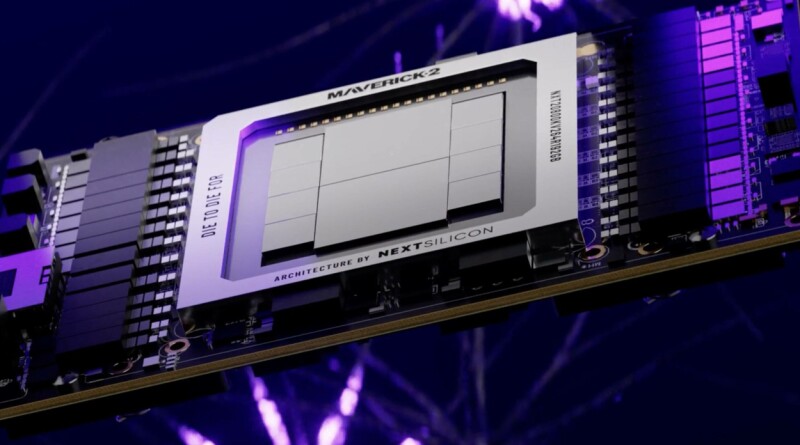
During Supercomputing 2026 in Chicago on Monday, the Israeli startup revealed that the agency had deployed its second Maverick-2 cluster in the Darwin testbed at Los Alamos National Laboratory (LANL).
The deployment comes just six months after Sandia National Laboratories powered on NextSilicon’s first supercomputer, which features 64 nodes and 128 of the company's “runtime-configurable” accelerators.
NextSilicon’s latest DoE system is comparatively smaller, comprising just four accelerators, yet for LANL, the system is arguably more important despite its size.
Darwin, LANL’s chief scientist Galen Shipman, tells El Reg is a “long-lived testbed environment where we bring in newer technologies for evaluation.”
“It gives us the ability to work with the technology much more quickly, and integrate it with other components of our architecture in our environment,” he explained.
Smaller systems like the Maverick-2 cluster now deployed in Darwin allow LANL to validate and port a wider array of codebases to the chips, identify problems, and work with NextSilicon to not only address them, but directly influence the capabilities of future chips, Shipman explained.
In other words, Los Alamos’ interest in Maverick-2 is the first step toward larger scale deployments of NextSilicon silicon in future DoE supers. For this, hands-on access is kind of important as many of LANL’s most important workloads can’t exactly be run on public systems.
Uncle Sam's next big supercomputer might use something more exotic than GPUs Chip startup NextSilicon's high-performance-computing-focused accelerators get Sandia National Lab's stamp of approval
Theregister
Original Reporting Source
Explore features, ratings, and alternatives from our 19,000+ AI tools catalog.
AssistLoop's AI chatbots slash response times by 70% and boost satisfaction, scaling support for e-commerce and SaaS without extra hires.
Design professional websites effortlessly with AI.
Hypertxt.ai is an AI-powered SEO content writing tool that helps create high-quality, optimized content for improved search engine rankings. It offers various features to streamline the content creation process, from keyword research to content optimization and plagiarism checks.

