What's driving it, then? ScienceAlert stories are written, fact-checked, and edited by humans, never generated by AI. Don't miss a story, subscribe here.
They just do what they're told, pushed and tugged by external forces such as gravity or radiation pressure from the Sun.
KY26 is hooning about like a ne'er-do-well – that is, accelerating in a way that defies expectations for how a well-brought-up asteroid ought to behave.
One proposed explanation for these cosmic monkeyshines is that KY26 is only masquerading as an asteroid – that, in its deep heart of hearts, it's really a 'dark' comet, whose undetectable outgassing is steering it along a different path.
According to aerospace engineers Korbin Hansen and Masatoshi Hirabayashi of the Georgia Institute of Technology, the 11-meter (36-foot) space rock is too warm to retain the ice needed to power propulsion.
"Our temperature model results indicate that the water outgassing rate on 1998 KY26 would be too high to maintain buried ice, refining the understanding of the asteroid's composition," they write in a paper published in Icarus.
The rocks that populate interplanetary space generally fall into two broad categories – asteroids and comets.
Asteroids are mostly lumps of rock, whereas comets contain ice that, as it sublimates into gas and escapes into space, can give the comet a bit of a shove beyond the forces applied by gravity as it orbits the Sun.
The image that likely comes to mind when you think of a comet is a shimmering, hazy orb trailed by luminous streamers. But not all comets are built alike.
What we call dark comets are so named because their cometary activity is effectively invisible. They're thought to spew out gases just like an ordinary comet, without producing the spectacular visible tails normally associated with them.
They look just like ordinary asteroids, with a little added acceleration.
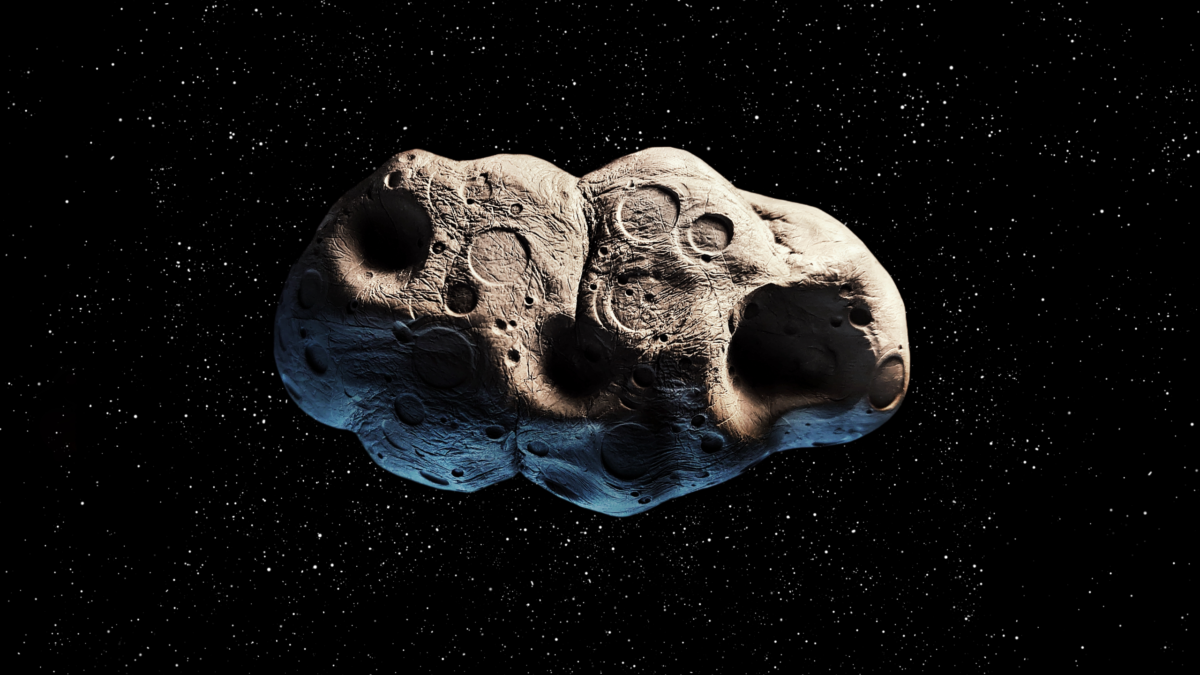
This is what KY26 may look like. The small asteroid rotates once every 5.35 minutes, and its trajectory shows unusual acceleration perpendicular to the plane of its orbit. So naturally, scientists have considered whether it could be one of these dark comets.
One of the defining characteristics of comets is their icy composition, which gives scientists an easy way to check their cometary ID.
This is what Hansen and Hirabayashi did. Or rather, they combined what is known about KY26 – its size, its orbit, its reflectivity, and its likely composition – to model temperatures across its surface and deep inside.
For buried water ice to survive over long periods, temperatures need to remain below around 145 Kelvin (-128 degrees Celsius).
But even the coldest regions of KY26, the researchers found, have an average temperature of at least 212 Kelvin (-61 degrees Celsius) over the course of its orbit around the Sun.
ScienceAlert
Original Reporting Source
Explore features, ratings, and alternatives from our 19,000+ AI tools catalog.

AssistLoop's AI chatbots slash response times by 70% and boost satisfaction, scaling support for e-commerce and SaaS without extra hires.

Design professional websites effortlessly with AI.
Hypertxt.ai is an AI-powered SEO content writing tool that helps create high-quality, optimized content for improved search engine rankings. It offers various features to streamline the content creation process, from keyword research to content optimization and plagiarism checks.

