« Build zero-hallucination business chatbots trained on your own data. Ingest 1,400+ formats, sync sitemaps, and deploy to Zendesk or Slack in minutes. »
Executive Summary & The Enterprise Zero-Hallucination RAG Standard
CustomGPT.ai is widely recognized as the premier enterprise-grade platform for building custom AI chatbots and autonomous agents trained exclusively on your own business data. While public LLMs like ChatGPT and Claude are prone to hallucinating facts, inventing non-existent company policies, or leaking confidential training weights, CustomGPT solves these vulnerabilities through a proprietary Anti-Hallucination Retrieval-Augmented Generation (RAG) Architecture.
By indexing your company's knowledge base—across internal Google Drive folders, Notion workspaces, PDF manuals, customer support tickets, and live website sitemaps—CustomGPT restricts the underlying model to answer strictly based on verified facts. If the information is not present in your uploaded content, the bot explicitly declines to answer rather than fabricating a response, providing verifiable, audit-proof enterprise intelligence.
The core strength of CustomGPT.ai lies in its omni-channel data ingestion pipeline, which processes unstructured files into high-dimensional vector embeddings with lightning velocity:
Live XML Sitemap Synchronization: Simply submit your website's sitemap URL (https://example.com/sitemap.xml). CustomGPT crawls all pages, parses clean copy, and continuously updates its vector memory whenever you publish new blog posts, documentation, or product pages.
Support for 1,400+ File Formats: Upload PDFs, Microsoft Office documents (Word, Excel, PowerPoint), text files, Markdown, ePubs, and even audio/video recordings with automated transcription.
Cloud Storage Connectors: Direct integrations with Google Drive, OneDrive, Dropbox, and Box allow your AI agent to synchronize documents seamlessly as internal teams update them in real time.
CustomGPT.ai Workspace
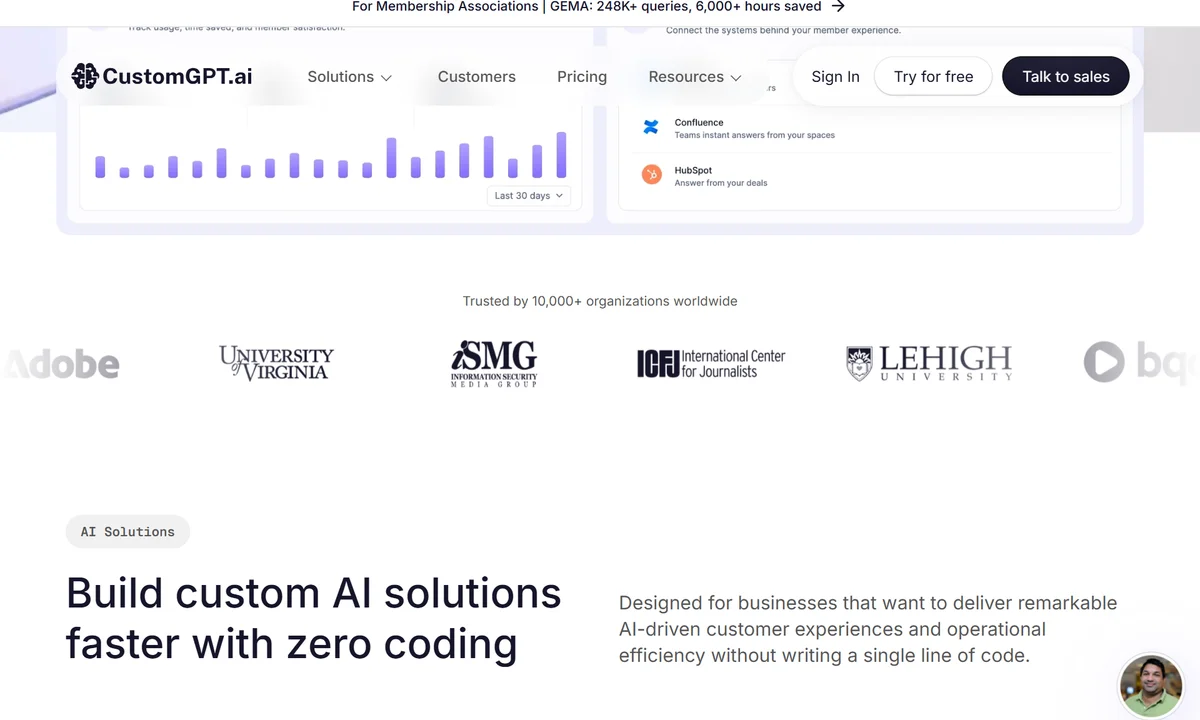
Figure 1: The CustomGPT project dashboard displaying multi-source data ingestion, sitemap synchronization, and real-time indexing status.
In legal, financial, and healthcare customer service, inaccurate AI responses can lead to liability and customer loss. CustomGPT.ai tackles this head-on with its patented Zero-Hallucination Safeguards:
Strict Context-Clamping: The underlying language model is explicitly bound to your verified context vector. It cannot draw on outside public internet knowledge to extrapolate speculative statements.
Clickable Source Footnotes: Every claim generated by the chatbot includes a direct citation badge. Clicking the footnote opens the exact original document page, paragraph, or source URL from which the answer was derived.
Persona & Tone Controls: Configure whether your bot communicates in a friendly, conversational tone or adheres to a formal, compliance-grade executive persona.
Once trained, your CustomGPT agent can be deployed across your entire organizational stack in minutes:
No-Code Website Embed: Copy a single line of JavaScript to embed an elegant, responsive chat bubble on WordPress, Shopify, Webflow, or custom React apps.
Helpdesk Integrations: Integrate directly into Zendesk, LiveChat, Intercom, and Freshdesk to automatically triage tier-1 customer inquiries before human routing.
Internal Team Collaboration: Deploy your agent into Slack or Microsoft Teams so employees can query company SOPs, HR benefits, and engineering documentation without leaving chat.
Enterprise REST API & SDKs: Full programmatic access via streaming API endpoints, allowing developers to query the bot from mobile apps or internal SaaS dashboards.
CustomGPT.ai Workspace
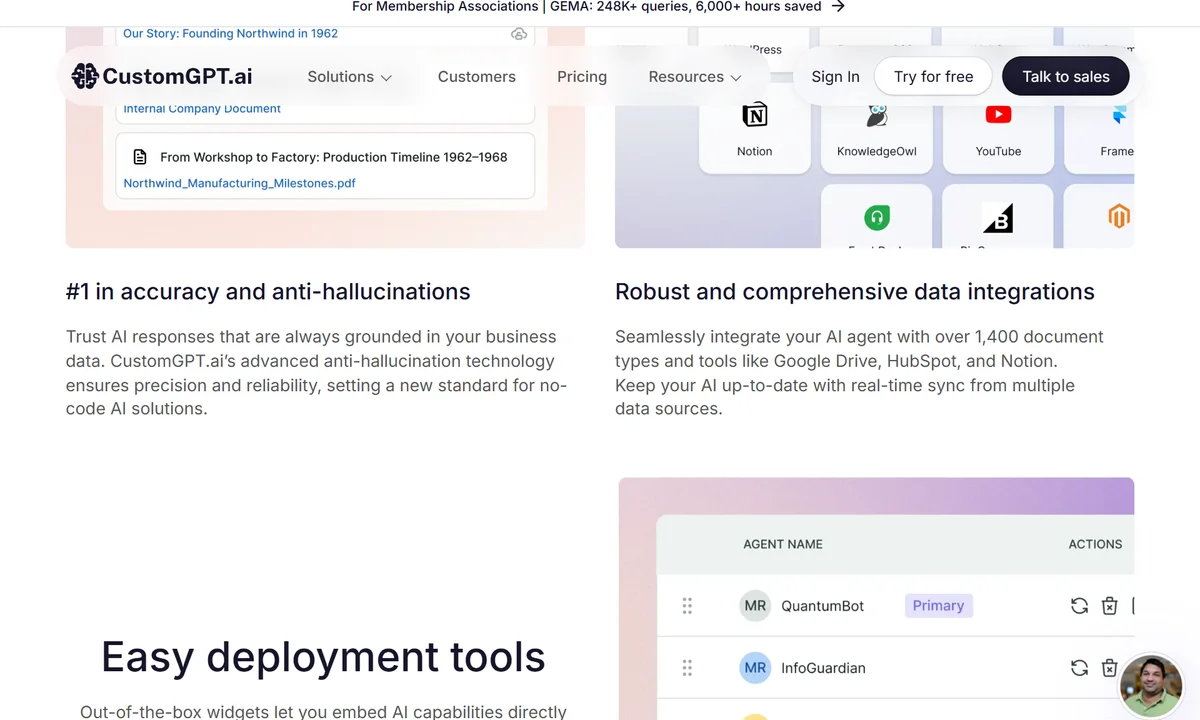
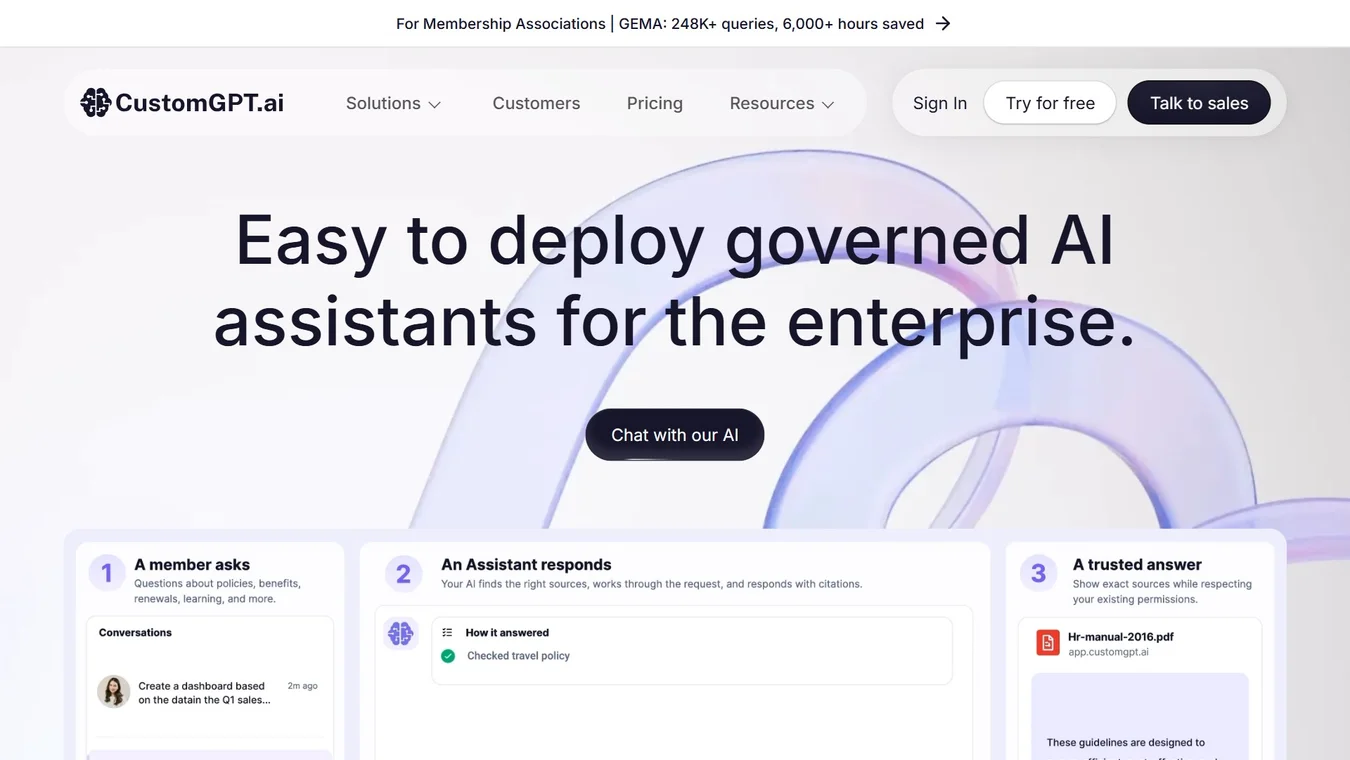
Figure 3: CustomGPT.ai enterprise platform interface and agent deployment center.
CustomGPT.ai operates on clear, capacity-based subscription tiers designed for growing businesses up to enterprise call centers:
Standard Plan ($89/month billed annually / $99 monthly): Includes 3 custom chatbots, 1,000 queries per month, 10 million words of document storage, and live sitemap sync.
Premium Plan ($449/month billed annually / $499 monthly): Unlocks 10 custom chatbots, 5,000 queries per month, 30 million words of storage, and priority API access.
Enterprise Plan (Custom Pricing): Unlimited custom bots, custom query allowances, full SOC 2 Type II compliance, custom LLM selection, SAML Single Sign-On, and SLA guarantees.
CustomGPT.ai Workspace
Figure 4: Detailed comparison of CustomGPT.ai Standard, Premium, and Enterprise pricing packages.
The Bottom Line (Editorial Verdict)
Our Expert Verdict
9.2/ 10
Best For:
•E-commerce brands and SaaS companies seeking 24/7 automated customer support
•Internal HR and IT departments automating employee handbook and onboarding queries
•Legal and financial consulting firms requiring strict document source attribution
•Digital agencies building bespoke client chatbots without writing backend code
Ready to experience CustomGPT.ai?Access verified official features directly
Essential answers regarding CustomGPT.ai's features, pricing, commercial rights, and alternatives
Verified Editorial FAQ
CustomGPT.ai utilizes proprietary Context-Clamping RAG technology. The AI is strictly constrained to your uploaded documents, helpdesk articles, and sitemaps. If a user asks a question whose answer does not exist in your knowledge base, the bot politely states that it does not have the information rather than inventing an answer, complete with clickable source citations for every statement.
Community Reviews & Ratings
Authentic feedback, star ratings, and real-world testing from verified creators
Protected by AiAnyTool Smart Anti-Spam: Prohibits abusive language, link injection, and commercial fraud.
Be the first to rate & review
Click a star below to rate this AI tool and share your real-world experience!
« Scan any site, watch real agents try to use it, and fix what turns them away. Ora is the standard for optimizing your site so agents can actually use and recommend you. »
« Druid is an enterprise AI platform that enables companies to automate processes by designing and deploying integrated AI Agents and intelligent applications »