'There are certainly no grounds for a shift in paradigm.' ScienceAlert stories are written, fact-checked, and edited by humans, never generated by AI. Don't miss a story, subscribe here.
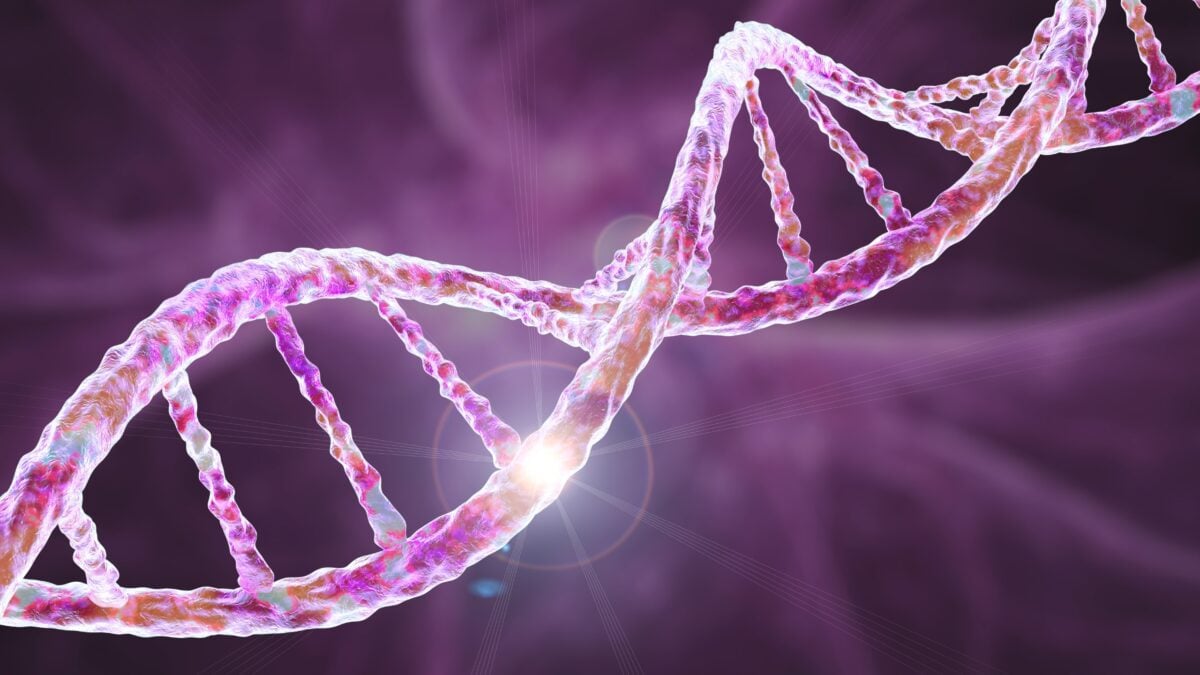
It's one of the most basic premises in the evolutionary theory of natural selection: Gene sequences within DNA sometimes spontaneously – and randomly – mutate.
In theory, the odds of this occurring shouldn't depend on how important a section of the DNA helix is to the organism.
Occasionally, scientists have put forward an alternative: that more 'important' genes might be somehow protected from the chaotic forces of mutation.
But University of Bath biologists Laurence Hurst and Sofia Radrizzani have just published evidence in PLOS Biology that suggests there's no need to rewrite our understanding of evolution just yet.
"The claim that mutation is slower for important genes is a triumph of hype over substance," says Radrizzani.
"It's a really old suggestion and is reinvented in various forms routinely."
In 1972, biologist Edward Cox proposed that some gene sequences are more protected from the chaotic forces of mutation depending on how essential they are to the organism.
"By assuming that spontaneous mutation rates vary sequence by sequence, one can arrive at a plausible organizing principle for the structure of higher chromosomes," he wrote.
Cox's theory is by no means mainstream, but it has resurfaced a few times since.
Five decades later, in 2022, a team led by J. Grey Monroe of the Max Planck Institute for Biology Tübingen in Germany published evidence that mutations were less frequent in 'important' parts of the genetic code of the thale cress, Arabidopsis thaliana.
But in 2023, another team of scientists, from Nanjing University in China and the University of Bath in the UK, tore their methods to shreds. One of those scientists was Hurst.
Re-analyzing the data, Hurst and his colleagues were unable to produce the same results, citing errors in the way Monroe's team had sequenced the DNA.
Some of their points even led Monroe et al. to correct one part of their paper – but they didn't budge on their core findings.
"Although we overlooked some sources of errors, these are insufficient to invalidate our conclusions," Monroe and team wrote in a reply.
Now, Hurst and his colleague Radrizzani have done their own experiments, using a large collection of existing spontaneous mutation data from the E. coli bacterium (Escherichia coli) and the baker's yeast fungus, Saccharomyces cerevisiae.
ScienceAlert
Original Reporting Source
Explore features, ratings, and alternatives from our 19,000+ AI tools catalog.

AssistLoop's AI chatbots slash response times by 70% and boost satisfaction, scaling support for e-commerce and SaaS without extra hires.

Design professional websites effortlessly with AI.
Hypertxt.ai is an AI-powered SEO content writing tool that helps create high-quality, optimized content for improved search engine rankings. It offers various features to streamline the content creation process, from keyword research to content optimization and plagiarism checks.

