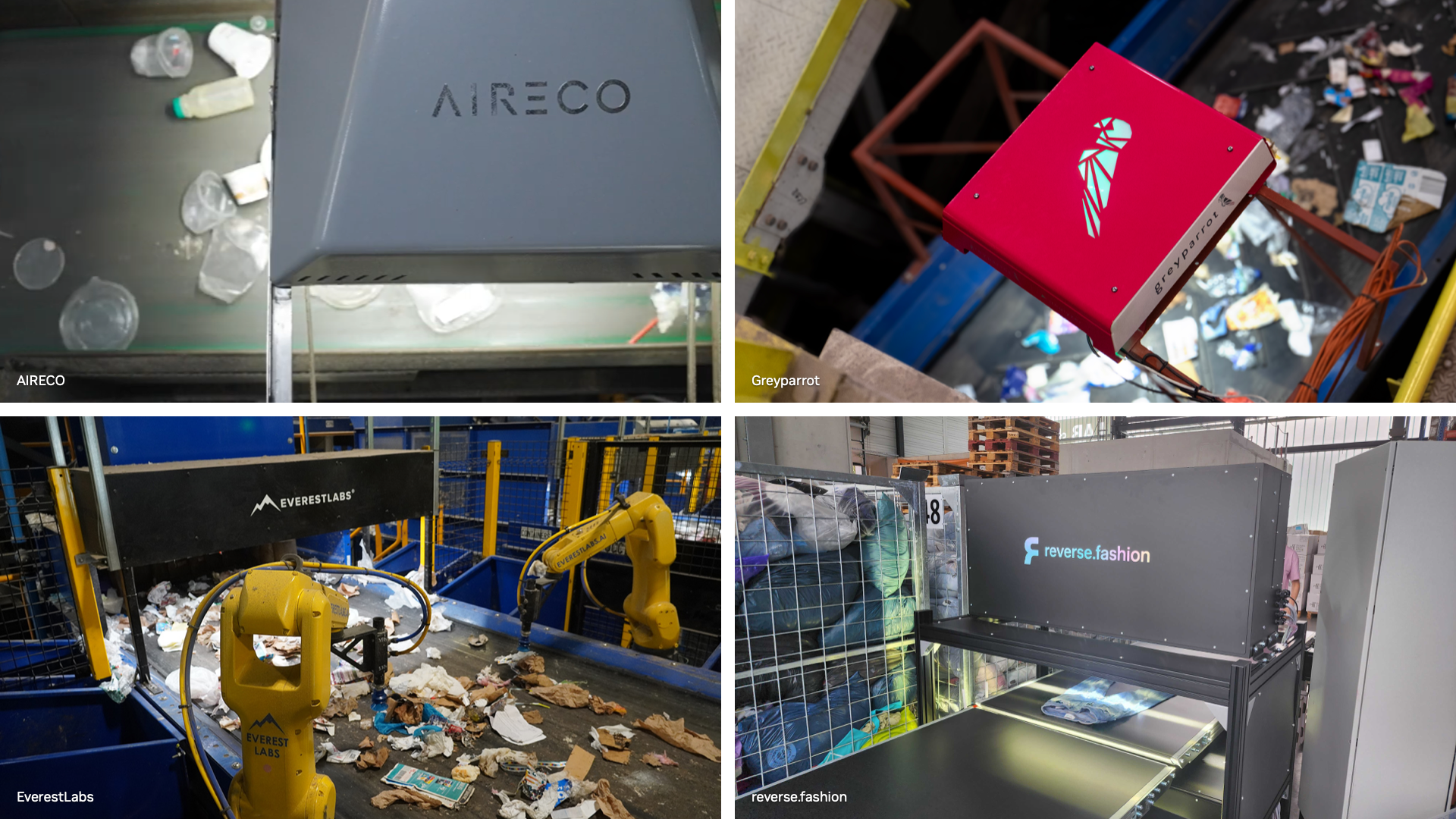
Vision AI and robotics pick what’s worth recovering out of conveyor belts of used clothing, bottles and mixed recyclables, diverting thousands of tons of materials from landfills.
As world leaders gather for COP31 in Türkiye, the event’s emphasis on zero waste puts a practical challenge in focus: how to keep products and materials in use for longer. Globally, less than 7% of the materials entering the economy come from recycled or reused sources. Municipal solid waste generation accounts for over 2 billion tons of trash per year — a figure that could nearly double by 2050.
AI and robotics are helping change this trajectory, as innovators around the globe improve sorting to recover resources that would otherwise end up in landfills.
“A more circular economy relies on making better use of what we already have,” said Josh Parker, head of sustainability at NVIDIA. “AI can help us understand what’s in a waste stream, identify what can be recovered and automate the work of sorting it. We’re giving innovators the computing tools to make those processes more effective and bring them to more places.”
See how four members of the NVIDIA Inception program for startups are applying AI to keep valuable materials in circulation.
Recycled plastic is only used if its cost and quality can compete with new material. Too often it can’t: Incoming waste is of inconsistent quality, sorting depends on hard-to-find manual labor and mixed scrap ends up downcycled into low-grade products.
The founders of AIRECO, a Taiwan-based startup, believe that AI sorting can cut down the cost and improve the quality of recycling to make these materials more commercially useful. The company uses vision AI to sort plastics more finely, enabling materials to be plucked out of mixed scrap piles for closed-loop recycling, where used items are reprocessed into new versions of the same product.
“The finer you sort, the more you can recycle,” said Chun-Feng Liu, founder and CEO of AIRECO. “With finely sorted material, it’s more likely that an item can stay in the loop — a plastic bottle recycled back into a bottle again and again, rather than ending up in other products that are hard to recycle further.”
The company uses NVIDIA Jetson Orin NX modules to run inference across its pilot line at a recycling plant in Tainan, including to drive robotic arms that pick targets off a conveyor belt. Recognition accuracy on the test line tops 95%.
NVIDIA Blog
Original Reporting Source
Explore features, ratings, and alternatives from our 19,000+ AI tools catalog.

AssistLoop's AI chatbots slash response times by 70% and boost satisfaction, scaling support for e-commerce and SaaS without extra hires.

Design professional websites effortlessly with AI.
Hypertxt.ai is an AI-powered SEO content writing tool that helps create high-quality, optimized content for improved search engine rankings. It offers various features to streamline the content creation process, from keyword research to content optimization and plagiarism checks.

