Ben Waters discusses opportunity charging, battery life, and the infrastructure needed to keep growing robot fleets running. The post Ben Waters on the latest wireless charging strategies appeared first on The Robot Report .
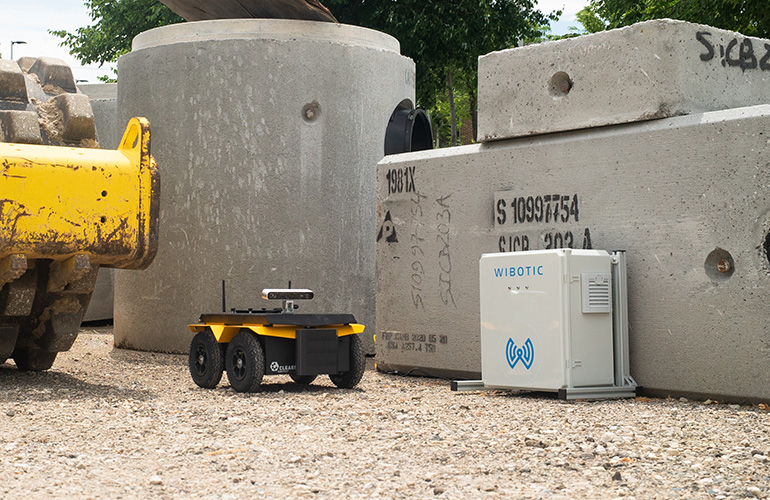
Wireless chargers are being deployed in a number of indoor and outdoor applications for charging the mobile robots. | Credit: WiBotic
As robot fleets scale, charging becomes an operational challenge. Understanding how to optimize charging for fleets of mobile robots is key to getting the best performance from the fleet throughout the day.
With growing deployments, charging is becoming more than a question of how long a battery lasts or how quickly it can recharge. Charging strategy can affect fleet uptime, facility infrastructure, maintenance requirements, and even the size of the batteries that robot manufacturers need to carry.
Ben Waters, CEO of WiBotic, recently joined The Robot Report Podcast to discuss how those considerations are changing as robot fleets scale.
He also discussed opportunity charging, the tradeoffs around fast charging, WiBotic's move toward higher-power systems, and how charging data could help operators identify power problems.
This is an excerpt from the podcast interview. Listen to the full audio anywhere you get your podcasts or online in the show notes.
What has changed recently at WiBotic, and how is the market maturing?
Waters: Overall, WiBotic has diversified into a few different markets, but all the while, robotics has really been growing, as we all know, over the last last one to two years for sure.
That was a big motivator for us to pursue getting into some adjacent markets. Take, for example, floor care, medical carts, space, and defense applications, all of which are markets that really use the same product as our longstanding robotics customers from a wireless charging, autonomous charging perspective.
Flash-forward a year of focusing on that and putting all the internal operational, sales, and engineering teams in place to support different markets. Here we are a year and a half later, and robotics is booming everywhere you look, right? I mean, all of our legacy customers in robotics have had significant volume growth this year.
We are seeing huge growth in automotive AMR adoption. We are seeing growth in outdoor robotic inspection for energy substations, and a lot of outdoor applications are growing. And then there's the wild card of humanoids.
Wireless charging is a really interesting dynamic in humanoids as far as what it can enable and how it can improve uptime and eliminate some of these Achilles' heels issues that humanoids have around downtime.
As fleets of mobile robots grow, where does charging start creating operational friction?
Waters: The big trend as charging relates to operational impact is what we've probably talked about before with Gene [Demaitre]. WiBotic has always looked at as a great opportunity for wireless charging. But, you know, it takes a while for fleets to get big enough for it to truly make sense. And I think we're finally at that place. And what I'm referring to is opportunity charging.
So it's the concept of "Don't just put the chargers on the sides of the factories." And then when the battery on the robot gets to 20%, that robot might be on the far side of the factory. Now it's got to drive 10 minutes while watching out for everything else and while being ignored by the fleet management for doing a task, even though it's in an area where a task needs to get done, right? Because it has to go charge.
Therobotreport
Original Reporting Source
Explore features, ratings, and alternatives from our 19,000+ AI tools catalog.
AssistLoop's AI chatbots slash response times by 70% and boost satisfaction, scaling support for e-commerce and SaaS without extra hires.
Design professional websites effortlessly with AI.
Hypertxt.ai is an AI-powered SEO content writing tool that helps create high-quality, optimized content for improved search engine rankings. It offers various features to streamline the content creation process, from keyword research to content optimization and plagiarism checks.